
Best Puzzle Toys for Anxious Dogs (2026 Guide)
Table of Contents
- How Puzzle Toys Help Dogs With Separation Anxiety
- Enrichment Toys for Separation Anxiety: What to Look For
-
The Best Puzzle Toys for Anxious Dogs: Our Top Picks
- 1. Chewzzle Interactive Puzzle Toys and Slow Feeders
- 2. LickiMat Classic Playdate: Best Lick Mat for Calming
- 3. PAW5 Wooly Snuffle Mat: Best for Scent Work and Foraging
- 4. West Paw Toppl: Best Freeze-and-Fill for Moderate Chewers
- 5. StarMark Bob-A-Lot: Best Treat-Dispensing Toy for Active Dogs
- 6. PetSafe Busy Buddy Kibble Nibbler: Best Budget Slow Feeder
- 7. Planet Dog Orbee-Tuff Snoop: Best for Boredom-Busting on a Budget
- Quick Comparison: Puzzle Toys at a Glance
- Benefits of Slow Feeders for Anxious Dogs
- How to Use Puzzle Toys for Dog Anxiety: A Step-by-Step Approach
- Which Puzzle Toy Should You Choose?
- Conclusion
Last Updated: August 26, 2026
Puzzle toys for anxious dogs are one of the most practical, research-backed tools available for pet owners dealing with separation anxiety, destructive chewing, and stress-related behaviors. At Chewzzle, we offer enrichment toys designed to engage cognitive function and promote calming behavior.
Quick Picks:
- Best Overall: Chewzzle Interactive Puzzle Toys and Slow Feeders, mental stimulation, slow feeding, and anxiety relief in one
- Best Lick Mat: LickiMat Classic Playdate, endorphin-releasing licking action for fast calming
- Best Scent Work Mat: PAW5 Wooly Snuffle Mat, foraging-based stress relief for all ages
- Best Freeze-and-Fill: West Paw Toppl, durable, dishwasher safe, and customizable difficulty
- Best for Active Dogs: StarMark Bob-A-Lot, treat-dispensing with adjustable challenge
- Best Budget: PetSafe Busy Buddy Kibble Nibbler, slow feeding and boredom-busting under $15
- Best Boredom Buster: Planet Dog Orbee-Tuff Snoop, BPA-free, made in the USA, and affordable
How Puzzle Toys Help Dogs With Separation Anxiety
Separation anxiety is a genuine behavioral condition affecting a significant portion of pet dogs. According to American Kennel Club's guide on separation anxiety, common signs include destructive chewing, pacing, whining, and panting. Puzzle toys redirect nervous energy into a focused, food-motivated task that engages cognitive function and promotes calming behavior.
Signs Your Dog Is Struggling: Pacing, Whining, and Destructive Chewing
A dog that shreds your couch cushions when you leave isn't being spiteful, it's overwhelmed. Pacing and whining are early-stage anxiety markers; destructive chewing typically signals escalated panic.
Why Mental Stimulation Interrupts the Anxiety Cycle
The anxiety cycle is self-reinforcing: the dog anticipates departure, cortisol spikes, and without distraction, stress compounds. Mental stimulation breaks this loop by giving the dog a problem to solve. Problem-solving activates canine cognition in a way incompatible with sustained panic. Treat-dispensing toys and slow feeders combine food motivation with cognitive engagement, two of the most reliable calming mechanisms. Scent work through snuffle mats engages a dog's most powerful sensory organ, triggering calm, methodical focus similar to natural hunting behavior.
Enrichment Toys for Separation Anxiety: What to Look For
Not every toy marketed as "enrichment" qualifies. Enrichment toys for separation anxiety must hold attention long enough to outlast the initial anxiety spike, be safe for unsupervised play, and scale in difficulty as the dog improves.
Material Safety: Non-Toxic, BPA-Free, and Durability Ratings
Material safety is non-negotiable. Any toy left with an anxious dog needs to be non-toxic and free from BPA, lead, and phthalates. According to CPSC guidelines on toy material safety, material toxicity is a serious concern for products experiencing sustained oral contact.
Look for these material markers:
- Non-toxic, food-grade TPR or TPE for lick mats and soft puzzle toys
- Zogoflex or similar proprietary compounds for moderate-to-heavy chewer toys
- BPA-free and phthalate-free certifications for treat-dispensing toys
- Dishwasher-safe construction for easy cleaning
A toy that breaks apart under chewing becomes a choking hazard, so durability ratings matter as much as toxicity.
Age-Specific Recommendations: Puppies vs. Adult vs. Senior Dogs
Puppies need softer materials and simpler difficulty levels. Lick mats and beginner-level snuffle mats are ideal starting points.
Adult dogs can handle wider difficulty ranges and materials, including treat-dispensing toys with adjustable openings and multi-step puzzles.
Senior dogs often benefit from scent-based enrichment more than physical manipulation toys, especially with joint stiffness. Snuffle mats and lick mats require minimal effort while delivering meaningful cognitive function.
The Best Puzzle Toys for Anxious Dogs: Our Top Picks
The seven toys below were selected based on material safety, difficulty scalability, suitability for anxious dogs, and real-world durability.
1. Chewzzle Interactive Puzzle Toys and Slow Feeders
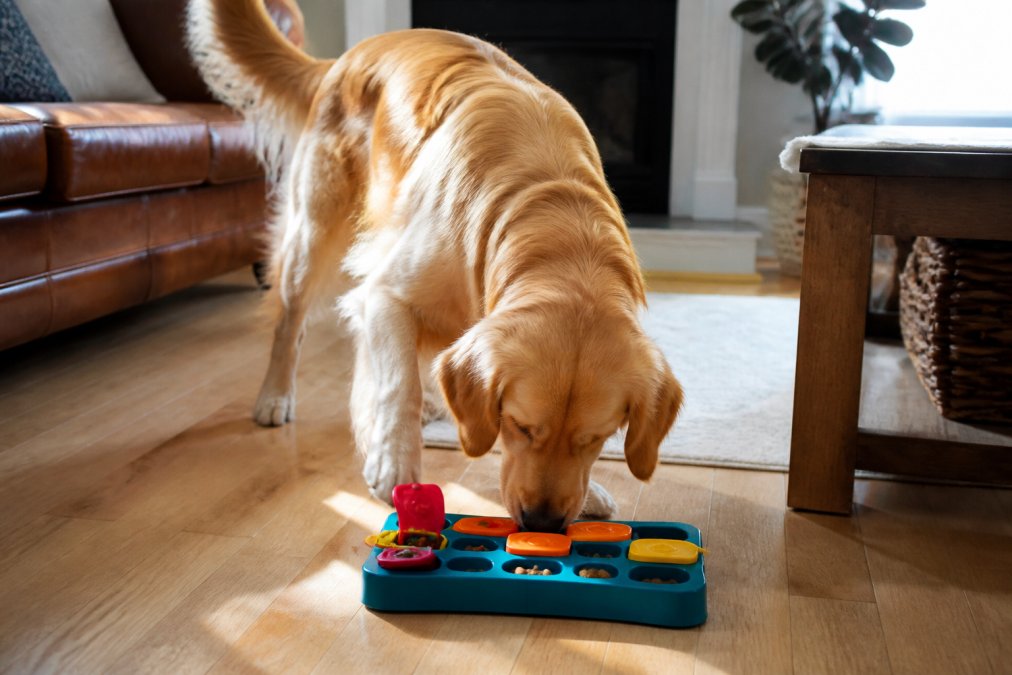
Chewzzle is our top pick because these toys do multiple jobs at once. The interactive puzzle challenges cognitive function while the slow feeder design prevents gulping and bloating. The combination of durable, non-toxic materials with a design rooted in natural foraging behaviors means mental stimulation feels rewarding rather than frustrating, critical for rescue dogs with serious anxiety.
Best for: New puppy owners, rescue dogs with separation anxiety, dogs that gulp food, and owners wanting a single toy covering enrichment and mealtime.
Pros:
- Interactive puzzle challenges boost mental stimulation and focus
- Slow feeder design prevents bloating and gulping
- Crafted from durable, non-toxic materials
- Mimics natural foraging behaviors for genuine calming
- Suitable across life stages
Cons:
- Pricing information is available directly on the Chewzzle website; check there for current options and any bundle deals
2. LickiMat Classic Playdate: Best Lick Mat for Calming
The LickiMat Classic Playdate earns its place because licking is one of the most effective self-soothing behaviors in dogs. Spread it with peanut butter, plain yogurt, or soft puree, and the textured surface forces slow, repetitive licking that releases endorphins and promotes calming behavior. At $9.99, it's the most accessible entry point on this list.
Best for: Dogs experiencing acute anxiety spikes, distraction during grooming or vet visits, and fast eaters.
Pros:
- Licking action releases endorphins, directly reducing anxiety
- Freezer-safe for longer-lasting enrichment
- Made from non-toxic, food-grade TPR
- Supports oral health as a secondary benefit
Cons:
- Not a chew toy; requires supervision with destructive chewers
- Less cognitive challenge than multi-step puzzle toys
3. PAW5 Wooly Snuffle Mat: Best for Scent Work and Foraging
The PAW5 Wooly Snuffle Mat hides kibble or treats within fabric folds, engaging a dog's sense of smell in calm, methodical foraging. At $33.57, it delivers excellent value for dogs needing low-frustration enrichment.
Best for: Dogs of all ages and sizes, especially senior dogs and those finding puzzle toys frustrating.
Pros:
- Reduces anxious behaviors through calm, focused scent work
- Machine washable for easy cleaning
- Made from durable, non-toxic materials
- Works as a slow feeder for kibble
Cons:
- Some dogs try to chew the fabric if not supervised
- May not challenge advanced puzzle-solvers enough
4. West Paw Toppl: Best Freeze-and-Fill for Moderate Chewers
The West Paw Toppl is built from Zogoflex, a proprietary material handling moderate chewing without breaking down. Fill it with kibble and a binder like plain pumpkin, freeze overnight, and you have a long-lasting enrichment toy occupying an anxious dog through a full departure window. Starting at $20.95, it's reasonably priced and dishwasher safe.
Best for: Moderate chewers needing slow feeding and sustained mental stimulation.
Pros:
- Durable Zogoflex material holds up to moderate chewing
- Dishwasher safe for easy cleaning
- Interlocking design with other sizes increases difficulty
- Non-toxic and highly customizable
Cons:
- Not suitable for aggressive chewers unsupervised
- Food can get stuck in crevices if not frozen correctly
5. StarMark Bob-A-Lot: Best Treat-Dispensing Toy for Active Dogs
The StarMark Bob-A-Lot is a treat-dispensing toy with a weighted, anti-slip base that bobs and tilts as the dog interacts with it. Dual chambers hold a full meal, and adjustable openings let you dial in difficulty as your dog's problem-solving skills improve. Starting at $20.00, it's a solid mid-range option for active, food-motivated dogs.
Best for: High-energy dogs needing mental engagement and boredom-busting independent play.
Pros:
- Adjustable difficulty keeps dogs engaged longer
- Durable construction for extended play
- Can hold an entire meal for slow feeding
Cons:
- Some dogs figure it out quickly on the easiest setting
- Can be noisy on hard floors
6. PetSafe Busy Buddy Kibble Nibbler: Best Budget Slow Feeder
The PetSafe Busy Buddy Kibble Nibbler costs just $12.99 and punches above its price point. The patented Treat Meter randomly dispenses treats, keeping the experience unpredictable enough to maintain interest. It's top-rack dishwasher safe, rubber-bumpered for durability, and holds a full meal.
Best for: Dogs that eat too fast, need weight management support, or require a budget-friendly boredom buster.
Pros:
- Promotes slower eating and aids digestion
- Durable rubber bumpers
- Top-rack dishwasher safe
Cons:
- Trimming prongs to adjust treat release is irreversible, so start conservatively
- May not challenge highly intelligent dogs for long
7. Planet Dog Orbee-Tuff Snoop: Best for Boredom-Busting on a Budget
At just $6.50, the Planet Dog Orbee-Tuff Snoop is the most affordable option on this list. Made from Orbee-Tuff TPE material free from BPA, lead, and phthalates, and manufactured in the USA, it's a treat-dispensing puzzle toy with a deep crevice making treat retrieval genuinely challenging.
Best for: Bored dogs needing a rewarding brain teaser at minimal cost.
Pros:
- BPA-free, lead-free, and phthalate-free
- Made in the USA
- Difficulty increases with an additional Orbee Nook insert
- Encourages slower eating
Cons:
- Not a chew toy; requires supervision
- May not challenge advanced puzzle solvers without the Nook insert
Quick Comparison: Puzzle Toys at a Glance
| Toy | Starting Price | Best For | Dishwasher Safe | Difficulty Level |
|---|---|---|---|---|
| Chewzzle | See website | Anxiety, slow feeding, all life stages | Check product listing | Adjustable |
| LickiMat Classic Playdate | $9.99 | Calming, acute anxiety, distraction | Yes | Low |
| PAW5 Wooly Snuffle Mat | $33.57 | Scent work, senior dogs, foraging | Machine washable | Low-Medium |
| West Paw Toppl | $20.95 | Moderate chewers, freeze-and-fill | Yes | Medium |
| StarMark Bob-A-Lot | $20.00 | Active dogs, full-meal dispensing | No | Adjustable |
| PetSafe Kibble Nibbler | $12.99 | Budget slow feeding, fast eaters | Top-rack only | Medium |
| Planet Dog Orbee-Tuff Snoop | $6.50 | Budget boredom-busting, BPA-free | No | Medium |
Benefits of Slow Feeders for Anxious Dogs
Dogs with separation anxiety often also eat too quickly. Both behaviors share a root cause: an inability to self-regulate in the absence of environmental cues. When a dog works for its food, mealtime becomes an enrichment session. According to American Veterinary Medical Association's guidance on canine enrichment, environmental enrichment, including food-based activities, is a recognized component of behavioral wellness. Slow feeders prevent gulping and bloating, reduce anxiety at mealtimes, and build calm, focused engagement that carries into independent play.
How to Use Puzzle Toys for Dog Anxiety: A Step-by-Step Approach
Using puzzle toys effectively requires deliberate, graduated practice to build positive associations between the toy and calm, independent behavior.
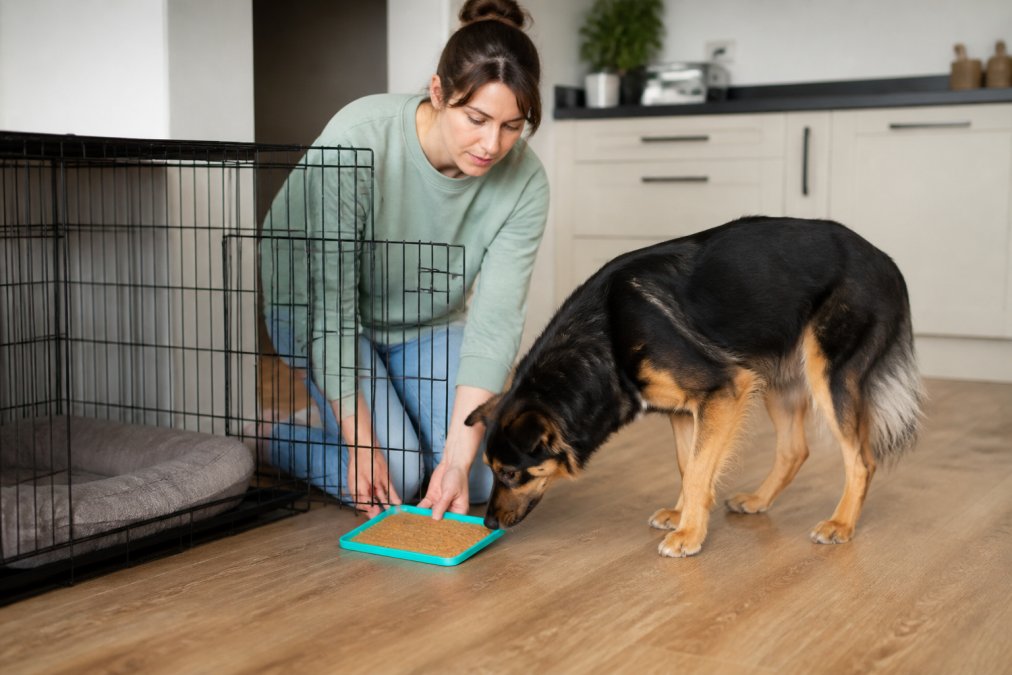
Step 1: Start with the easiest difficulty level. Introduce the toy while you're present and relaxed. Let the dog succeed quickly to build positive reinforcement.
Step 2: Increase duration gradually. Add one to two minutes of independent play time per session over a week.
Step 3: Introduce frozen treats. Frozen treats significantly extend engagement time. Fill and freeze the night before.
Step 4: Raise the difficulty level. Once the dog engages confidently, adjust openings or add layers to increase cognitive challenge.
Step 5: Introduce the toy before departures. Give the toy five to ten minutes before leaving so the dog is already engaged and calm when you exit.
Supervised Play vs. Independent Play: Knowing the Difference
Supervised play is for introducing new toys, testing difficulty levels, and monitoring for destructive chewing. Independent play is the goal, where the dog engages safely without you present. Start with supervised sessions, step out for 30 seconds, return calmly, and extend that window over days. Never leave a dog unsupervised with a toy it hasn't demonstrated it can handle safely.
Desensitization Training: Pairing Toys With Departure Cues
Desensitization training gradually reduces a dog's anxiety response to departure cues like picking up keys or putting on shoes. Pairing these cues with a high-value puzzle toy is one of the most effective behavioral interventions available. Pick up your keys, immediately give the dog its puzzle toy, sit back down. Repeat dozens of times until the dog associates the departure cue with the toy rather than your absence. According to ASPCA's behavioral guidance on separation anxiety, systematic desensitization combined with counter-conditioning is the gold standard for managing separation anxiety.
Which Puzzle Toy Should You Choose?
The right choice depends on your dog's chewing intensity, current anxiety level, and available supervision.
| Your Situation | Best Pick |
|---|---|
| Rescue dog with serious anxiety, all life stages | Chewzzle Interactive Puzzle Toys |
| Need immediate calming during grooming or departures | LickiMat Classic Playdate |
| Senior dog or low-frustration tolerance | PAW5 Wooly Snuffle Mat |
| Moderate chewer who needs freeze-and-fill | West Paw Toppl |
| High-energy dog needing a full-meal dispenser | StarMark Bob-A-Lot |
| Fast eater on a budget | PetSafe Kibble Nibbler |
| Budget-conscious, BPA-free priority | Planet Dog Orbee-Tuff Snoop |
A common mistake is buying the most challenging toy first. Dogs that fail repeatedly don't build confidence, they give up. Start simple, build success, then increase difficulty as problem-solving skills develop.
Managing a dog's separation anxiety takes patience, consistency, and the right tools working together. Enrichment toys alone won't resolve deep-rooted anxiety, but paired with a desensitization protocol, they make a measurable difference in how quickly a dog learns to self-soothe. Chewzzle's range of interactive puzzle toys and slow feeders is built specifically for this purpose, combining durable, non-toxic materials with designs that mimic natural foraging behaviors and promote calming behavior at every meal. Visit Chewzzle to find the right toy for your dog's age, size, and anxiety level, and add it to your cart today.
Frequently Asked Questions
Q: Do puzzle toys actually help dogs with anxiety?
A: Yes, puzzle toys for anxious dogs work by redirecting nervous energy into a focused, rewarding task. The problem-solving required for treat-dispensing and snuffle mat toys engages cognitive function, which competes with anxious behaviors like pacing, whining, and panting. Licking in particular triggers endorphin release, which supports calming behavior. Puzzle toys work best as part of a broader routine that includes consistent departure cues and positive reinforcement, not as a standalone fix.
Q: What are the best enrichment toys for separation anxiety specifically?
A: The most effective enrichment toys for separation anxiety are ones your dog can use independently without getting frustrated. Lick mats loaded with frozen treats, snuffle mats for scent-based foraging, and treat-dispensing toys with adjustable difficulty levels all work well. The key is to introduce the toy before you leave so your dog associates it with a positive experience rather than your departure. Start with easy difficulty levels and increase the challenge gradually as confidence builds.
Q: How do I keep my anxious dog busy while I'm at work?
A: Rotate two or three different toys throughout the week so novelty stays high. Freeze a lick mat or fill a Toppl-style toy the night before to add time and difficulty. Pair toy time with a snuffle mat for scent work, which tires dogs out mentally faster than physical play alone. For dogs with serious separation anxiety, combine puzzle toys with a gradual desensitization routine where you practice short departures and extend them slowly over days and weeks.
Q: Are puzzle toys safe to leave with a dog unsupervised?
A: It depends on the toy type and your dog's chewing habits. Hard treat-dispensing toys made from durable, non-toxic, BPA-free materials are generally safer for unsupervised play than fabric snuffle mats or soft lick mats, which require supervision to prevent chewing and ingestion of material. Always check the manufacturer's guidance on supervised versus independent play. Start by observing your dog with any new toy before leaving them alone with it, and remove it if they show signs of destructive chewing.
Q: What does non-toxic actually mean for dog puzzle toys?
A: Non-toxic means the materials used in the toy do not contain harmful chemicals like BPA, lead, or phthalates that could leach out during chewing or licking. Look for toys made from food-grade materials, natural rubber, or certified-safe TPE or TPR plastics. If a brand does not specify what the toy is made from or how it was tested, that is a reason to look elsewhere.
This article was written using GrandRanker