

10 Engaging Games for High Energy Dogs
Table of Contents
- Why High-Energy Dogs Need the Right Games
- Mental Stimulation for Dogs: Brain Games That Work
- Dog Puzzle Toys for High Energy Dogs: Top Interactive Options
- Physical Play: Fetch, Flirt Poles, and Sprint Games
- How to Tire Out a Hyper Puppy: Training Games That Build Focus
- Safety and Recovery: Protecting Your Dog During High-Impact Play
- Building a Daily Routine for High-Energy Dogs
- Frequently Asked Questions
Last Updated: October 2, 2026
Why High-Energy Dogs Need the Right Games
High-energy dogs need mental engagement as much as physical exercise, which is why games for high energy dogs are essential tools for enrichment. A tired dog is well-behaved, but mental exhaustion matters equally. Without proper enrichment, dogs turn to destructive behaviors: chewing furniture, digging, or excessive barking. This guide covers 10 engaging games for high energy dogs that combine physical play with mental challenges to keep your pup satisfied.
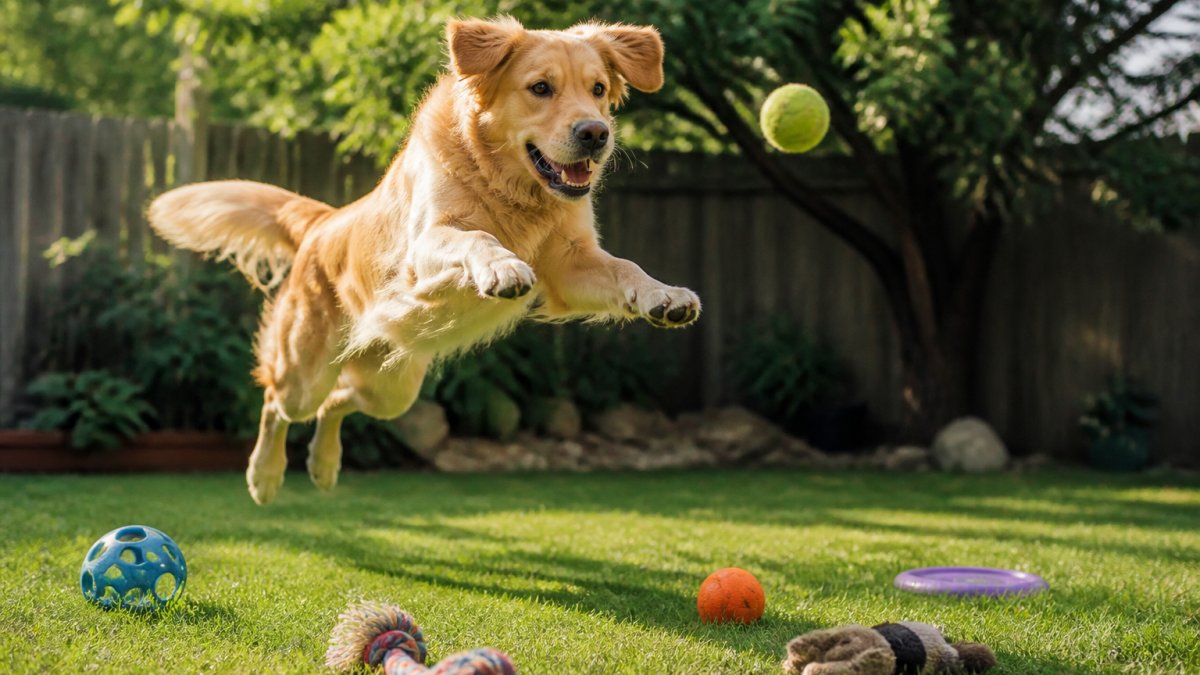
Border Collies, Labradors, Australian Shepherds, and other high-drive breeds were bred to work. They demand brain engagement and physical movement. Without structured outlets, these dogs become anxious, bored, and destructive.
The best approach combines physical exertion with mental problem-solving. A dog that's only physically tired can still be mentally restless. A dog that only solves puzzles might still have excess energy.
Mental Stimulation for Dogs: Brain Games That Work
Mental stimulation is where most dog owners fall short. A long walk isn't enough. Your dog's brain needs active challenges that force decision-making, problem-solving, and focus. Brain games reduce anxiety, slow eating habits, and tire dogs faster than physical exercise alone.
Puzzle Toys and Problem-Solving
Puzzle toys turn feeding time into a game. Instead of inhaling kibble in seconds, your dog figures out how to extract each piece, extending mealtime from minutes to 15-30 minutes of sustained mental work.
The best puzzle toys have adjustable difficulty. Start simple so your dog succeeds quickly and builds confidence, then increase challenge by hiding treats deeper or rearranging compartments. Your dog learns persistence and problem-solving.
Look for durable, non-toxic materials that handle daily use. The Chewzzle ThinkDisc Puzzle Feeder ($19.99) uses sliding paw-shaped covers and a rotating center wheel, forcing dogs through multiple puzzle layers before accessing food.

Hide and Seek Games
Hide and seek taps into your dog's natural hunting instincts while building focus and impulse control. Start indoors with simple versions: hide a treat under a blanket while your dog watches, then give a release command.
Advanced hide and seek involves scent work, hiding treats in boxes or outdoor areas. Your dog learns to focus on scent rather than sight, engaging different neural pathways.
Dog Puzzle Toys for High Energy Dogs: Top Interactive Options
Puzzle toys vary widely. Some dispense treats slowly, others require multiple steps to unlock rewards, and some combine physical and mental challenges. The right choice depends on your dog's chewing intensity, food motivation, and skill level.
Automatic Ball Launchers for Independent Play
Automatic ball launchers let your dog play fetch without you throwing. Dogs drop the ball, it ejects automatically, and they chase and retrieve. This teaches the drop-it command through repetition and reward rather than force.
The Chewzzle Smart Ball Launcher ($74.99) offers three adjustable throw distances, from short (indoor rooms) to long (up to 30 feet in backyards). The non-slip base stays stable on hardwood, tile, and grass.
This tool works best for fetch-motivated dogs who already understand basic retrieval. Puppies still learning to fetch benefit more from the Chewzzle Launch & Learn Puppy Trainer ($69.99), which doesn't require electricity and includes treat-based rewards.

Treat-Dispensing Toys for Mental Engagement
Treat-dispensing toys release food slowly as your dog plays, turning mealtime into enrichment. The Chewzzle TreatDrop Ball ($14.99) is soft silicone that dispenses kibble as your dog nudges and chews it.
The Chewzzle RollFeast Treat Ball ($9.99) works with a rolling mechanism. Your dog pushes it across the floor to access treats. For aggressive chewers, the Chewzzle ChewClean Treat Ball ($9.99) uses natural rubber construction.
Sliding Puzzles and Problem-Solving Feeders
Sliding puzzle feeders require your dog to move buttons, discs, or wheels to reveal hidden food. The Chewzzle PuzzleFeast Sliding Puzzle ($49.99) has sliding buttons covering individual treat compartments. Your dog nudges each button aside to access one treat at a time, naturally pacing fast eaters.
The Chewzzle ThinkDisc Puzzle Feeder ($19.99) combines sliding paw-shaped covers and a rotating center wheel.
| Puzzle Type | Best For | Engagement Duration | Difficulty Level |
|---|---|---|---|
| Treat-dispensing balls | Fast eaters, beginners | 10-20 minutes | Easy to moderate |
| Sliding puzzles | Problem-solvers, experienced dogs | 15-30 minutes | Moderate to hard |
| Rotating wheels | Dogs who like variety, clever breeds | 20-40 minutes | Hard |
| Multi-step puzzles | High-drive dogs, advanced learners | 30-60 minutes | Very hard |
Physical Play: Fetch, Flirt Poles, and Sprint Games
Physical exertion burns energy fast, but the best games combine movement with decision-making. Fetch is the gold standard, triggering prey drive and teaching retrieval.
Flirt poles are toys on a rope or pole that move unpredictably, triggering chase and pounce instincts.
Sprint-and-stop games teach impulse control while building cardiovascular fitness. Call your dog to run at full speed toward you, then ask for a sit or down command.
How to Tire Out a Hyper Puppy: Training Games That Build Focus
Puppies tire quickly but get distracted easily. Training games channel their energy into learning while building focus and impulse control, preventing behavioral problems later.
Impulse Control Training Through Play
Impulse control is the ability to pause, wait, and follow instructions even when excited.
The sit-stay-release game is foundational. Have your puppy sit, wait for 3-5 seconds while you hold a treat, then give a release word and let them take the treat.
Chewzzle SmartBounce Rolling Ball →
The drop-it game builds impulse control around possessions.
The Chewzzle Smart Ball Launcher and Launch & Learn Puppy Trainer both reinforce impulse control naturally.
Scent Work and Nose Games
Scent work is intense mental stimulation. Dogs process the world primarily through smell, so games engaging their nose are deeply satisfying.
Start with simple versions. Hide a treat under one of three cups, shuffle them, and let your puppy find it.
Advanced scent work involves teaching your dog to alert (sit, paw, or bark) when locating a specific scent.
Hide-and-seek games combine scent work with impulse control.
Safety and Recovery: Protecting Your Dog During High-Impact Play
High-energy play carries injury risk, especially for puppies and large breeds.
Puppies shouldn't do repetitive jumping or sprinting until growth plates close (around 12-18 months).
Watch for signs of exhaustion: excessive panting, reluctance to move, or lying down mid-play.
Recovery is essential. After intense play, your dog needs rest.
Rotate activity types daily. Fetch one day, puzzle toys the next, scent work the third.
Building a Daily Routine for High-Energy Dogs
A structured daily routine is the foundation of a calm, focused dog.
A sample routine:
- Morning (7-8 AM): Physical play (20-30 minutes of fetch or flirt pole)
- Mid-morning (10-11 AM): Mental stimulation (puzzle toy or scent work for 15-20 minutes)
- Afternoon (2-3 PM): Training games (impulse control, drop-it, recall for 10-15 minutes)
- Late afternoon (5-6 PM): Physical play (20-30 minutes)
- Evening (8-9 PM): Calm enrichment (treat-dispensing toy while you relax)
This routine totals 90-120 minutes of structured activity daily.
Adjust based on your dog's age, breed, and individual energy level.
The Chewzzle product line supports this routine. Use the SmartBounce Rolling Ball ($19.99) for independent play. Use puzzle toys like the MindMaze ($29.99) or SmartPaws ($39.99) for afternoon mental stimulation. Use treat-dispensing toys like the TreatDrop Ball ($14.99) for evening calm engagement.

| Time of Day | Activity Type | Duration | Example Games |
|---|---|---|---|
| Morning | Physical exertion | 20-30 min | Fetch, flirt pole, sprint-and-stop |
| Mid-morning | Mental stimulation | 15-20 min | Puzzle toys, scent work |
| Afternoon | Training games | 10-15 min | Impulse control, drop-it, recall |
| Late afternoon | Physical play | 20-30 min | Fetch, obstacle courses, chase games |
| Evening | Calm enrichment | 15-30 min | Treat-dispensing toys, slow feeders |
High-energy dogs aren't broken; they're dogs bred to work and need jobs. Games are essential management tools.
Start with games matching your dog's current skill level and energy type.
Frequently Asked Questions
How much playtime do high-energy dogs actually need each day?
High-energy breeds typically need 60-120 minutes of physical activity and mental stimulation daily, split across multiple sessions. The exact amount depends on breed, age, and individual temperament. Puppies and working breeds like Border Collies, Labradors, and Australian Shepherds often need the upper end of this range. Without adequate engagement, these dogs are prone to destructive behaviors, excessive barking, and anxiety. A combination of games for high energy dogs, both physical and mental, works best.
What's the difference between mental stimulation and physical exercise for dogs?
Physical exercise burns energy through movement and exertion, while mental stimulation challenges your dog's problem-solving abilities and focus. Both are essential. A dog that runs for an hour but has no mental engagement may still exhibit boredom-related behaviors. Mental stimulation for dogs through puzzle toys, training games, and scent work engages their brain, promotes calmness, and builds impulse control. Combining both creates a balanced routine that prevents hyperactivity and destructive chewing.
Will puzzle toys actually work for my fast-eating dog, or will she just figure them out immediately?
Most food-motivated dogs do work out puzzle toys within a few sessions, but that's exactly how they're designed to work. The goal isn't to create an impossible challenge, it's to slow down eating and engage the brain. A puzzle that takes 15-20 minutes to empty instead of 2 seconds significantly reduces gulping and bloating. Start with easier dog puzzle toys for high energy dogs and progress to harder ones. Rotating different puzzles keeps the challenge fresh. Even if your dog masters one, the mental engagement from problem-solving and the slower feeding pace provide real benefits.
How can I tell if my puppy is getting enough mental stimulation?
A mentally stimulated puppy shows focused play, settles more easily after activity, and exhibits fewer destructive behaviors like excessive chewing or nipping. Conversely, a bored or under-stimulated puppy may constantly seek attention, destroy toys or furniture, or display anxious behaviors. How to tire out a hyper puppy involves combining physical games with training games that build impulse control and focus. If your puppy still seems restless after play sessions, increase the mental challenge through puzzle toys, scent work, or obedience training rather than just more running.
Are there specific games for different dog breeds?
Yes, breed tendencies matter. Retriever breeds thrive on fetch and ball launchers, herding breeds excel at agility and impulse control games, and scent hounds love nose work and hide-and-seek. High-drive sporting breeds benefit from flirt poles and sprint-and-stop games. Toy breeds can still play games for high energy dogs but may need scaled-down versions. Consider your dog's natural instincts, prey drive, herding impulse, or scenting ability, and choose games that channel those instincts productively. This creates more engagement and prevents frustration.