
Enrichment Ideas for High Energy Dogs
Table of Contents
- What Is Canine Enrichment and Why High-Energy Dogs Need It
- Best Puzzle Toys for Anxious Dogs and Mental Stimulation
- Mental Stimulation Games for Dogs That Build Problem-Solving
- How to Calm a Hyperactive Dog Through Enrichment Rotation
- Physical vs. Mental Enrichment: What Your Dog Actually Needs
- Budget-Friendly and Zero-Cost Enrichment for High-Energy Dogs
- The Cool Down Phase: Settling Your Dog After Play
- Enrichment Ideas for High-Energy Dogs: Final Recommendations
- Frequently Asked Questions
Last Updated: August 31, 2026
What Is Canine Enrichment and Why High-Energy Dogs Need It
Canine enrichment refers to activities, toys, and experiences designed to stimulate a dog's mind and body, encouraging natural behaviors like foraging, problem-solving, and play. For high-energy dogs, enrichment addresses destructive behavior, anxiety, and restlessness that emerge when mental and physical needs aren't met.
High-energy breeds like Border Collies, Labradors, Australian Shepherds, and Jack Russell Terriers were developed to work all day. Without proper outlets, they redirect that energy into destructive behaviors: chewing furniture, digging holes, jumping on people, or developing anxiety-driven habits.
The challenge many pet parents face is understanding that physical exercise alone isn't enough. A high-energy dog can run for an hour and still be restless because their brain hasn't been engaged. Mental stimulation through puzzle solving, scent work, and foraging is equally critical. When both physical and mental enrichment are combined strategically, high-energy dogs become calmer, more focused, and genuinely content.
Best Puzzle Toys for Anxious Dogs and Mental Stimulation
Puzzle toys designed for mental stimulation serve a dual purpose: they slow fast eaters and force dogs to work for their food, mimicking natural foraging behavior. Unlike simple toys that provide momentary entertainment, quality puzzle toys demand problem-solving and persistence.
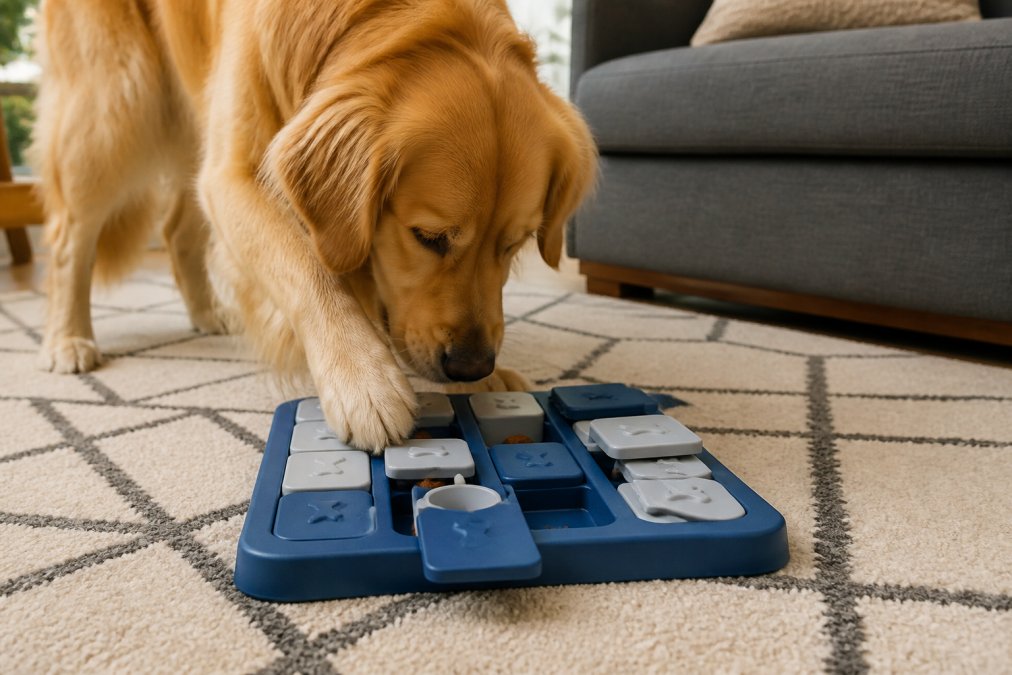
The Chewzzle™ MindMaze IQ Puzzle ($29.99) features multiple hidden compartments requiring different manipulation techniques: sliding, lifting, or nudging. Dogs learn that effort equals reward, and adjustable difficulty increases the challenge as your dog becomes more skilled. This toy works exceptionally well for anxious dogs because focused problem-solving redirects nervous energy into productive behavior.
For dogs who inhale food in seconds, the Chewzzle™ PuzzleFeast Sliding Puzzle ($49.99) is a game-changer. Each button slides to reveal one treat at a time, transforming a portion of kibble into a 10-15 minute engagement session. The non-slip base keeps it stable even when larger dogs push at it with their paws.
Treat-Dispensing Puzzles That Slow Fast Eaters
Fast eating can lead to bloating, gastric dilatation-volvulus (a potentially life-threatening condition), and digestive upset. Treat-dispensing puzzles control the rate at which food becomes available.
The Chewzzle™ TreatDrop Ball ($14.99) is an affordable entry point. Made from soft, textured silicone, it dispenses kibble or small treats as your dog rolls and manipulates it. The textured surface also supports dental health by reducing plaque buildup during play.
For a more challenging experience, the Chewzzle™ ThinkDisc Puzzle Feeder ($19.99) combines sliding covers and a rotating center wheel. Your dog must nudge paw-shaped covers aside to access compartments, then rotate the center section.
Interactive Ball Launchers for Independent Play
Interactive ball launchers automate play and teach dogs to entertain themselves while burning significant energy.
The Chewzzle™ Smart Ball Launcher ($74.99) is designed for small to medium dogs (up to approximately 40 pounds) and features three adjustable throw distances, from short indoor throws to distances up to 9 meters for backyards. USB rechargeable and built from non-toxic ABS plastic with a non-slip base, it works on hardwood, tile, grass, and patios. The automatic reward cycle teaches focus and reinforces the "drop it" command through natural, rewarding repetition.
Mental Stimulation Games for Dogs That Build Problem-Solving
Problem-solving games move beyond simple fetch or tug-of-war into activities that require your dog to think, plan, and execute strategies. These games build cognitive function and provide the kind of mental fatigue that physical exercise alone cannot achieve.
Scent Work and Foraging Activities
Scent work taps into one of the dog's most powerful instincts: their ability to detect and track odors. A dog's sense of smell is 10,000 to 100,000 times more sensitive than a human's, making scent-based activities deeply rewarding and mentally engaging.
The Chewzzle™ SnuffleSphere Foraging Ball ($29.99) mimics natural foraging by hiding treats inside a soft, plush ball with multiple crevices and folds. Dogs use their nose and paws to search, sniff, and extract treats. This toy is particularly valuable for anxious dogs because the repetitive sniffing behavior has a calming effect.

To expand scent work beyond commercial toys, try creating DIY foraging activities: hide treats in a muffin tin covered with tennis balls, scatter kibble in a loosely rolled towel, or use a snuffle mat during meals. Scent work can be practiced indoors during bad weather and requires minimal physical space, making it ideal for apartment dogs or those with mobility limitations.
Hide and Seek and Scatter Feeding Routines
Hide and seek transforms your home into a problem-solving environment. Start by hiding treats in easy-to-find locations and use a verbal cue like "Find it!" As your dog improves, increase difficulty by hiding treats under cushions or behind doors.
Scatter feeding, spreading kibble across the floor or yard instead of serving it in a bowl, mimics natural foraging patterns. Dogs must search, sniff, and hunt for each piece, turning mealtime into a 15-20 minute engagement activity. This approach works especially well for dogs who eat too quickly and for those who need mental stimulation but have physical limitations.
How to Calm a Hyperactive Dog Through Enrichment Rotation
The key to managing a hyperactive dog is strategically rotating enrichment activities to maintain novelty and prevent boredom while building the dog's capacity to settle independently.
Enrichment rotation works by introducing different activities on a schedule, so your dog doesn't habituate to any single toy or game. Create a rotation schedule:
- Monday/Thursday: Puzzle toys (MindMaze, PuzzleFeast)
- Tuesday/Friday: Scent work and foraging (SnuffleSphere, DIY activities)
- Wednesday/Saturday: Interactive play (ball launcher, hide and seek)
- Sunday: Rest and settling activities
Rotate toys weekly or bi-weekly. Store toys out of sight when not in active rotation; when you introduce a "new" toy that's actually been stored for two weeks, it feels fresh and exciting.

Physical vs. Mental Enrichment: What Your Dog Actually Needs
Physical exercise and mental stimulation are complementary, not interchangeable.
Physical enrichment includes running, fetch, swimming, agility work, and any activity that increases heart rate and uses large muscle groups. Physical exercise burns energy and improves cardiovascular health, but it doesn't necessarily tire a dog's mind.
Mental enrichment includes puzzle toys, scent work, training, problem-solving games, and any activity that requires thinking, decision-making, or focus. Mental enrichment tires the brain and creates the kind of deep, restorative rest that physical exercise alone cannot achieve.
The ideal enrichment protocol combines both. A high-energy dog benefits from 30-60 minutes of physical exercise daily, 20-30 minutes of mental enrichment daily, and settling time to practice calm behavior and independence. Research from veterinary behaviorists shows that dogs who receive both physical and mental enrichment exhibit fewer behavioral problems, lower anxiety levels, and better overall well-being.
Budget-Friendly and Zero-Cost Enrichment for High-Energy Dogs
High-quality enrichment doesn't require expensive purchases. Many of the most effective enrichment activities cost nothing and use materials you already have at home.
Zero-cost enrichment ideas: scatter feeding, towel rolls with hidden treats, muffin tin puzzles, cardboard box foraging, DIY snuffle mats, hide and seek, nose work games, and tug games with old towels.
Low-cost enrichment: The Chewzzle™ ChewClean Treat Ball ($9.99) is one of the most affordable options and works for dogs of all sizes. The Chewzzle™ SmartBounce Rolling Ball ($19.99) offers automatic rolling action that encourages chase and play instincts without requiring owner participation.

Budget-conscious owners should prioritize one quality puzzle toy and supplement with DIY activities. This approach provides consistent enrichment without overwhelming your budget.
The Cool Down Phase: Settling Your Dog After Play
Many owners focus entirely on providing enrichment and exercise but neglect the equally important skill of teaching dogs to settle and calm down after activity. This creates dogs that are stimulated but unable to transition to rest, leading to continued hyperactivity and anxiety.

The cool down phase is the transition period after enrichment or exercise where your dog learns to decompress, lower their arousal level, and settle independently.
Cool down protocol:
- End enrichment or exercise activity
- Provide a calming activity (lick mat, chew toy) for 10-15 minutes
- Guide your dog to their resting area (bed, crate, designated space)
- Reward calm behavior with quiet praise and treats
- Practice this sequence daily until settling becomes automatic
Lick mats, where wet food, peanut butter, or yogurt can be spread, are exceptionally valuable for cool down. The repetitive licking action has a calming, almost meditative effect on dogs. Freeze lick mats for extended engagement during cool down periods.
Without guidance during the transition, dogs often remain in a heightened arousal state and resume destructive or anxious behaviors. The cool down phase teaches your dog that activity is followed by rest, creating a healthy cycle.
| Enrichment Type | Best For | Duration | Frequency | Settling Time After |
|---|---|---|---|---|
| Puzzle toys | Mental stimulation, fast eaters | 10-20 minutes | Daily | 5-10 minutes |
| Scent work | Anxious dogs, brain engagement | 15-30 minutes | 3-4x weekly | 10-15 minutes |
| Ball launcher | High-energy dogs, independent play | 20-30 minutes | Daily | 10-15 minutes |
| Hide and seek | Problem-solving, engagement | 10-15 minutes | 2-3x weekly | 5-10 minutes |
| Scatter feeding | Fast eaters, foraging behavior | 5-10 minutes | Daily | 2-5 minutes |
| Lick mats | Calming, cool down | 10-15 minutes | Post-activity | N/A (settling tool) |
Enrichment Ideas for High-Energy Dogs: Final Recommendations
High-energy dogs thrive when their physical and mental needs are met through a structured enrichment program. The most effective approach combines multiple enrichment types, rotates activities to prevent boredom, and includes dedicated settling time to build calm behavior.
Start by assessing your dog's primary needs. Is your dog destructive because of boredom, anxiety, or lack of physical exercise? Is your dog a fast eater who needs to slow down? Once you've identified the core need, select enrichment activities that directly address it.
For most high-energy dogs, the ideal weekly enrichment program includes 1-2 puzzle toy sessions, 2-3 scent work or foraging activities, 3-4 physical exercise sessions, daily cool down practice with settling activities, and rotation of toys and activities to maintain novelty.
Invest in one or two quality puzzle toys from Chewzzle that match your dog's size and motivation level. Supplement with DIY activities and budget-friendly options. Consistency matters far more than expense; a dog that receives daily enrichment with affordable toys will be better behaved than a dog with expensive toys used sporadically.
According to the American Kennel Club's guidance on canine behavior, dogs that receive adequate mental and physical enrichment show measurably lower stress levels and fewer behavioral problems. Research on canine cognition from UC Davis demonstrates that puzzle toys and scent work activities activate the same brain regions associated with reward and learning in dogs, making enrichment not just entertaining but neurologically beneficial.
Your high-energy dog isn't broken or defective; they simply need the right outlet for their energy and intelligence. With the right enrichment ideas for high energy dogs, you'll unlock the best version of your pet.
High-energy dogs don't need less engagement, they need smarter engagement. Chewzzle's puzzle toys and interactive enrichment tools are designed specifically to channel that energy into mental stimulation and problem-solving. The Chewzzle™ MindMaze IQ Puzzle, PuzzleFeast Sliding Puzzle, and Smart Ball Launcher give you the tools to build a structured enrichment program that transforms behavior and strengthens your bond with your dog. Start with one quality puzzle toy, add rotating activities, and watch your hyperactive dog become a calm, focused, and genuinely content companion. Add to cart and begin your enrichment journey today.
Frequently Asked Questions
How much time should I spend on enrichment ideas for high energy dogs each day?
High-energy dogs typically benefit from 30-60 minutes of combined physical exercise and mental enrichment daily, split across multiple sessions. Short 10-15 minute puzzle toy sessions throughout the day prevent boredom better than one long session. The key is consistency and rotation, using different enrichment activities keeps your dog engaged without habituation. Most owners find that combining a 20-30 minute walk or fetch session with 20-30 minutes of puzzle toys or scent work addresses their dog's needs effectively.
Can mental stimulation games for dogs actually tire them out as much as physical exercise?
Yes. Mental enrichment can tire dogs as effectively as physical exercise, sometimes more so. Problem-solving activities activate cognitive function and use significant mental energy. Many high-energy dogs who receive only physical exercise remain restless because their minds aren't engaged. The Chewzzle MindMaze IQ Puzzle and PuzzleFeast Sliding Puzzle are designed to provide that cognitive challenge. Combining both types, a walk plus a puzzle toy, addresses your dog's complete enrichment needs and often reduces destructive behavior more effectively than exercise alone.
What should I do if my dog ignores puzzle toys or enrichment activities?
Start with high-value rewards. Most dogs respond better when you use treats they genuinely love inside the puzzle. Begin with easier puzzles or partially open compartments so your dog experiences early success. The Chewzzle SnuffleSphere Foraging Ball is a soft, low-pressure option that mimics natural foraging without complex mechanics. If your dog still shows no interest, try scatter feeding treats on the floor first to build the sniffing habit, then progress to puzzle toys. Some dogs need multiple exposures before engagement clicks, patience and positive association matter more than immediate success.
Are Chewzzle puzzle toys safe for aggressive chewers, and how do I know they're non-toxic?
Chewzzle products are made from durable, non-toxic, BPA-free materials specifically chosen for safety. The ChewClean Treat Ball uses natural rubber designed for aggressive chewers, while the MindMaze and SmartPaws puzzles use reinforced plastic rated for heavy use. All materials are tested for pet safety and free from harmful chemicals. That said, supervise your dog during initial sessions, especially if they have a history of destroying toys. If your dog is an extreme chewer who swallows pieces, puzzle toys work best under supervision or as part of structured play rather than unsupervised access.
How do I create enrichment for multiple high-energy dogs without spending a fortune?
Rotate toys and activities to extend their novelty. A small collection of Chewzzle toys used on a schedule, puzzle toys Monday and Wednesday, ball launchers Tuesday and Thursday, keeps each feel fresh. Combine purchased items with free options: scatter feeding kibble outdoors, hide-and-seek games, sniff walks, and DIY puzzle setups (treats hidden in towel rolls or cardboard boxes). For multi-dog households, provide separate enrichment stations so dogs don't compete, and supervise interactions to prevent resource guarding. This balanced approach keeps costs reasonable while meeting both dogs' needs.