

7 Ways to Improve Dog Gut Health Naturally
Table of Contents
- 1. Introduce a Species-Appropriate Whole Food Diet
- 2. Use Slow Feeders to Support Healthy Digestion
- 3. Add Fiber-Rich Foods and Prebiotics
- 4. Incorporate Probiotics and Postbiotics
- 5. Recognize Signs of Poor Gut Health in Dogs
- 6. Manage Stress and Anxiety for Better Digestion
- 7. Ensure Proper Hydration and Add Bone Broth
- Improve Dog Gut Health: Common Mistakes to Avoid
- Frequently Asked Questions
Last Updated: September 28, 2026
1. Introduce a Species-Appropriate Whole Food Diet
A species-appropriate whole food diet forms the foundation to improve dog gut health, providing whole proteins, healthy fats, and nutrient-dense vegetables rather than processed kibble loaded with fillers and by-products.
Whole foods support better nutrient absorption and reduce inflammation. Dogs' digestive systems evolved to process meat-based proteins, organ meats, and bone content efficiently, producing healthier stools and better energy levels.
Transitioning to whole foods means introducing real meat, bone broth, organ meats like liver and kidney, and fresh vegetables. Many owners report improved coat quality, stable energy, and resolved digestive issues within weeks.
Rotate protein sources (chicken, beef, fish, lamb) to prevent sensitivities and include organ meats twice weekly for concentrated vitamins and minerals that support the gastrointestinal tract.
2. Use Slow Feeders to Support Healthy Digestion
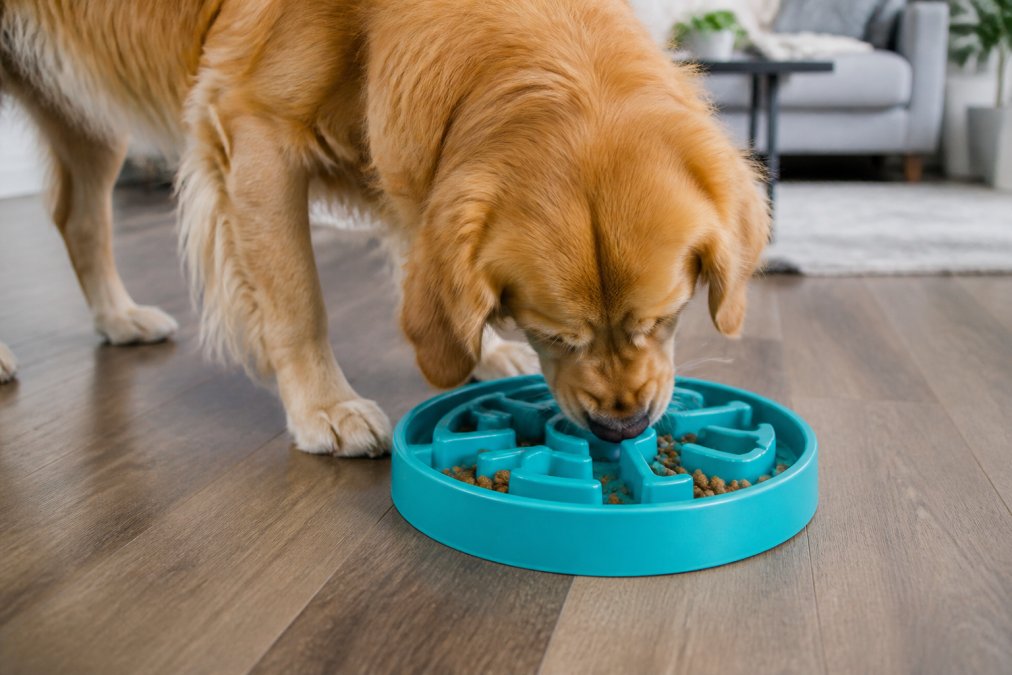
Fast eating causes bloating, gas, and poor nutrient absorption. Slow feeders force your dog to work for their meal, mimicking natural foraging behavior and preventing these issues.
Puzzle feeders extend mealtime to 10-15 minutes, allowing digestive enzymes to work properly and giving your dog's brain time to register fullness signals.
The Chewzzle ThinkDisc Puzzle Feeder addresses this directly with paw-shaped sliding covers and a turning center wheel that hides food in compartments. Your dog has to solve the puzzle to access each piece of kibble, naturally slowing intake and turning mealtime into mental enrichment. The non-slip base keeps it stable while your dog nudges and paws at it.

For dogs who are extremely fast eaters, the Chewzzle PuzzleFeast Sliding Puzzle takes the concept further. Each button slides to reveal one treat at a time, creating a genuine puzzle-solving experience. Food-motivated dogs work out the mechanism within minutes, but the single-treat-at-a-time design means a full meal takes several minutes instead of seconds.
3. Add Fiber-Rich Foods and Prebiotics
Fiber feeds beneficial bacteria in your dog's microbiome, creating an environment where good bacteria thrive. Without adequate fiber, inflammation increases throughout the gastrointestinal tract.
Pumpkin and sweet potato are accessible fiber sources that promote healthy stool quality. Add a tablespoon or two daily; many owners notice improved digestion within days.
Prebiotics feed beneficial bacteria; probiotics are the bacteria themselves. Good prebiotic sources include chicory root, inulin, and certain vegetables that reach the colon and strengthen bacterial balance.
Vegetables like carrots, broccoli, and green beans add fiber and antioxidants, supporting digestive health and creating an environment where beneficial bacteria flourish.
When introducing fiber-rich foods, go slowly. Too much fiber too quickly can cause temporary bloating or loose stool as your dog's microbiome adjusts. Start with small amounts and increase over two weeks.
4. Incorporate Probiotics and Postbiotics
Probiotics introduce live beneficial bacteria that colonize the gastrointestinal tract and compete with pathogens. A healthy bacterial balance supports nutrient absorption, reduces inflammation, and strengthens the intestinal barrier.
Quality matters more than quantity with probiotics. Look for strains specifically researched for canine health, such as Lactobacillus and Bifidobacterium species. Avoid generic probiotics designed for humans, as they may not survive canine stomach acid or colonize effectively in a dog's digestive system.
Postbiotics are metabolic byproducts of probiotics, including short-chain fatty acids like butyrate that feed intestinal cells. They're more stable than probiotics and increasingly recognized as more effective for maintaining gut health.
Fermented foods like plain kefir, sauerkraut, and kimchi contain both probiotics and postbiotics. Start with a teaspoon added to meals and monitor for digestive changes before increasing.
The combination of prebiotics (fiber), probiotics (bacteria), and postbiotics (bacterial byproducts) creates the ideal environment for a balanced microbiome. This three-pronged approach is far more effective than supplementing with probiotics alone.
5. Recognize Signs of Poor Gut Health in Dogs
Poor gut health manifests beyond obvious digestive upset, affecting mood, energy, and immune function. Recognizing these signs helps you intervene early.
Loose or inconsistent stool indicates gut inflammation. Healthy stool should be firm, well-formed, and consistent in color.
Chewzzle ThinkDisc Puzzle Feeder →
Excessive gas, bloating, or stomach gurgling indicates bacterial imbalance. Your dog may seem uncomfortable after meals or develop food aversion when meals cause discomfort.
Skin problems often trace back to gut health. A compromised gastrointestinal barrier allows pathogens to enter the bloodstream, triggering itching, rashes, or ear infections.
Behavioral changes signal digestive distress. Dogs with poor gut health often display anxiety, reactivity, or depression due to the gut-brain axis connection.
Poor coat quality, lethargy, and frequent illness suggest nutrient malabsorption. When the intestinal lining is damaged or inflamed, your dog can't extract full nutrition from food, even if the diet is excellent. This leads to dull fur, low energy, and a weakened immune system.
6. Manage Stress and Anxiety for Better Digestion
The gut-brain axis is a bidirectional communication system where stress impacts digestion and poor gut health increases anxiety. Breaking this cycle requires addressing both sides simultaneously.
Chronic stress suppresses beneficial bacteria and promotes harmful pathogens. Stress hormones alter the intestinal barrier, allowing pathogens to cross into the bloodstream and create inflammation.
Environmental enrichment reduces stress significantly. Interactive puzzle toys engage your dog's brain and provide healthy outlets for natural foraging instincts, reducing cortisol levels and supporting digestive health.
Routine and predictability matter enormously. Dogs with consistent feeding times, exercise schedules, and sleep patterns have better digestion than those with chaotic routines. Establish set times for meals, walks, and play. Predictability reduces the nervous system activation that interferes with digestion.
Physical exercise is a powerful stress reducer. Daily walks, play sessions, and running reduce anxiety and promote healthy digestion. Exercise stimulates the parasympathetic nervous system, which activates the "rest and digest" response. A dog that's exercised regularly shows better stool quality and fewer digestive complaints.
Some dogs benefit from calming supplements like L-theanine or adaptogenic herbs, but these should complement, not replace, environmental enrichment and exercise. Talk to your veterinarian before adding supplements.
7. Ensure Proper Hydration and Add Bone Broth
Hydration is fundamental to digestive health. Water supports nutrient absorption, moves food through the gastrointestinal tract, and maintains healthy stool consistency.
Most dogs don't drink enough water, especially if fed dry kibble. Fresh, clean water should be available at all times; some dogs drink more from fountains or multiple locations.
Bone broth is a nutrient-dense addition that supports digestive health directly. Made by simmering bones and connective tissue for 12-24 hours, bone broth contains collagen, gelatin, amino acids, and minerals that strengthen the intestinal barrier. The gelatin heals damaged intestinal lining and reduces inflammation. Collagen supports the structural integrity of the gastrointestinal tract.
Adding a quarter to half cup of bone broth to meals provides immediate digestive support. Use unsalted, unsweetened bone broth with no added garlic or onions, which are toxic to dogs. Many dogs find meals more palatable when bone broth is added, increasing overall food intake and hydration simultaneously.
The amino acids in bone broth, particularly glutamine and glycine, directly repair intestinal damage.
Improve Dog Gut Health: Common Mistakes to Avoid
The most damaging mistake is changing diets too quickly. Introducing new foods abruptly overwhelms your dog's digestive system and microbiome. The bacteria in your dog's gut need time to adjust to new food sources. Rapid transitions cause bloating, loose stool, and vomiting. Always transition over 7-10 days, gradually mixing increasing amounts of new food with the old diet.
| Common Mistake | Why It Damages Digestion | Solution |
|---|---|---|
| Rapid diet changes | Overwhelms microbiome and digestive enzymes | Transition over 7-10 days |
| Probiotics without diet change | Bacteria cannot establish without proper food | Combine probiotics with whole food diet |
| Ignoring stress and anxiety | Stress hormones suppress beneficial bacteria | Add enrichment toys and exercise |
| Overfeeding portions | Overwhelms digestive capacity | Feed appropriate portions for age/activity |
| Inconsistent feeding times | Disrupts digestive rhythm and predictability | Establish set feeding schedule |
| Introducing too many new foods | Cannot identify which foods cause problems | Add one new food per week |
| Feeding toxic foods | Direct damage to digestive and other systems | Eliminate chocolate, grapes, onions, xylitol |
Frequently Asked Questions
How do I restore my dog's gut health naturally?
Restore your dog's gut health by combining whole foods, probiotics, and slow feeding practices. Add fiber-rich vegetables like pumpkin and sweet potato, introduce quality probiotics to support healthy bacteria, and reduce eating speed with puzzle feeders to improve nutrient absorption. Manage stress through exercise and play, ensure adequate hydration, and transition foods gradually over 7-10 days. Most dogs show improvement in stool quality and energy within 2-4 weeks of consistent dietary changes.
What are the benefits of slow feeders for digestion?
Slow feeders extend meal time from seconds to minutes, allowing your dog's digestive system to process food properly. By pacing food intake, they reduce bloating, gulping, and gastrointestinal distress. Slower eating also improves nutrient absorption and gives your dog's brain time to register fullness, preventing overeating. Puzzle feeders like the Chewzzle PuzzleFeast ($49.99) add mental stimulation while supporting digestive health, making them especially beneficial for fast eaters and anxious dogs.
What are signs of poor gut health in dogs?
Poor gut health in dogs shows up as chronic diarrhea, constipation, or inconsistent stool quality. Watch for excessive gas, bloating, vomiting, or loss of appetite. Dogs with compromised microbiomes often display itchy skin, a dull coat, low energy, and increased susceptibility to infections. Behavioral signs include anxiety, restlessness, or food sensitivities that weren't present before. If these symptoms persist beyond a few days, consult your veterinarian to rule out underlying conditions.
Is yogurt good for a dog's gut?
Plain, unsweetened yogurt with live cultures can support your dog's gut flora, but it's not a complete probiotic solution. A small spoonful occasionally provides some beneficial bacteria, but the amount is minimal compared to targeted canine probiotics. Look for dog-specific probiotic supplements formulated for their digestive system, which contain strains that survive stomach acid better than human yogurt cultures. Always introduce new foods gradually and choose products without artificial sweeteners or added sugar.