

Buy Interactive Dog Puzzle Feeders: 8 Best Picks for 2026
Table of Contents
- Quick Comparison: 8 Interactive Dog Puzzle Feeders
- How to Choose the Right Puzzle Feeder for Your Dog
- Chewzzle ThinkDisc Puzzle Feeder: Best First Puzzle for Small and Medium Dogs
- Chewzzle PuzzleFeast Sliding Puzzle: Best for Fast Eaters Who Gulp
- Chewzzle MindMaze IQ Puzzle: Best Adjustable Difficulty for Smart Dogs
- Chewzzle SmartPaws Interactive Puzzle: Best for Puppies in Training
- Chewzzle SnuffleSphere Foraging Ball: Best for Anxious Rescues
- Chewzzle TreatDrop Ball: Best Dental Chew and Slow Feeder Combo
- Chewzzle RollFeast Treat Ball: Best Budget Enrichment for Small and Medium Dogs
- Chewzzle ChewClean Treat Ball: Best for Aggressive Chewers
- How to Use Puzzle Feeders for Mental Stimulation
- How Long Should a Dog Spend on a Puzzle Feeder?
- Durable Puzzle Feeders for Aggressive Chewers
- Frequently Asked Questions
Last Updated: September 27, 2026
Quick Comparison: 8 Interactive Dog Puzzle Feeders
The Chewzzle lineup of interactive dog puzzle feeders covers every eating style and energy level, from a $9.99 treat ball to a $49.99 sliding board. This guide breaks down our options by price, difficulty, and best use case.
Dogs that inhale food swallow air with every bite, and that swallowed air is a leading driver of bloat, which can turn serious within hours. Puzzle feeders spread a meal across minutes of sniffing, nudging, and problem-solving instead of seconds of gulping, and give high-energy dogs a job to do, often the difference between a calm afternoon and a chewed-up couch cushion.
Below, we'll show you how to pick the right feeder, then walk through each Chewzzle option.
| Product | Price | Best For | Difficulty |
|---|---|---|---|
| ThinkDisc Puzzle Feeder | $19.99 | First puzzle, small/medium dogs | Beginner |
| PuzzleFeast Sliding Puzzle | $49.99 | Fast eaters who gulp | Intermediate |
| MindMaze IQ Puzzle | $29.99 | Smart dogs needing a challenge | Adjustable |
| SmartPaws Interactive Puzzle | $39.99 | Puppies in training | Beginner to intermediate |
| SnuffleSphere Foraging Ball | $29.99 | Anxious rescues | Beginner |
| TreatDrop Ball | $14.99 | Dental chew plus slow feeder | Beginner |
| RollFeast Treat Ball | $9.99 | Budget enrichment, small/medium | Beginner |
| ChewClean Treat Ball | $9.99 | Aggressive chewers | Beginner |
How to Choose the Right Puzzle Feeder for Your Dog
The right puzzle feeder matches your dog's eating speed, body size, and problem-solving confidence. Getting that match wrong is the most common reason a puzzle gets ignored after day one.

Match the Puzzle Type to Your Dog's Eating Style
A dog that clears a bowl in under a minute needs a feeder that releases food slowly, one piece at a time. A reasonable eater benefits more from a foraging-style toy that stretches mealtime through sniffing and searching. Puppies and anxious dogs do best with lower barriers to entry, since a puzzle that's too hard teaches them to walk away.
A common mistake is buying the hardest puzzle first. Start easy, let your dog win, then increase difficulty once they're solving it in under a minute.
Size, Materials, and Safety Checks
Look for pet-safe, non-toxic materials and a non-slip base, which keeps the toy planted on tile and hardwood instead of skating across the room. Small and medium dogs handle recessed-compartment designs well; larger dogs use a paw rather than a nose, so sturdier construction matters more. Supervise the first few sessions, and retire any toy that develops cracks or loose pieces.
Chewzzle ThinkDisc Puzzle Feeder: Best First Puzzle for Small and Medium Dogs
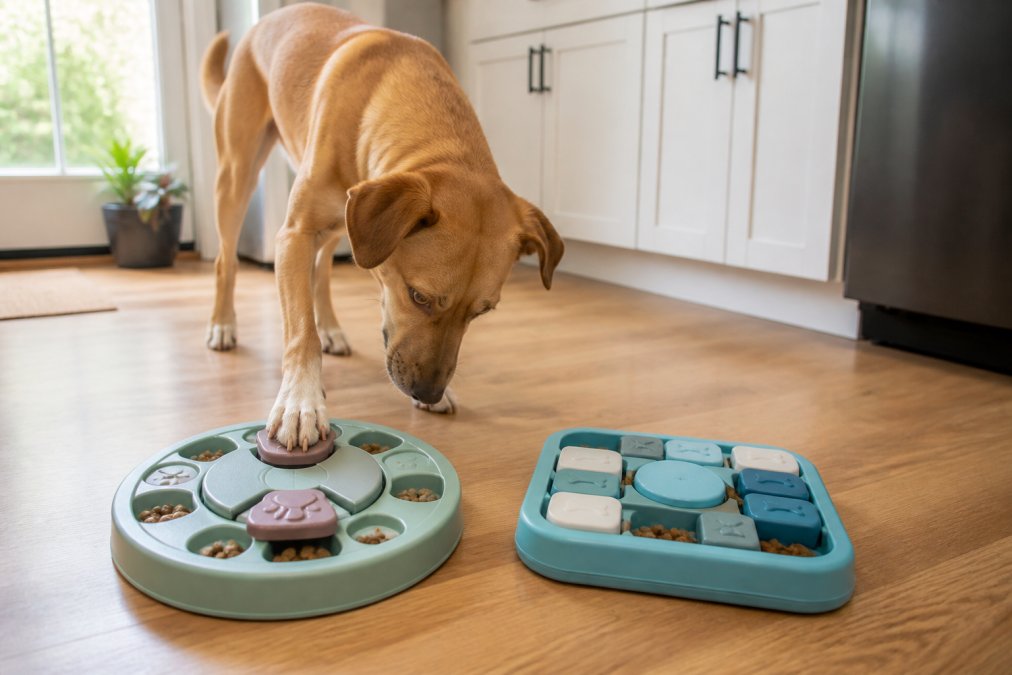
The ThinkDisc is an easy entry point in the Chewzzle lineup at $19.99, and a great option for a first-time puzzle dog. Kibble goes into recessed compartments and shallow troughs around the rim, then paw-shaped sliding covers and a turning center wheel hide it away. Your dog nudges a cover aside, finds food, and learns the game in one session.
The rubberized base keeps it planted while your dog pushes at it, and it rinses clean under the tap. It's sized for small and medium dogs and works just as well for a curious cat. Move the food between compartments so it doesn't become routine.
Chewzzle PuzzleFeast Sliding Puzzle: Best for Fast Eaters Who Gulp
For the Golden Retriever who inhales dinner in two seconds, the PuzzleFeast is the answer, the most thorough slow feeder Chewzzle makes at $49.99. Each treat sits under its own sliding button, and your dog must nose or paw one aside before moving to the next. Only one treat is uncovered at a time, so nothing gets inhaled in a single gulp.
Load it with normal kibble and the same food takes several minutes of thinking instead of seconds of swallowing. The non-slip base holds on tile and hardwood.
Chewzzle MindMaze IQ Puzzle: Best Adjustable Difficulty for Smart Dogs
Smart dogs burn through easy puzzles and get bored, exactly the problem the MindMaze solves at $29.99. You vary the placement of treats to change the challenge, so the same toy stays fresh for beginners and clever pups alike. It dispenses small treats or kibble as your dog works out each hidden reward, and it's built from non-toxic, BPA-free plastic that's easy to clean.
Chewzzle SmartPaws Interactive Puzzle: Best for Puppies in Training
Puppies need an outlet for excess energy before they redirect it into your baseboards. The SmartPaws, at $39.99, is built for that: treat-based problem-solving that channels chewing and restlessness into positive behavior. It's designed for obedience training and redirecting chewing habits, with scalable difficulty for small pups and large breeds alike.
Chewzzle ThinkDisc Puzzle Feeder →
Chewzzle SnuffleSphere Foraging Ball: Best for Anxious Rescues
Rescue dogs with separation anxiety often settle faster with sniffing work than any other kind of play. The SnuffleSphere, at $29.99, mimics the instinct to search and explore for hidden treats, and that foraging behavior is naturally calming for a stressed dog. It's soft plush fleece with non-toxic TPR, gentle on mouths and paws.
Chewzzle TreatDrop Ball: Best Dental Chew and Slow Feeder Combo
Two jobs in one toy: the TreatDrop Ball, at $14.99, dispenses kibble as your dog plays while its textured silicone works against plaque buildup.
Chewzzle RollFeast Treat Ball: Best Budget Enrichment for Small and Medium Dogs
At $9.99, the RollFeast is the cheapest way to test whether your dog takes to puzzle feeding at all. Your dog rolls or nudges it, treats dispense, and mealtime becomes a puzzle-solving activity. It fits most dry kibble and treats up to 0.59 x 0.91 inches, and it's made from non-toxic, chemical-free plastic.
Chewzzle ChewClean Treat Ball: Best for Aggressive Chewers
Natural rubber and a 5-centimeter diameter make the ChewClean the sturdiest option in this lineup at $9.99. It's built for aggressive chewers, with textured rubber that cleans teeth and massages gums while your dog works treats out of the grooves.
How to Use Puzzle Feeders for Mental Stimulation
Using a puzzle feeder well comes down to three habits: start easy, rotate toys, and keep sessions short. A dog that solves the same puzzle the same way every day stops getting the mental benefit, so change the food placement and swap toys between meals.
How Long Should a Dog Spend on a Puzzle Feeder?
A well-matched puzzle feeder should occupy your dog for five to fifteen minutes per session. Beginners often finish in three to five minutes, while dogs working a harder puzzle can stay engaged for twenty minutes or more.
Durable Puzzle Feeders for Aggressive Chewers
Durability comes down to material. Natural rubber outlasts softer plastics and TPR for dogs that chew hard, which is why the ChewClean Treat Ball is the pick for aggressive chewers here. Non-toxic, BPA-free plastic works well for moderate chewers who solve puzzles rather than destroy them.
A few habits extend any toy's life:
- Check for cracks and loose pieces after every session
- Rinse food residue out promptly, since dried kibble attracts chewing
- Rotate toys so no single one takes constant abuse
- Match the toy's material to your dog's chewing style, not their size
Frequently Asked Questions
Are puzzle feeders good for dogs?
They give dogs a job to do at mealtime instead of swallowing a bowl in seconds. Interactive dog puzzle feeders slow eating, which supports digestion and may reduce gulping and bloat risk in fast eaters. They also provide mental stimulation and enrichment, easing boredom and destructive chewing. Food-motivated dogs usually take to them quickly, and adjustable difficulty keeps the challenge fresh over time.
What is the best dog puzzle feeder for fast eaters?
The Chewzzle PuzzleFeast Sliding Puzzle ($49.99) is built for this. Each sliding button hides one treat, so a dog works across the board one piece at a time rather than inhaling a full bowl. Load it with a portion of normal kibble and the same meal takes several minutes. The Chewzzle ThinkDisc Puzzle Feeder ($19.99) also paces food with sliding covers and a turning center wheel.
How long should a dog spend on a puzzle feeder?
Most dogs finish a loaded puzzle in five to fifteen minutes, depending on difficulty and how hungry they are. If your dog solves it in under two minutes, raise the difficulty by moving food to harder compartments or choosing a model with adjustable difficulty, like the Chewzzle MindMaze IQ Puzzle. If a session runs past twenty minutes and your dog walks away, lower the challenge.
Can puzzle feeders help prevent bloat in dogs?
They can help by slowing how fast food goes in. Dogs that gulp air while eating quickly are at higher risk of bloating and digestive upset, and a puzzle feeder paces kibble out a few pieces at a time. The Chewzzle SnuffleSphere Foraging Ball ($29.99) and TreatDrop Ball ($14.99) both release food gradually. If your dog has a history of bloat, talk to your vet first.
How often should I rotate my dog's puzzle toys?
Rotate every few days so the challenge stays new. Keep two or three puzzles in play, then swap one out and store it for a week. Move food to different compartments between sessions, especially with the Chewzzle ThinkDisc, so your dog has to search again instead of running a memorized routine. Rinse each toy after use and check for cracks before the next session.