

Best Puzzle Feeders for Dogs with Sensitive Stomachs 2026
Table of Contents
- Why Puzzle Feeders Matter for Dogs with Sensitive Stomachs
- How Puzzle Feeders Slow Down Fast Eating and Support Digestion
- Best Slow Feeder Bowls for Dogs: Our Top Picks
- How to Slow Down a Dog Eating Too Fast: A Practical Approach
- How to Introduce a Puzzle Feeder to a Dog: Step-by-Step
- Dog Enrichment Feeders for Wet Food and Sensitive Diets
- Cleaning and Maintenance for Safe, Healthy Feeding
- When to Consult Your Veterinarian
- Frequently Asked Questions
Last Updated: October 10, 2026
Why Puzzle Feeders Matter for Dogs with Sensitive Stomachs
Dogs with sensitive stomachs need to eat slowly for healthy digestion, but many gulp their food in seconds. Puzzle feeders force your dog to work for each piece, turning mealtime into problem-solving instead of a race. The result is slower eating, better digestion, and mental engagement.
Fast eating causes bloating, gas, vomiting, or loose stools in dogs with digestive sensitivities. Slowing the eating pace gives the digestive system time to process food properly.
Chewzzle puzzle feeders combine mental enrichment with digestion support. The best puzzle feeders for dogs with sensitive stomachs improve eating pace, reduce anxiety, and enhance overall quality of life.
How Puzzle Feeders Slow Down Fast Eating and Support Digestion
Puzzle feeders reveal food in small portions as your dog solves the puzzle, requiring sniffing, nudging, pawing, or licking to access each bite.

This extra time allows saliva to mix with food and gives the digestive tract time to signal fullness, preventing discomfort in sensitive-stomach dogs.
Mental stimulation reduces anxiety and destructive behaviors. Many owners report their dogs are calmer and more content after regular puzzle feeder use, especially rescue dogs or those with separation anxiety.
Best Slow Feeder Bowls for Dogs: Our Top Picks
When choosing the best puzzle feeders for dogs with sensitive stomachs, consider your dog's size, eating style, and cleaning time available.
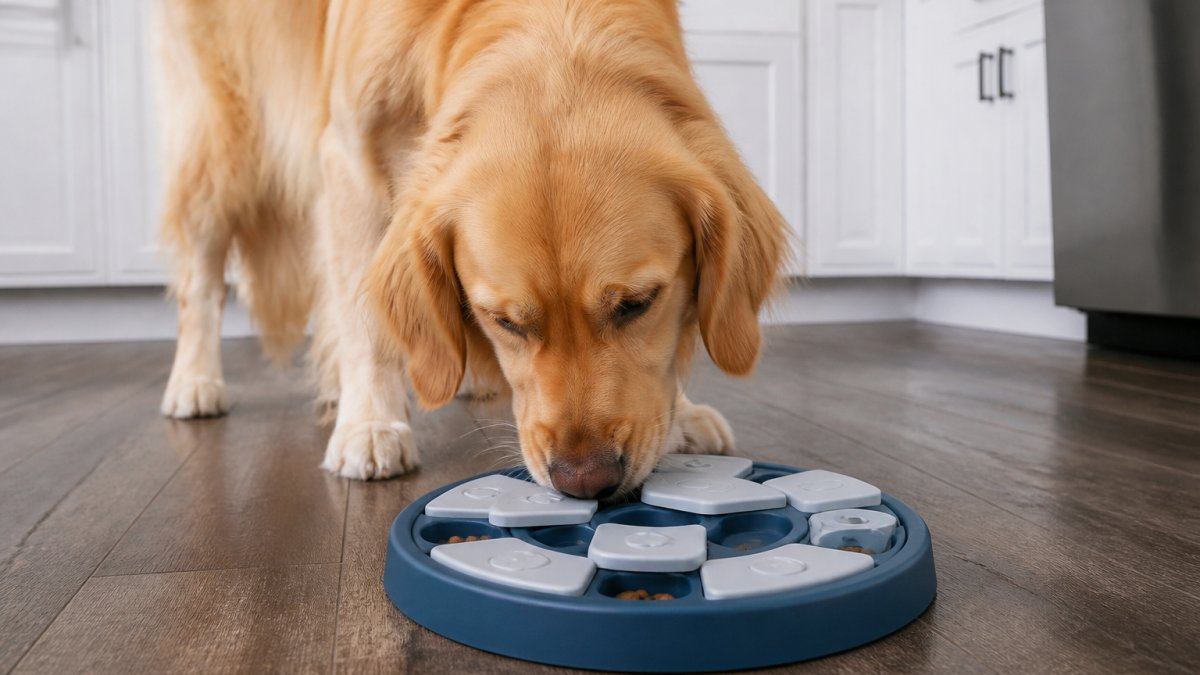
Chewzzle ThinkDisc Puzzle Feeder ($19.99)
The ThinkDisc combines sliding paw-shaped covers and a rotating center wheel, forcing dogs to work through multiple layers. Even determined fast eaters must slow down and think.
The non-slip base prevents sliding, paw-shaped covers are intuitive, and difficulty adjusts by moving food to different compartments.
The ThinkDisc works for small to medium dogs and kibble eaters.
Chewzzle PuzzleFeast Sliding Puzzle ($49.99)
The PuzzleFeast is most effective for serious fast eaters. Each button reveals one piece.
The smooth sliding mechanism works with nose or paw work. The non-slip base keeps it stable, and the design stays engaging over time.
Works for all sizes. Best for sensitive-stomach dogs if you can monitor mealtime.
Chewzzle MindMaze IQ Puzzle ($29.99)
The MindMaze dispenses treats as your dog solves each section, with adjustable difficulty to prevent boredom.
Non-toxic, BPA-free, and easy to clean.
Start with easier placement and gradually increase difficulty.
Chewzzle SmartPaws Interactive Puzzle ($39.99)
The SmartPaws combines treat-dispensing with training functionality.
Best for food-driven dogs that enjoy learning. Durable, non-toxic, and suitable for all sizes.
Chewzzle TreatDrop Ball ($14.99)
The TreatDrop Ball is soft silicone that dispenses kibble as your dog plays, encouraging longer mealtimes and supporting dental and digestive health.
Soft and flexible, ideal for gentle to moderate chewers. Food leaks gradually during play, naturally slowing consumption.
Easy to clean and safe for daily use.
Chewzzle RollFeast Treat Ball ($9.99)
The RollFeast is the most affordable option, dispensing treats as your dog rolls or nudges it. Compatible with most dry kibble and treats.
Ideal for small and medium dogs and budget-conscious owners.
| Feeder | Price | Best For | Puzzle Type | Difficulty |
|---|---|---|---|---|
| ThinkDisc | $19.99 | Beginners, small-medium dogs | Sliding covers + rotating wheel | Easy to moderate |
| PuzzleFeast | $49.99 | Serious fast eaters, all sizes | Sliding buttons | Moderate to challenging |
| MindMaze | $29.99 | Dogs needing mental enrichment | Adjustable compartments | Adjustable |
| SmartPaws | $39.99 | Training + enrichment | Multi-section puzzle | Moderate |
| TreatDrop Ball | $14.99 | Gentle chewers, dental care | Soft silicone dispenser | Easy |
| RollFeast | $9.99 | Active dogs, budget option | Rolling toy dispenser | Easy |
How to Slow Down a Dog Eating Too Fast: A Practical Approach
Puzzle feeders are one strategy; complementary approaches create a feeding routine supporting digestive health and positive habits.
Feed in a quiet, consistent location to reduce anxiety.
For naturally fast eaters, pair a puzzle feeder with smaller, more frequent meals. Split one large meal into two or three portions to give the digestive system manageable processing opportunities.
Supervise initial meals to ensure correct engagement and prevent frustration. Help by pointing out hidden food or gently moving covers to show how it works.
How to Introduce a Puzzle Feeder to a Dog: Step-by-Step
Introducing a new feeder requires patience. A rushed transition can cause frustration or rejection.
Step 1: Start with an empty feeder. Let your dog explore the puzzle feeder without food. Let them sniff it, nudge it, and get comfortable with the object itself. This takes 5-10 minutes and removes the pressure of having to solve it while hungry.
Step 2: Place food in plain sight. Put a few pieces of kibble in the easiest compartments or under covers that are already partially open. Your dog should be able to see and smell the food. This builds confidence that food is actually inside and worth working for.
Step 3: Feed a small portion. Use a portion of your dog's regular meal, not the entire meal. If something goes wrong or your dog gets frustrated, you haven't wasted a full feeding. Start with no more than a quarter of their daily kibble.
Step 4: Supervise and encourage. Watch while your dog eats. If they struggle, gently point out where food is or move a cover aside to show them how it works. Praise and encourage every attempt, even if they don't solve it perfectly on the first try.
Step 5: Gradually increase difficulty. Once your dog figures out the basic mechanism, start hiding food in more compartments or covering it more completely. Increase difficulty over several days, not all at once.
Step 6: Transition to full meals. Once your dog is comfortable with the puzzle feeder and solves it reliably, start using it for larger portions. Build up to feeding an entire meal through the puzzle feeder over a week or two.
Timeline: A slow transition prevents frustration and ensures your dog views the puzzle feeder as positive.
Dog Enrichment Feeders for Wet Food and Sensitive Diets
Standard puzzle feeders don't work for wet, raw, or fresh diets. Use enrichment feeders designed for soft foods instead.
Spread wet food across the mat and let your dog lick it off slowly.
Freeze wet food or paste in treat-dispensing toys. Your dog licks it out slowly as it thaws, extending mealtime.
Follow the same introduction steps for wet-food feeders: start with plain sight, supervise, encourage, and gradually build to full meals. Patience is especially important.
Cleaning and Maintenance for Safe, Healthy Feeding
Dirty puzzle feeders harbor bacteria and mold, especially problematic for sensitive-stomach dogs. Proper cleaning between uses is essential.
Rinse immediately after feeding with warm water and a soft brush. Use a bottle brush for hard-to-reach areas.
Wash with mild dish soap and warm water. Avoid harsh chemicals or bleach. Hand washing extends feeder life.
Air dry completely before refilling to prevent mold growth. Store in a clean, dry place.
Inspect regularly for cracks or wear. Replace if damaged, as plastic pieces can cause intestinal blockages.
Check silicone feeders for tears or punctures. Replace if damaged to prevent ingestion of pieces.
When to Consult Your Veterinarian
A puzzle feeder is a helpful tool, not a substitute for veterinary care.
Choosing the right puzzle feeder for your dog with a sensitive stomach starts with understanding your dog's eating style and digestive needs. Chewzzle's range of puzzle feeders, from the affordable RollFeast to the comprehensive PuzzleFeast, gives you options at every price point and difficulty level. The best puzzle feeders for dogs with sensitive stomachs combine slower eating with mental enrichment, turning mealtime into a positive experience that supports both digestive health and emotional wellbeing. Start with the feeder that matches your dog's size and eating habits, introduce it gradually, and watch as your dog becomes calmer, healthier, and more engaged during meals. Get started with Chewzzle and give your dog the enrichment and digestive support they deserve.
Frequently Asked Questions
Can a puzzle feeder help a dog that eats too fast?
Yes. Puzzle feeders slow food intake by requiring your dog to solve a problem before accessing each portion. Instead of inhaling a bowl in seconds, your dog works through the puzzle over several minutes. This paced eating reduces the risk of gulping and gives the digestive system time to process food properly, which is especially important for dogs with sensitive stomachs.
Are slow feeders safe for dogs with sensitive stomachs?
Slow feeders are generally safe and often beneficial for sensitive-stomach dogs. Look for feeders made from non-toxic materials like those Chewzzle offers. The key is choosing a design your dog will actually solve rather than chew. If your dog has a diagnosed digestive condition, mention the feeder to your veterinarian to ensure it complements your dog's specific diet and treatment plan.
How do I introduce a puzzle feeder to a dog that gulps food?
Start with an easier puzzle. Place the feeder on the ground with some compartments or buttons already partly open so your dog can see and smell the food. Let them succeed quickly on the first attempt to build confidence. Once they understand the basic mechanism, gradually increase difficulty by closing more compartments. Most food-motivated dogs figure out the first puzzle within a few minutes, and the rest follows naturally from there.
What type of feeder is easiest to clean after wet or sensitive-stomach food?
Feeders with fewer crevices and removable parts are easiest to clean. The Chewzzle TreatDrop Ball, made from textured silicone, rinses quickly under running water. For wet food, avoid feeders with deep compartments that trap moisture. Always rinse immediately after use to prevent food from drying and hardening, which can harbor bacteria.
When should I contact my veterinarian about my dog's fast eating?
Rapid eating alone isn't usually an emergency, but it's worth addressing to prevent complications.