
7 Best Dog Food Puzzles for Fast Eaters (2026 Guide)
Table of Contents
- Best Dog Food Puzzles for Fast Eaters: Quick Comparison
- How We Evaluated the Best Dog Food Puzzles
- 1. Chewzzle ThinkDisc Puzzle Feeder: Best for Slowing Gulpers
- 2. Chewzzle PuzzleFeast Sliding Puzzle: Best for Serious Problem Solvers
- 3. Chewzzle RollFeast Treat Ball: Best Budget Option for Puppies
- 4. Chewzzle SnuffleSphere Foraging Ball: Best for Anxious Dogs
- 5. Chewzzle MindMaze IQ Puzzle: Best for Adjustable Difficulty
- 6. Chewzzle SmartPaws Interactive Puzzle: Best for Training
- How to Stop Dog Eating Too Fast
- Cleaning and Maintenance for Puzzle Feeders
- Choosing the Right Difficulty and Managing Portions
- Frequently Asked Questions
Last Updated: September 5, 2026
A dog that inhales dinner in under a minute isn't just messy; that gulping habit can lead to bloating, poor digestion, and a frustrated pet who never feels satisfied. The best dog food puzzle for fast eaters forces your dog to slow down, work for each piece, and actually engage their brain during mealtime. At Chewzzle, we design interactive feeders that turn a frantic inhale-fest into a focused, rewarding challenge that protects your dog's health.
Below, we break down the top dog food puzzles we offer, how to pick the right difficulty level for your breed, and the transition steps most guides skip. We will cover cleaning protocols, durability for aggressive chewers, and how to manage portion control without adding stress to your routine. Whether you have a Golden Retriever who vacuums her bowl or a rescue who needs calm, structured meals, there is a solution here that fits.
Best Dog Food Puzzles for Fast Eaters: Quick Comparison
A dog food puzzle is a feeding tool that requires your dog to solve a challenge, such as sliding a cover or rolling a ball, to access kibble or treats hidden inside. This slows consumption dramatically and adds mental enrichment to every meal. For fast eaters, the goal is simple: make food come out a few pieces at a time instead of all at once.
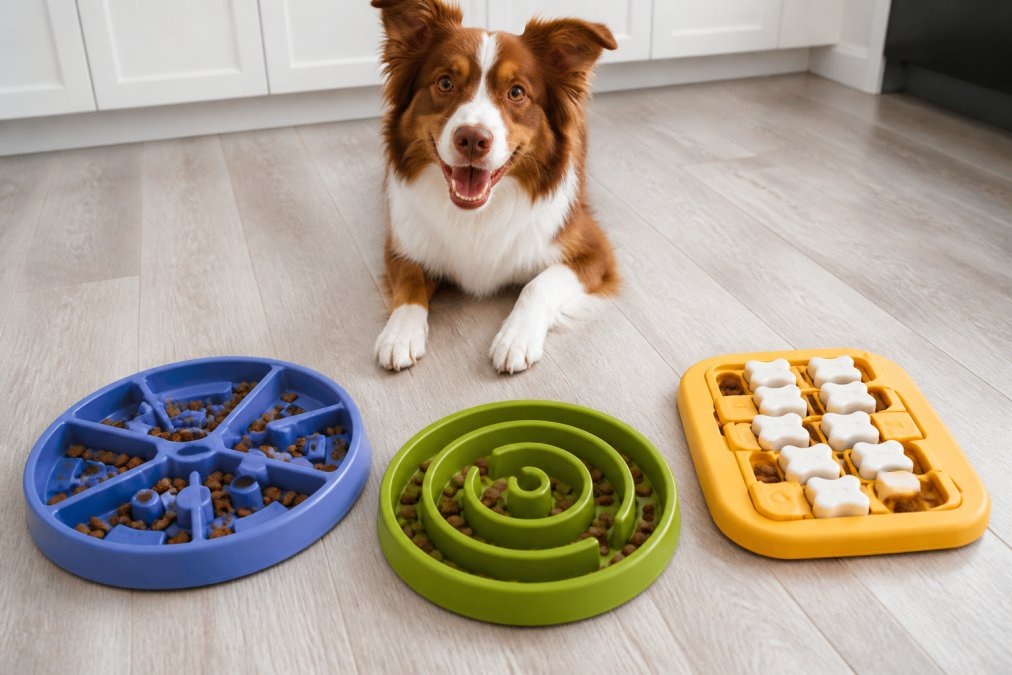
Here is how our lineup compares at a glance:
| Puzzle | Price | Best For | Difficulty | Key Feature |
|---|---|---|---|---|
| ThinkDisc | $19.99 | Slowing gulpers | Beginner | Sliding covers + turning wheel |
| PuzzleFeast | $49.99 | Serious problem solvers | Intermediate | One treat at a time |
| RollFeast | $9.99 | Puppies on a budget | Beginner | Roll-and-dispense play |
| SnuffleSphere | $29.99 | Anxious dogs | Easy | Soft foraging action |
| MindMaze | $29.99 | Adjustable challenge | Adjustable | Vary treat placement |
| SmartPaws | $39.99 | Training sessions | Intermediate | Obedience integration |
How We Evaluated the Best Dog Food Puzzles
We judged every puzzle on four criteria that matter for fast eaters: how effectively it paces food delivery, the quality of materials, ease of cleaning, and durability against determined chewers. Each product was assessed for its ability to provide mental enrichment while using food-grade materials that are safe for extended chewing sessions.
A common mistake is buying a puzzle that is too easy, which the dog solves once and then ignores. Another is choosing a design too difficult for a first-timer, leading to frustration and abandonment. The right fit depends on your dog's size, breed, and experience level with interactive dog toys. We also considered whether each design supports portion control, so you can replace a full bowl of kibble without overfeeding.
1. Chewzzle ThinkDisc Puzzle Feeder: Best for Slowing Gulpers
Our top pick for fast eaters is the ThinkDisc Puzzle Feeder because it combines multiple puzzle mechanics in one durable, non-slip base. Kibble goes into recessed compartments and shallow troughs, then paw-shaped sliding covers and a turning center wheel hide it away. Your dog must nudge covers aside and rotate the wheel to unlock each piece of food, turning a two-second inhale into several minutes of focused work.

The non-slip rubberized base keeps the puzzle planted on tile or hardwood, so your dog pushes against the toy rather than chasing it across the room. Made from pet-safe plastic, it rinses clean easily between meals. For dogs sized small to medium, this is the most direct answer to gulping and bloating prevention we offer.
2. Chewzzle PuzzleFeast Sliding Puzzle: Best for Serious Problem Solvers
The PuzzleFeast Sliding Puzzle is the right choice for dogs who blow through beginner puzzles and still want more mental work. A treat sits under each sliding button, and your dog must nose or paw each one aside to reach the reward underneath. Because only one treat is uncovered at a time, this design naturally paces even the most determined gulper.

This is real cognitive work: sniffing, nudging, and problem-solving rather than just eating. It suits dogs of all sizes, with smaller dogs using their nose and larger dogs using a paw. Load it with a portion of normal kibble to slow a full meal, or use a handful of treats for a short enrichment session between meals.
3. Chewzzle RollFeast Treat Ball: Best Budget Option for Puppies
The RollFeast Treat Ball is the most affordable entry point into puzzle feeding, and it is ideal for puppies who are still learning how to work for their food. As your dog rolls or nudges the ball, kibble dispenses gradually through the opening, turning mealtime into a playful game. This slow feeder design helps reduce bloating and improves digestion by pacing food delivery.

It is compatible with most dry kibble or treats up to roughly half an inch in size, and the durable, pet-safe plastic is crafted from non-toxic materials. For a young puppy who is still developing coordination, this is a forgiving introduction to treat-dispensing toys. It also works well for Labradors, Retrievers, and other playful breeds who need an outlet for their energy.
4. Chewzzle SnuffleSphere Foraging Ball: Best for Anxious Dogs
For rescue dogs or pups with separation anxiety, the SnuffleSphere Foraging Ball offers a softer, quieter approach to mealtime enrichment. Made from plush fleece, this ball mimics natural foraging behavior by encouraging your dog to search, sniff, and explore for hidden treats. The gentle texture is easy on mouths and paws, making it perfect for indoor use.
The key benefit for anxious dogs is the calming rhythm of sniffing and searching, which can reduce stress and redirect nervous energy into a positive activity. It is lightweight and portable, so you can use it in a crate, on the road, or during quiet time at home. While it slows fast eating through gradual food release, its primary strength is cognitive enrichment for dogs who need emotional support.
5. Chewzzle MindMaze IQ Puzzle: Best for Adjustable Difficulty
The MindMaze IQ Puzzle stands out because you control the challenge level, making it a long-term investment that grows with your dog's skills. Start with treats placed in easy-to-reach spots, then vary the placement to hidden wedges and deeper compartments as your dog gains confidence. This adjustable difficulty keeps the puzzle fresh for both beginners and clever pups who master patterns quickly.
It is made from non-toxic plastic that is safe for indoor play and easy to clean. The treat-dispensing action rewards curiosity and persistence, which supports focus and reduces boredom-related destructive behaviors. Whether you have a tiny Terrier or a clever Retriever, this toy scales to keep them engaged.
6. Chewzzle SmartPaws Interactive Puzzle: Best for Training
The SmartPaws Interactive Puzzle is designed for owners who want to combine mealtime with obedience training. This puzzle encourages problem-solving through treat-based challenges that help improve focus and cognitive function. It is particularly effective for redirecting chewing behavior and channeling excess energy into a positive, rewarding outlet.
The scalable difficulty works for all dog sizes, so you can adjust the challenge as your puppy grows or as your adult dog becomes more skilled. Use it during dedicated training sessions with high-value treats, or load it with kibble for a structured meal. The reward-driven motivation keeps your dog engaged and reinforces calm, patient behavior around food.
How to Stop Dog Eating Too Fast
Transitioning a fast eater to a puzzle requires patience and a gradual approach. Start by placing a small amount of kibble on top of or near the puzzle, allowing your dog to eat freely while becoming comfortable with the new object. Once they eat confidently from the surface, hide a few pieces under one easy cover and show them how it works by sliding it partially open.
Most food-motivated dogs figure out the first cover within a few minutes, especially when you start with covers partly open so they can see and smell the reward. After one success, the rest follows quickly. Increase difficulty over several days, moving food to different compartments so the puzzle does not become routine.
For dogs who gulp out of anxiety or competition with other pets, feed them in a separate, quiet space during the transition. Supervision is recommended for the first few sessions, and any dog who tends to chew plastic rather than solve it should not be left alone with a puzzle. If your dog loses interest, end the session on a success and try again at the next meal.
Cleaning and Maintenance for Puzzle Feeders
Cleaning a dog food puzzle between uses takes a few minutes, but it is essential for preventing bacterial buildup in the crevices where kibble oils collect. Most Chewzzle puzzles are made from pet-safe plastic or silicone that rinses clean under warm water with mild dish soap.
For complex designs like the PuzzleFeast, soak the puzzle in warm soapy water for five minutes before scrubbing to loosen stuck pieces. Always rinse thoroughly to remove all soap residue, then air dry completely before storing. The SnuffleSphere fleece sections should be hand washed and air dried to maintain the soft texture.
Choosing the Right Difficulty and Managing Portions
When selecting a dog food puzzle, match the difficulty to your dog's personality and experience. A puppy or first-timer needs an easy win, like the RollFeast Ball or a ThinkDisc with covers left partially open. A seasoned problem solver needs the sliding mechanics of the PuzzleFeast or the adjustable MindMaze to stay engaged.
For portion control, replace your dog's regular meal with the same amount of kibble loaded into the puzzle, rather than adding puzzle food on top of their normal bowl. This prevents overfeeding while still delivering the benefits of slowed eating. Track your dog's weight weekly during the first month of puzzle feeding, since the added mental engagement can change their activity levels and caloric needs.
For heavy chewers, prioritize natural rubber constructions like the ChewClean Treat Ball, which is built to handle aggressive chewing, over rigid plastic puzzles. If your dog is a dedicated chewer, supervise all puzzle sessions and remove the toy when the food is gone. A puzzle should be a feeding tool, not a lifelong chew toy, and matching the material to your dog's habits helps prevent replacements.
Finding the right dog food puzzle for fast eaters is about matching the challenge to your dog's skill level while prioritizing safe, non-toxic materials that hold up to daily use. The transition takes a few patient sessions, but the payoff is calmer meals, better digestion, and a mentally stimulated dog who looks forward to dinnertime. Chewzzle offers a range of interactive feeders, from the budget-friendly RollFeast Ball to the advanced PuzzleFeast, all crafted from durable, food-grade materials that turn mealtime into a rewarding game. Get started with Chewzzle and give your fast eater the slow, satisfying meals they deserve.
Frequently Asked Questions
Are dog food puzzles good for dogs?
Yes, dog food puzzles are excellent for most dogs. They slow down fast eaters, which helps prevent gulping, bloating, and indigestion. They also provide mental enrichment by turning mealtime into a problem-solving activity, which can reduce boredom and anxiety. For dogs who inhale their food in seconds, a puzzle feeder is one of the most effective tools to encourage healthier eating habits.
How can I stop my dog from eating their food in seconds?
The most effective way to stop a dog from eating too fast is to use a puzzle feeder or slow feeder bowl. These tools force your dog to work for each piece of kibble, extending mealtime from seconds to several minutes. Start with an easy puzzle, show your dog how it works by leaving compartments open, and supervise the first few sessions. Consistency is key.
What is the best food puzzle for a dog that inhales food?
The best dog food puzzle for a fast eater is one with multiple compartments and obstacles that release food gradually. The Chewzzle ThinkDisc Puzzle Feeder is a strong choice because sliding paw-shaped covers and a turning center wheel prevent your dog from accessing all the food at once, naturally slowing down their eating pace.
Do puzzle feeders help with dog digestion?
Yes, puzzle feeders help with digestion by slowing down how quickly a dog eats. When dogs gulp food, they swallow excess air, which can lead to bloating and gastric discomfort. By pacing meals, puzzle feeders encourage proper chewing and reduce the amount of air swallowed, supporting healthier digestion and helping prevent serious conditions like gastric torsion.