

Durable Chew Toys for Heavy Chewers: 2026 Guide
Table of Contents
- Why Heavy Chewers Destroy Most Toys Within Days
- How to Choose Safe Dog Toys for Aggressive Chewers
- Signs a Dog Toy Is Unsafe and Should Be Replaced
- Durable Chew Toys for Heavy Chewers: Top Pick That Delivers
- Interactive Puzzle Toys for Dogs: Mental Stimulation Over Destruction
- Natural Chew Alternatives and How to Prevent Destructive Behavior
- Cleaning and Maintenance Tips to Extend Toy Life
- Conclusion
Last Updated: August 28, 2026
Most dog owners have watched a "tough" toy get shredded before dinner. At Chewzzle, we hear this constantly. The market is flooded with toys marketed as durable that simply aren't built for dogs with serious jaw strength. This guide on durable chew toys for heavy chewers cuts through the noise, covering what makes a toy genuinely safe, which materials hold up, and how to match the right toy to your dog's chewing style.
Why Heavy Chewers Destroy Most Toys Within Days
The biggest mistake pet owners make is assuming all "heavy-duty" labels mean the same thing. Toy durability depends on material density, construction method, and how well the toy matches your dog's chewing intensity. A toy rated for a 50-pound dog handed to a 90-pound Rottweiler will fail quickly, often producing dangerous fragments.
Chewing Behavior Psychology: What's Really Driving It
Chewing in dogs is not random destruction. It stems from stress relief, boredom, teething, and natural foraging drives. Understanding this matters because it changes how you select a toy. A dog chewing from anxiety needs sustained chew satisfaction and mental stimulation. A dog chewing from boredom needs interactive play elements. Treating both with the same toy sets you up for failure.
Breed-Specific Chewing Profiles and Jaw Strength
Breeds like American Pit Bull Terriers, Mastiffs, Labrador Retrievers, German Shepherds, and Rottweilers generate bite forces that exceed what standard rubber or nylon toys handle. Smaller but equally determined chewers like Jack Russell Terriers and Beagles are tenacious despite lower raw jaw strength. Breed-specific profiles matter when selecting toy thickness, material density, and size.
American Kennel Club breed information and behavior guides
How to Choose Safe Dog Toys for Aggressive Chewers
Safety and durability are related but distinct. A toy can be extremely hard and still be unsafe if it causes tooth fractures, contains harmful chemicals, or breaks into swallowable fragments.
Material Toxicity and Safety Testing: What Non-Toxic Actually Means
"Non-toxic" is not a standardized, regulated term for pet toys. It generally means materials do not contain chemicals known to be acutely harmful, including BPA, phthalates, lead, and formaldehyde. Look for natural rubber sourced without chemical vulcanization, food-grade dyes, no recycled plastics of unknown composition, and no added fragrances.
Responsible manufacturers reference guidelines like those from the Consumer Product Safety Commission guidelines on toy materials.
Rubber vs. Nylon: Which Material Holds Up Longer
Natural rubber is resilient and flexible, absorbing bite force rather than resisting it rigidly. This makes it less likely to cause tooth fractures. Natural rubber toys last well with dogs that chew rhythmically and can be filled with treats for interactive play.
Nylon is extremely hard and resists fragmentation well. For dogs that bite and shake, nylon can outlast rubber. The trade-off is that very hard nylon can stress tooth enamel, particularly in aggressive chewers. Some veterinary dentists caution against toys so hard that a fingernail cannot indent the surface.
| Material | Best For | Durability | Dental Safety | Interactive Play |
|---|---|---|---|---|
| Natural Rubber | Persistent gnawers | High | Better (flexible) | Yes, treat-fillable |
| Nylon | Shake-and-bite chewers | Very High | Moderate risk | Limited |
| Thermoplastic Rubber | Moderate chewers | Moderate | Good | Some options |
| Hard Plastic | Light chewers only | Low for heavy chewers | Poor if fragments | Varies |
Selecting the Right Size for Your Dog
A toy too small is a choking hazard; too large may be ignored. The toy should be large enough that your dog cannot fit the entire thing in its mouth at once. For giant breeds, opt for toys explicitly designed for large or extra-large dogs, even if the dog is still a puppy. Puppies of large breeds grow into jaw strength quickly.
Signs a Dog Toy Is Unsafe and Should Be Replaced
Recognizing when a toy has reached the end of its safe life matters as much as choosing the right toy. Signs include visible fragmentation, deep gouges exposing inner material, chunks missing, and any piece small enough to swallow.
Run a quick check before every play session:
- No chunks or pieces broken off
- No sharp edges or exposed inner layers
- Size still appropriate
- No discoloration or unusual smell
- Seams and joins still intact
If a toy fails any check, remove it immediately. Supervision is always recommended during chew sessions with aggressive chewers.
ASPCA guidance on pet toy safety and hazard prevention
Replacement Schedules: How Often to Swap Out Chew Toys
Inspect toys weekly for heavy chewers and replace them when they show wear signs, regardless of purchase date. Heavy chewers may go through a rubber toy in two to four weeks; nylon toys typically last longer. Keeping a rotation of two to three toys and cycling them weekly reduces fixation and accelerates wear.
Durable Chew Toys for Heavy Chewers: Top Pick That Delivers
Our top recommendation for durable chew toys for heavy chewers is the Chewzzle ChewClean Treat Ball at $9.99.

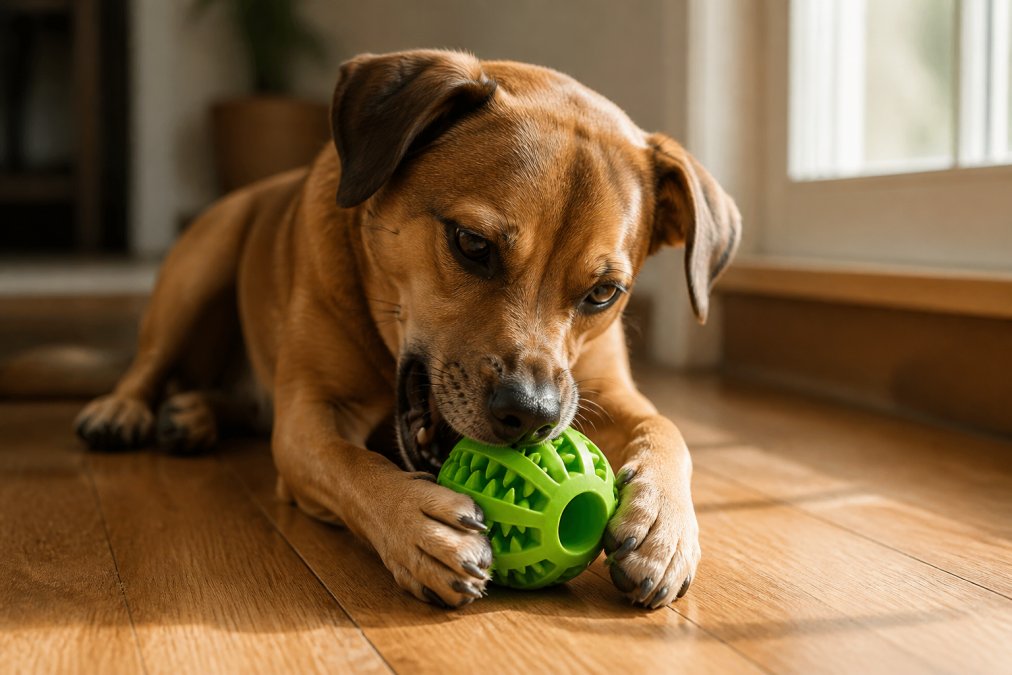
Made from natural rubber, the ChewClean Treat Ball handles aggressive chewers without fragmenting. The textured surface provides chew satisfaction while cleaning teeth and massaging gums, supporting long-term dental health. The treat-dispensing design turns solo chew sessions into interactive puzzles, addressing the boredom that drives destructive chewing.
Pros:
- Natural rubber construction resists fragmentation
- Promotes dental health through textured surface
- Treat-fillable for extended engagement
- Accessible price point
Cons:
- Determined power chewers may require supervision
- Treat size matters for dispensing effectiveness
Interactive Puzzle Toys for Dogs: Mental Stimulation Over Destruction
The most overlooked solution to destructive chewing is not a tougher toy but a more engaging one. Interactive puzzle toys address the root cause: a bored, under-stimulated, or anxious dog redirects energy destructively.
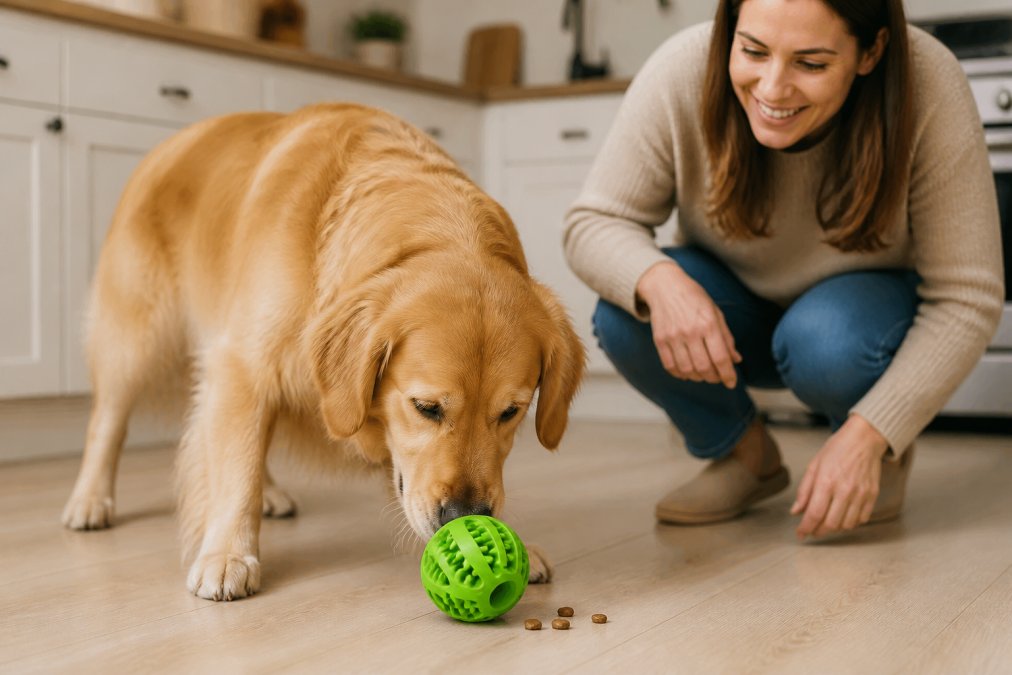
Mental stimulation through puzzle play tires a dog out differently than physical exercise. A 15-minute puzzle session can have the same calming effect as a 30-minute walk for many high-energy dogs.
Interactive vs. Solo Play: Matching the Toy to Your Dog's Needs
Interactive toys require owner engagement; solo toys work independently. For most heavy chewers, a combination of both works best. Dogs with separation anxiety benefit from solo interactive toys they can engage with when alone. Dogs that chew destructively primarily when owners are home may need more interactive play sessions rather than more toys.
Natural Chew Alternatives and How to Prevent Destructive Behavior
Natural alternatives include bully sticks, raw bones, antlers, and dried tendons. Each has trade-offs: raw bones can splinter, antlers carry tooth fracture risk for power chewers, and bully sticks are consumed rather than reused.
Preventing destructive behavior long-term requires addressing the cause. Practical strategies include establishing a consistent routine with physical exercise and mental enrichment, rotating toys to maintain novelty, using puzzle feeders at mealtimes, providing appropriate chew outlets before high-risk periods, and training a "leave it" command.
The Humane Society of the United States dog behavior resources offer practical guidance on redirecting destructive behaviors through enrichment and positive reinforcement. Dogs that chew destructively are meeting a need; your job is ensuring that need gets met appropriately.
Cleaning and Maintenance Tips to Extend Toy Life
A clean toy is a safe toy. Bacteria, mold, and food residue accumulate quickly in toy crevices, particularly in warm environments. Regular cleaning prevents material degradation that makes toys unsafe.
For rubber toys like the Chewzzle ChewClean Treat Ball:
- Rinse with warm water after every use
- Deep clean weekly by soaking in diluted white vinegar for 10 minutes, then scrubbing with a soft brush
- Ensure the toy is fully dry before returning it to your dog
- Inspect during each cleaning for cracks, gouges, or missing chunks
Always follow manufacturer care instructions. Proper maintenance extends toy life and gives you regular opportunities to spot wear before it becomes a safety issue.
Frequently Asked Questions
Q: What is the strongest chew toy for aggressive chewers?
A: The strongest durable chew toys for heavy chewers are made from high-density natural rubber or reinforced nylon. Natural rubber is generally preferred because it resists fragmentation better than nylon, which can splinter under extreme jaw pressure. Look for toys rated for aggressive chewers, sized appropriately for your dog's weight, and free from added plasticizers or dyes. The Chewzzle ChewClean Treat Ball is built from natural rubber specifically to handle aggressive chewing while also supporting dental health.
Q: How do I choose a safe chew toy for my aggressive chewer?
A: Start with material: natural rubber and dense nylon are the most resilient. Check that the toy is non-toxic and free from BPA, phthalates, and artificial dyes. Size matters too, a toy that's too small becomes a choking hazard. Avoid toys with small detachable parts, thin squeakers, or soft foam filling. Always supervise the first few sessions with any new toy, and replace it at the first sign of cracking, deep gouging, or fragmentation. Interactive puzzle toys for dogs add mental stimulation alongside chewing satisfaction.
Q: What are the best long-lasting chews for heavy chewers?
A: Long-lasting options fall into two categories: manufactured toys and natural chews. For manufactured toys, high-density natural rubber treat balls and reinforced nylon bones consistently outlast softer alternatives. For natural chews, bully sticks, elk antlers, and raw bones offer extended chew satisfaction, though supervision is essential with all of them. The key is matching chew intensity to material density, a toy rated for light chewers will fail quickly under heavy use regardless of how it's marketed.
Q: How often should I replace my dog's chew toys?
A: There's no fixed schedule that fits every dog, but a practical rule is to inspect toys after every session and replace them when you see deep cracks, missing chunks, sharp edges, or significant size reduction. For heavy chewers, this can mean monthly replacement of softer toys. Durable chew toys made from natural rubber typically last longer before showing wear. Setting a monthly visual check as a habit catches unsafe wear early and prevents your dog from swallowing fragments.
Finding the right toy for a determined chewer takes more than picking the hardest option available. It requires matching material, size, and play style to your dog's specific needs, then staying on top of wear and replacement. Chewzzle's ChewClean Treat Ball brings together natural rubber durability, dental health benefits, and treat-dispensing engagement in a single toy designed for dogs that take chewing seriously. Add it to your cart and give your dog an outlet that actually holds up.
This article was written using GrandRanker