

Durable Puzzle Toys for Aggressive Chewers: Top Picks
Table of Contents
- Quick Comparison: Durable Puzzle Toys for Aggressive Chewers
- Chewzzle ChewClean Treat Ball: Best for Dental Health and Fetch
- Chewzzle TreatDrop Ball: Best for Slow Feeding and Gentle Chewers
- Chewzzle RollFeast Treat Ball: Best for Interactive IQ Play
- How to Choose Safe Chew Toys for Dogs
- Signs a Dog Toy Is Unsafe
- Mental Enrichment for Aggressive Chewers
- Conclusion: Picking the Right Puzzle Toy
- Frequently Asked Questions
Last Updated: September 26, 2026
Quick Comparison: Durable Puzzle Toys for Aggressive Chewers
Durable puzzle toys for aggressive chewers survive powerful jaws and turn destruction into problem-solving. This Chewzzle guide covers three toys built for that job, how to choose safe chew toys for dogs, how to spot a failed toy, and why mental enrichment matters.
| Toy | Price | Material | Best For |
|---|---|---|---|
| Chewzzle ChewClean Treat Ball | $9.99 | Natural rubber | Dental health and fetch |
| Chewzzle TreatDrop Ball | $14.99 | Textured silicone | Slow feeding, gentle to moderate chewers |
| Chewzzle RollFeast Treat Ball | $9.99 | Pet-safe plastic | Interactive IQ play |
Chewzzle ChewClean Treat Ball: Best for Dental Health and Fetch
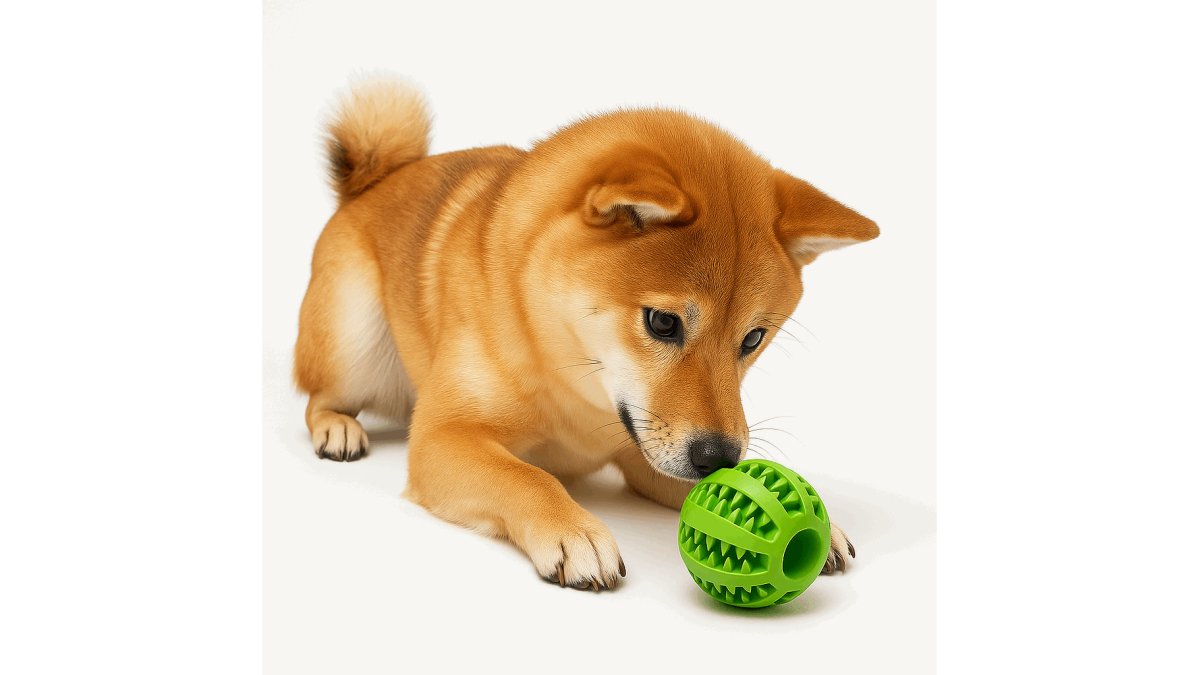
The Chewzzle ChewClean Treat Ball suits dogs who chew hard and need their teeth cleaned in the process. At 5cm, it fits puppies, small and medium dogs, and larger dogs who enjoy a challenge.


Chewzzle TreatDrop Ball: Best for Slow Feeding and Gentle Chewers
The Chewzzle TreatDrop Ball is a slow feeder first and a chew toy second. It dispenses kibble gradually as your dog plays, stretching a two-second meal into a real activity and helping prevent gulping, bloating, and indigestion.

Chewzzle RollFeast Treat Ball: Best for Interactive IQ Play
The Chewzzle RollFeast Treat Ball turns feeding into a puzzle your dog solves with nose and paws. Treats drop as they roll or nudge it, so every meal becomes problem-solving.
How to Choose Safe Chew Toys for Dogs
Choosing safe chew toys for dogs means matching material to jaw strength, then checking size, texture, and build. A toy right for a gentle chewer can be a choking hazard for a dog who shreds everything.
Match the material to the chew style
Not all "tough" materials behave the same under a determined jaw:
- Natural rubber, the gold standard for aggressive chewers. It flexes under pressure instead of shattering, resisting punctures and returning to shape. Look for walls you cannot pinch flat between two fingers.
- Nylon, extremely hard and long-lasting, but it does not flex. A determined chewer can shave off flakes over time, a swallowing risk. Best for dogs who gnaw rather than shred.
- Silicone, soft, food-safe, easy to clean, but it tears under sustained pressure. Suits gentle to moderate chewers, not the dog who has destroyed three toys this month.
- TPR and PVC, marketed as "durable," but they crack along seams and shed pieces. Treat these as short-term toys, not daily drivers.
- Hard plastic, fine for treat-dispensing puzzle balls that roll, but poor for a dog who crushes toys in their back teeth.
Size it to the dog, not the breed label
A toy too small is a choking hazard; one too large frustrates small dogs. It should be wide enough that your dog cannot fit it entirely behind their molars: at least 3 inches for medium and large breeds, 4 inches or more for giant breeds, and 2 to 3 inches for puppies and small dogs.
Check the build, not just the label
Run through this before you buy:
- No loose parts, glued seams, or thin edges that can be torn off
- No chemical smell out of the packaging, a strong odor can indicate low-grade plasticizers
- Treat capacity suits your dog's food motivation and meal size
- Dishwasher safe or easy to rinse, because a toy you avoid cleaning becomes a bacteria trap
- Chew resistance suits your dog, not the average dog on the label
What "non-toxic" actually means
"Non-toxic" is a marketing term, not a regulated one. Look for concrete claims:
- BPA-free and phthalate-free, these are the two plasticizers most commonly flagged for concern in chew toys.
- Food-grade silicone, a meaningful, testable claim, unlike "pet-safe."
- FDA-compliant materials, some manufacturers voluntarily use materials that meet FDA food-contact standards, which is a stronger signal than an unregulated "non-toxic" badge.
A common mistake
Buying for the breed instead of the individual dog. Two Labradors can have completely different chewing styles, and the destroyer needs a denser material than their littermate. Watch how your dog chews for a week before committing.
Signs a Dog Toy Is Unsafe
Signs a dog toy is unsafe include cracks, missing chunks, exposed inner material, and any piece your dog can pull free. Check toys weekly and retire them the moment one appears.
Watch for these specific failures:
Chewzzle ChewClean Treat Ball →
- Cracks or splits in rubber or plastic, especially along seams
- Missing chunks, which means pieces have already gone somewhere
- Loose squeakers or inserts working their way to the surface
- Sharp edges where a chewer has worn the material down
- Chemical smells that do not fade after washing
Mental Enrichment for Aggressive Chewers
Mental enrichment for aggressive chewers works because most hard chewing is about boredom, not the mouth, and a puzzle toy gives that energy somewhere to go. But dropping a puzzle toy in front of a dog who has spent months shredding furniture rarely works on day one, the transition matters.
Why destructive chewing happens
Destructive behavior shows up when a dog has more energy than outlets. Chewing is self-rewarding, so shredding a cushion pays off every time. A treat-dispensing toy replaces that payoff with a slower one, but it must be at least as good, or the dog goes back to the couch.
A four-week transition plan
This is the sequence most trainers use to move a dog from destructive chewing to puzzle-solving. Adjust the pace; some dogs need two weeks, others six.
- Week 1, Pair the toy with high-value food. Fill the puzzle toy with something your dog rarely gets, and hand it over while you are in the room. Do not walk away yet. The goal is for the toy to mean "good things happen."
- Week 2, Shorten the reward, lengthen the work. Switch to your dog's regular kibble so the food is familiar but the puzzle is the novelty. Sit nearby and let them work. If they give up, do not solve it for them, nudge the toy once and wait.
- Week 3, Add distance. Step out of the room for one to two minutes at a time. Come back before your dog loses interest, not after. This teaches them that the puzzle is a solo activity, not a shared one.
- Week 4, Replace, don't remove. Every time you take away a forbidden chew target (a shoe, a cushion corner), hand over the puzzle toy instead. The dog learns the swap, not the loss.
The calorie math most owners miss
Treat-dispensing toys feed your dog, so subtract that food from the daily bowl or you are quietly overfeeding. How to do it:
- Weigh out your dog's normal daily kibble ration.
- Set aside roughly 25 to 50 percent of that ration for the puzzle toy.
- Feed the remainder in the bowl, or use it for training.
Interactive vs. solo play
Interactive play beats solo play for anxious dogs because you are part of the reward: ten minutes of supervised puzzle work does more for a restless dog than an hour with an ignored toy. But solo play teaches self-soothing, exactly the skill a destructive chewer is missing. Aim for a mix, supervised sessions when you are home, solo puzzle time when you are not.
The noise factor
Rolling plastic and hard nylon toys are loud on hardwood floors, which matters if you live in an apartment or work from home. A few ways to cut the racket:
- Play on a low-pile rug or a yoga mat, which absorbs the roll and slows the toy down.
- Choose a rubber ball over a hard plastic one when noise is the priority.
- Rotate toys so the loudest one is reserved for outdoor or supervised sessions.
Signs it is working
Conclusion: Picking the Right Puzzle Toy
The right durable puzzle toys for aggressive chewers come down to matching material to your dog's jaw, not the label on the box: natural rubber for the dog who destroys everything, silicone for the gentle chewer, and a rolling puzzle ball for the dog who needs a job.
Frequently Asked Questions
What are the best puzzle toys for dogs with aggressive chewing?
The best puzzle toys for aggressive chewers combine durable construction with treat-dispensing features. Look for natural rubber or tough plastic materials that resist wear and tear. The Chewzzle ChewClean Treat Ball is built from natural rubber and designed to handle aggressive chewers, while the RollFeast Treat Ball offers a hard plastic option for interactive play. Always supervise your dog and check for damage after each session.
Are puzzle toys safe for aggressive chewers?
Yes, when you choose the right material and size. Puzzle toys for aggressive chewers should be made from non-toxic natural rubber or durable plastic, with no small parts that can break off. Check the toy regularly for cracks or loose pieces. The Chewzzle ChewClean Treat Ball is made from natural rubber and is safer than PVC or TPR. Always match the toy size to your dog to avoid choking hazards.
How do I know if a dog toy is unsafe?
Signs a dog toy is unsafe include visible cracks, loose pieces, sharp edges, or a strong chemical smell. If your dog can bite off chunks or the toy wears down quickly, it is not suitable for aggressive chewers. Avoid toys with small parts that can detach. The Chewzzle TreatDrop Ball uses BPA-free silicone and is easy to inspect for damage. Replace any toy that shows deep gouges or tears.
What is the most challenging puzzle toy for dogs?
The most challenging puzzle toys require multiple steps or rolling to release treats. The Chewzzle RollFeast Treat Ball dispenses kibble as your dog rolls or nudges it, turning feeding into a problem-solving activity. Start with easier puzzles and increase difficulty as your dog learns. Mental enrichment for aggressive chewers works best when the toy matches their skill level.
How do I clean and maintain durable puzzle toys?
Most durable puzzle toys are easy to clean with warm water and pet-safe soap. The Chewzzle TreatDrop Ball is dishwasher safe on the top rack. Rinse thoroughly after each use to remove treat residue. Inspect toys weekly for wear and tear. Replace any toy that shows deep cracks or becomes loose. Proper cleaning extends the life of your puzzle toys and keeps your dog safe.