
Interactive Mealtime Games for Dogs: 7 Brain Games
Table of Contents
- Why Interactive Mealtime Games Beat the Bowl
- The Benefits of Canine Enrichment at Mealtime
- How to Stop Dog Eating Too Fast: Pacing Techniques That Work
- Interactive Mealtime Games for Dogs, Ranked by Difficulty
- The Best Slow Feeder Toys for Dogs and How to Pick One
- DIY Mealtime Games You Can Build at Home
- Safety, Supervision, and Cleaning Rules for Mealtime Play
- Matching Games to Your Dog: Breed, Age, and Anxiety
- Frequently Asked Questions
Last Updated: September 16, 2026
Why Interactive Mealtime Games Beat the Bowl
A plain bowl asks your dog to do nothing but swallow. Interactive mealtime games for dogs turn that same food into a job: sniffing, nudging, pawing, and problem-solving for every bite. That shift matters most for fast eaters, high-energy breeds, and anxious rescues.
The Benefits of Canine Enrichment at Mealtime
Canine enrichment is the practice of giving a dog outlets for natural behaviors like sniffing, foraging, and problem-solving. At mealtime, it converts a two-minute inhale into ten minutes of focused work.
The payoff shows up in three places:
- Mental stimulation that tires a dog faster than a walk in many cases
- Slower eating that supports digestion and reduces gulping
- Less boredom that often fuels destructive behavior like chewing furniture
How to Stop Dog Eating Too Fast: Pacing Techniques That Work
Learning how to stop dog eating too fast starts with removing the open bowl. Pacing works by putting obstacles between your dog and the food, so each bite requires effort.
Three techniques cover most situations:
- Scatter feeding across a snuffle mat or a patch of floor
- Puzzle feeders that release kibble a few pieces at a time
- Slow feeder bowls with ridges that force a dog to navigate around them
Why Gulping Matters for Digestion and Bloat Risk
Fast eating is linked to swallowing air, which contributes to gas and, in deep-chested breeds, raises concern around bloat. Bloat is a genuine emergency in dogs, and it can progress quickly. If your dog shows a swollen abdomen, retching without producing anything, or restlessness after a meal, contact a veterinarian immediately. Slowing the meal is one practical step owners can take to reduce the risk.
Interactive Mealtime Games for Dogs, Ranked by Difficulty
Interactive mealtime games for dogs work best when you match the challenge to your dog's skill level. Start easy, then add difficulty as your dog solves each stage. The seven games below are grouped into beginner, intermediate, and advanced tiers.
| Level | Game | What It Works | Best For |
|---|---|---|---|
| Beginner | Scatter feeding | Sniffing, foraging | Puppies, anxious dogs |
| Beginner | Snuffle mat | Olfactory stimulation | Slow eaters-in-training |
| Intermediate | Treat ball | Problem-solving | High-energy breeds |
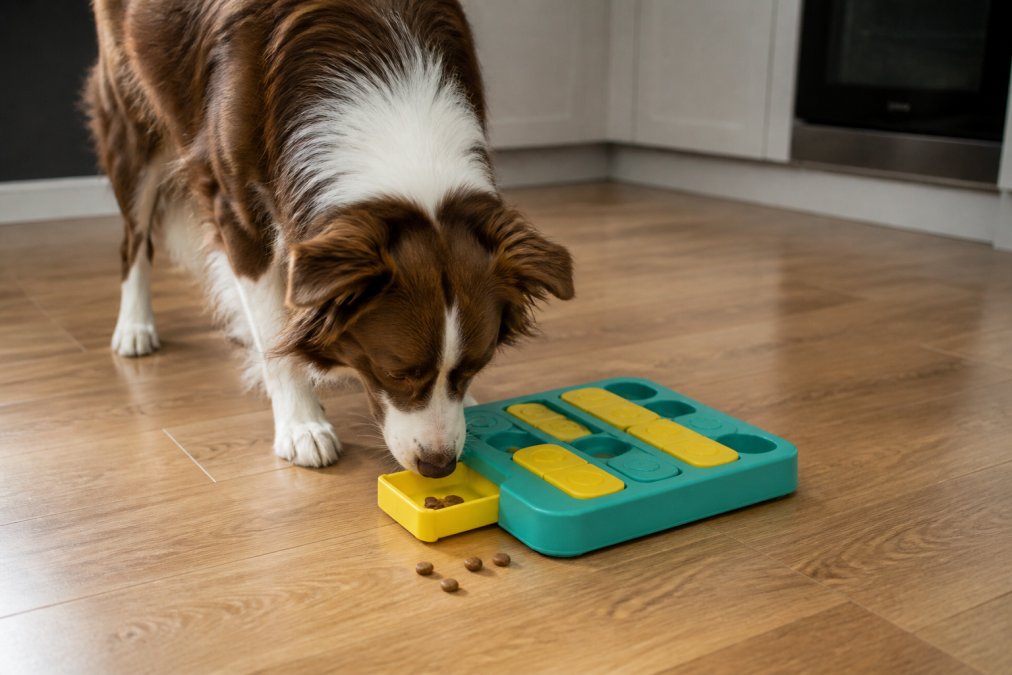
| Intermediate | Sliding puzzle | Nose and paw work | Confident eaters |
| Advanced | Multi-step puzzle | Cognitive development | Experienced puzzle dogs |
Beginner Games: Scatter Feeding and Snuffle Mats
Scatter feeding is the simplest entry point. Toss a portion of kibble across a snuffle mat or a clean patch of floor and let your dog sniff out each piece. It mimics natural foraging behavior and slows eating without any learning curve.
Intermediate Games: Treat Balls and Sliding Puzzles
Treat balls roll and dispense kibble as your dog nudges them around the room. The Chewzzle RollFeast Treat Ball is a good fit here: it's built for small and medium dogs, dispenses dry kibble or treats as your dog rolls it, and uses a slow feeder design that paces food delivery during play.

Advanced Games: Multi-Step Puzzle Feeders
Multi-step puzzles combine several mechanisms in one toy. The Chewzzle ThinkDisc Puzzle Feeder uses sliding paw-shaped covers plus a turning center wheel, so your dog has to solve more than one puzzle to reach the food. This is where problem-solving and cognitive development really come into play.
The Best Slow Feeder Toys for Dogs and How to Pick One
The best slow feeder toys for dogs share three traits: they pace food delivery, they're built from durable non-toxic materials, and they can be cleaned without a scrub brush and twenty minutes.
Use this checklist before buying:
- Does it dispense food a few pieces at a time, not all at once?
- Is it sized for your dog's breed and jaw?
- Is the material pet-safe and free of chemical additives?
- Does it have a non-slip base so it stays put?
- Can it be rinsed clean in under a minute?
DIY Mealtime Games You Can Build at Home
You don't need to buy anything to start, and the best DIY games are the ones you can rebuild in two minutes from things already in your kitchen. The trick is to treat each build as a stage in a progression, not a one-off craft project.
Starter Builds (Beginner)
- Muffin tin puzzle. Drop one piece of kibble in each cup of a standard 12-cup tin, then cover some cups with tennis balls. Leave two or three cups uncovered at first so your dog gets an easy win. As your dog masters it, cover every cup.
- Crumpled-paper snuffle box. Fill a cardboard box with crumpled packing paper and scatter kibble through the layers. This mimics the foraging work a snuffle mat provides at zero cost.
- Towel roll. Lay a bath towel flat, scatter kibble in a line down the middle, roll it up, and let your dog unroll it with nose and paws.
Leveling Up the Same Builds (Intermediate to Advanced)
This is the part most guides skip. A DIY game your dog has memorized stops providing mental stimulation, so you have to add steps rather than buy a new toy.
- Add a layer. Roll the towel, then tuck the rolled towel inside a second towel and roll again. Two unrolls instead of one.
- Add a lock. Place a lightweight plastic bowl upside down over the muffin tin. Your dog now has to move the bowl before it can reach the cups.
- Add a wrong answer. Put an empty cup or a ball in one muffin slot so not every cover hides food. Dogs that learn to check every slot are doing real problem-solving, not just pattern-matching.
- Change the location. Move the same build to a different room or onto a slightly raised surface. Novelty of place restores difficulty without changing the mechanism.
Materials to Use and Materials to Avoid
Safe: cardboard, plain paper, cotton towels, silicone muffin liners, food-grade plastic bowls, tennis balls (for dogs who don't shred them).
When to Retire a DIY Toy
DIY builds have a short lifespan by design. Retire the toy the moment any of these appear:
- Torn edges your dog is pulling off and eating
- Softening or collapsing cardboard that can be swallowed in a chunk
- Any exposed tape, adhesive, or staple
- A build your dog now solves in under 30 seconds with no effort
Safety, Supervision, and Cleaning Rules for Mealtime Play
Safety is the gap most guides skip, and cleaning is the gap almost every guide skips. Both matter more than the toy itself.
Supervision Guidelines by Toy Type
Supervision isn't a yes-or-no question. It scales with how much damage the toy can do if it fails.
- Snuffle mats and scatter feeding: Light supervision. The main risk is ingestion of fabric strands, so check the mat for loose threads after each use.
- Treat balls and rolling dispensers: Moderate supervision. Watch for the moment your dog stops rolling and starts chewing the dispenser itself, that's the cue to pick it up.
- Sliding and multi-step puzzles: Close supervision for the first several sessions. Dogs who chew plastic rather than solve the puzzle can crack covers and create sharp edges.
- DIY builds: Close supervision every session. Cardboard, paper, and towels are all swallowable once torn.
Materials That Are Toxic or Choking Hazards
Avoid toys and DIY builds made from or containing:
- Soft PVC or vinyl that smells strongly of plastic (phthalates are a common concern in cheap soft plastics)
- Painted or varnished wood, which can chip and be swallowed
- Foam, packing peanuts, and bubble wrap
- Small detachable parts, bells, squeakers, plastic caps, beads
- Anything with tape, staples, glue, or wire
- Cooked bones, rawhide, and antler pieces that can splinter or fracture teeth
Look for toys labeled as food-grade, BPA-free, or made from natural rubber. If a toy has no material information at all, treat it as unknown and supervise closely.
Cleaning and Maintenance: DIY vs. Store-Bought
This is where most owners fall short, and it's the difference between a toy that lasts a year and one that makes your dog sick.
After every meal:
- Rinse store-bought puzzle feeders and treat balls with warm water to remove saliva and food residue. Saliva is the real problem, it feeds bacteria fast.
- Shake out snuffle mats and let them dry fully before the next use. A damp snuffle mat grows mold in the fabric folds within a day or two.
- Discard DIY builds made from cardboard or paper once they're soiled. They cannot be effectively cleaned.
Weekly:
- Wash plastic and rubber puzzle feeders with warm water and a pet-safe dish soap, then rinse thoroughly. Residual soap can cause digestive upset.
- Machine-wash fabric snuffle mats on a gentle cycle if the manufacturer allows it, then air-dry completely. Check the care tag before assuming.
- Inspect every toy for cracks, loose parts, or chewed edges. Retire anything damaged, a cracked puzzle feeder is a choking hazard waiting to happen.
Monthly:
- Check for lingering odors or discoloration inside compartments. If a puzzle feeder smells sour after washing, the plastic has absorbed residue and should be replaced.
- Replace DIY builds entirely. Cardboard and paper degrade even when they look intact.
When to Stop and Call Your Vet
Stop mealtime play and contact a veterinarian if your dog shows:
- Retching without producing anything, a swollen or hard abdomen, or restlessness after eating (possible bloat, this is an emergency)
- Vomiting, diarrhea, or loss of appetite after using a new toy
- Any sign of having swallowed a piece of a toy, fabric, or cardboard
Matching Games to Your Dog: Breed, Age, and Anxiety
The right game depends on your dog, not the trend. Breed-specific enrichment matters: herding and sporting breeds often need harder puzzles to stay engaged, while flat-faced breeds do better with low-effort foraging like scatter feeding.
Frequently Asked Questions
How can interactive feeding help prevent bloat in dogs?
Bloat, or gastric dilatation-volvulus, is linked to dogs swallowing large amounts of air while eating. When a dog inhales a bowl of kibble in under a minute, they gulp air along with the food. Interactive mealtime games spread the same meal across several minutes and force the dog to work for each piece, which slows eating and reduces the air swallowed. It is not a guarantee against bloat, but slower meals are one of the simplest changes you can make, especially for deep-chested breeds.
How do I transition my dog from a bowl to interactive feeding?
Start by swapping one meal a day, not all of them. Put a portion of your dog's normal kibble in a scatter or a beginner puzzle and let them investigate at their own pace. If they walk away, open the compartments so the food is visible and easy to reach. Once they finish a meal confidently, move to a puzzle with more steps. Keep the bowl for the other meal until the new routine is solid, then switch both.
Are there DIY mealtime games I can make at home?
Yes. A muffin tin with kibble in each cup and tennis balls placed on top is a classic beginner puzzle. A cardboard box filled with crumpled paper and scattered treats works as a homemade snuffle station. You can also roll kibble into a towel, knot it loosely, and let your dog unroll it. Always supervise DIY setups, remove tape, staples, or loose plastic, and retire anything your dog starts shredding rather than solving.
What are the benefits of using puzzle feeders for dogs?
Puzzle feeders turn a meal into problem-solving, which provides mental stimulation and can tire a dog out faster than a short walk. They slow fast eaters, support healthier digestion, and give dogs an outlet for natural foraging and sniffing behavior. For anxious dogs, the repetitive search-and-reward pattern can be calming. The main rule is to match the difficulty to your dog so they stay engaged instead of frustrated.
Most owners don't realize how much a bowl shapes their dog's behavior until they change it. If your dog inhales meals, gets bored indoors, or needs a calmer mealtime routine, Chewzzle builds interactive puzzle toys and slow feeders designed to turn eating into enrichment. Our durable, non-toxic products mimic natural foraging, support mental stimulation, and help prevent gulping and bloating. Get started with Chewzzle and give your dog a mealtime that works as hard as they do.