

Top 10 Canine Enrichment Activities for Senior Dogs
Table of Contents
- Why Canine Enrichment Activities Matter for Older Dogs
- Mental Stimulation for Senior Dogs Through Puzzle Toys
- Low-Impact Activities for Senior Dogs That Preserve Mobility
- Puzzle Toys for Senior Dogs with Arthritis or Dental Sensitivity
- How Much Exercise and Enrichment Does a Senior Dog Need
- Adapting Enrichment for Sensory Changes and Health Conditions
- A Weekly Enrichment Plan for Your Senior Dog
- Frequently Asked Questions
Last Updated: October 20, 2026
Why Canine Enrichment Activities Matter for Older Dogs
Senior dogs need more than food and shelter. Their bodies slow down but their minds stay sharp, so mental stimulation matters as much as physical exercise.
Older dogs have less energy, but boredom triggers destructive behavior, excessive barking, and anxiety.
At Chewzzle, we know senior dogs may have arthritis, dental sensitivity, or vision changes, so we've designed our puzzle toys and slow feeders for every life stage.
Mental Stimulation for Senior Dogs Through Puzzle Toys
Puzzle toys are one of the most effective ways to engage a senior dog's mind. Unlike a simple chew toy, they require problem-solving: your dog figures out how to access the hidden treat, which tires the brain in a way physical exercise alone cannot.
Puzzle toys tap into a dog's natural foraging instincts. For senior dogs with limited mobility, that mental challenge is even more valuable.
Sliding Puzzle Feeders and Treat-Dispensing Toys
Sliding puzzle feeders suit senior dogs well. The Chewzzle ThinkDisc Puzzle Feeder ($19.99) has paw-shaped sliding covers and a turning center wheel hiding kibble in recessed compartments.

This slow-feeding approach prevents gulping and bloating, and the non-slip base keeps the puzzle stationary.
For more complex challenges, the Chewzzle PuzzleFeast Sliding Puzzle ($49.99) has buttons that slide aside to reveal treats underneath.
IQ Puzzles That Adjust to Your Dog's Pace
The Chewzzle MindMaze IQ Puzzle ($29.99) offers adjustable difficulty: you control where treats are placed, so you can make it easier or harder depending on your dog's problem-solving skills.
The MindMaze dispenses treats as your dog unlocks each hidden reward, and its non-toxic, BPA-free plastic is safe for long sessions.
The Chewzzle SmartPaws Interactive Puzzle ($39.99) combines puzzle-solving with training, for obedience refreshers or a brain-boosting game.
Low-Impact Activities for Senior Dogs That Preserve Mobility
Physical activity matters for senior dogs, but high-impact exercise can aggravate arthritis and joint problems. Low-impact activities keep your older dog moving without pain while maintaining muscle tone and providing gentle stimulation.
Slow Walks and Sniff Sessions
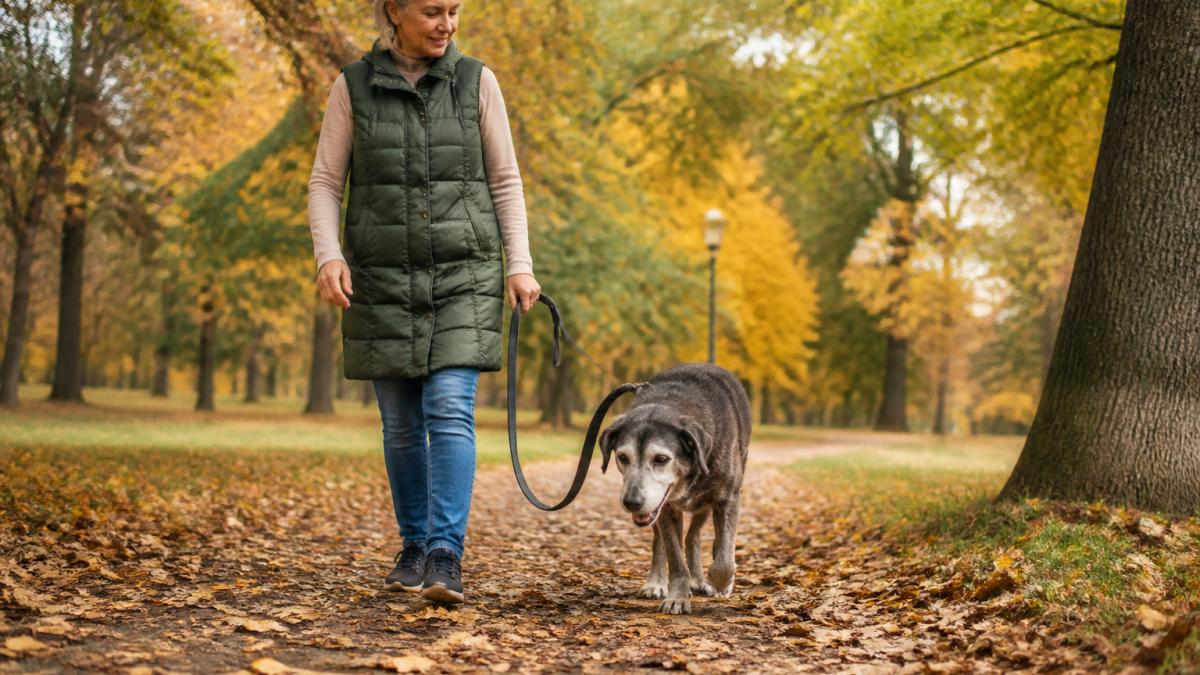
Among the top 10 canine enrichment activities for senior dogs, slow walks are the foundation of senior dog enrichment. Unlike a brisk jog, they let your older dog set the pace, stopping to sniff and explore without pressure to keep moving.
Sniff walks are even better: let your dog lead and follow their nose at ground level. This engages their most powerful sense, smell, while keeping exertion low.
Indoor Scent Work and Nose Games
Scent work doesn't require outdoor space. Hide a treat under a blanket, inside a cardboard box, or under a cushion and let your dog find it by nose.
A scent trail is another indoor option: place treats in a line across the floor leading to a final reward. Your senior dog sniffs their way to each treat, mimicking natural foraging without jumping, running, or climbing.
Puzzle Toys for Senior Dogs with Arthritis or Dental Sensitivity
Some senior dogs face specific physical challenges. Arthritis makes movement painful. Dental sensitivity makes hard chewing uncomfortable. Enrichment activities need to accommodate these limitations while still providing mental stimulation.
Soft Silicone Options for Gentle Chewers
The Chewzzle TreatDrop Ball ($14.99) is made from soft, durable silicone for gentle to moderate chewers, ideal for seniors with dental sensitivity.

It dispenses kibble or treats as your dog plays, and unlike hard plastic toys, the soft silicone won't aggravate sensitive teeth.
The Chewzzle ChewClean Treat Ball ($9.99) uses natural rubber, softer and more flexible than synthetic alternatives, making it gentler on aging teeth and gums.
Food-Based Enrichment Without Strain
Food-based enrichment doesn't always mean puzzle toys.
A lick mat, a grooved rubber mat, can be filled with soft foods like pumpkin, yogurt, or wet dog food.
The Chewzzle RollFeast Treat Ball ($9.99) works for seniors too: compatible with dry kibble up to a certain size, it dispenses treats as your dog rolls or nudges it, and the slow-feed design prevents gulping.
How Much Exercise and Enrichment Does a Senior Dog Need
No single number fits every senior dog, but there's a reliable way to find yours: start low, measure the response, and adjust. Most veterinarians suggest roughly 15 to 30 minutes of low-impact physical activity per day for healthy older dogs, split into two or three shorter sessions. Mental enrichment is separate and can happen daily in 5- to 15-minute blocks.
A Practical Starting Framework by Dog Profile
Use these as starting points, not prescriptions, and confirm with your veterinarian before changing your dog's routine, especially if your dog has a diagnosed heart, joint, or respiratory condition.
| Dog profile | Daily physical activity | Daily mental enrichment | Session length |
|---|---|---|---|
| Small breed, mobile, no major diagnoses | 20-30 min total, split | 15-25 min total | 5-10 min blocks |
| Medium/large breed, mild arthritis | 15-25 min total, split | 15-20 min total | 5-10 min blocks |
| Any size, moderate mobility limitation | 10-20 min total, split | 10-15 min total | 3-8 min blocks |
| Any size, cognitive changes or sensory loss | 10-20 min total, split | 10-15 min total, familiar settings | 3-5 min blocks |
| Recovery day after a flare-up | 5-10 min gentle sniffing only | 5-10 min low-effort licking or sniffing | 3-5 min blocks |
A 15-minute sniff walk often delivers more mental fatigue than a 30-minute brisk walk, because sniffing is cognitively demanding. That's why physical and mental activity are tracked separately: a dog with limited mobility can still get a full day's enrichment from scent work, lick mats, and food puzzles without covering much ground.
Measuring Whether an Activity Suits Your Dog
Rather than relying on claims that an activity 'tires out' a dog or 'improves memory,' watch for observable indicators before, during, and after the session:
- Engagement: Does your dog approach the activity willingly, or need coaxing? Willing approach is a green light; hesitation or avoidance is a signal to simplify or stop.
- Working behavior: Is your dog sniffing, nudging, pawing, or licking with focus? Sustained focus for even 3-5 minutes is a good sign.
- Relaxed body language: Loose, waggier movement, soft eyes, and an easy tail are positive. Stiff posture, tucked tail, lip licking, yawning, or turning away are stress signals.
If you see two or more stress signals in one session, end it and try a shorter or easier version next time. If your dog shows next-day stiffness or reluctance to move, drop the physical component and keep only mental work until your veterinarian weighs in.
Signs to Stop or Pause an Activity
Stop the session immediately if you observe any of the following:
- Heavy panting that does not settle within a minute or two of rest
- Limping, favoring a limb, or a change in gait
- Slipping, stumbling, or losing balance
Rest Days Are Part of the Plan
Enrichment isn't a daily quota to hit at all costs. One or two lighter days per week, gentle sniffing, a lick mat, or quiet time with you, prevent cumulative fatigue and give you a clearer read on your dog's baseline. If your dog needs more rest days than active ones, that's useful information for your veterinarian, not a failure of the plan.
Adapting Enrichment for Sensory Changes and Health Conditions
Most enrichment guides stop at 'adapt to your dog.' This section maps common age-related conditions to specific modifications, so you can adjust an activity instead of abandoning it. These are general patterns, not veterinary advice, confirm any change with your veterinarian, especially if your dog has a diagnosed condition or is on medication.
Arthritis and Joint Pain
Arthritis is the most common reason senior dogs stop using standard puzzle toys. The problem is rarely the puzzle itself; it's the posture required to use it.
- Raise the surface. Put puzzle feeders on a low, stable platform or a non-slip mat on a low stool so your dog does not have to bend or crouch. A dog that will not work a floor puzzle will often work the same puzzle at chest height.
- Shorten the reach. Choose puzzles with shallow compartments and wide openings rather than deep wells that require extended pawing.
- Warm up first. A 3- to 5-minute gentle walk or a warm compress on stiff joints before puzzle time can make the difference between engagement and refusal.
Vision Loss
Dogs losing or without vision rely on scent, sound, and routine. The goal is to make the activity findable without sight.
- Keep a fixed layout. Put the puzzle, mat, and water bowl in the same place every session so your dog can navigate by memory.
- Use strong-smelling treats. Warm, smelly foods (a bit of canned food, freeze-dried liver, or a dab of peanut butter) are easier to locate than dry kibble.
- Guide with scent trails. Place a line of small treats from a known landmark to the puzzle so your dog can follow the trail to the activity.
Hearing Loss
Dogs that cannot hear rely on visual cues and vibration.
- Switch to hand signals. Pair every verbal cue with a clear hand signal, and use the hand signal alone once your dog learns it.
- Use a flashlight or a stomp on the floor to get attention before starting an activity.
- Keep sessions in the same room so your dog is not startled by an unexpected approach from behind.
Cognitive Changes
Dogs showing signs of canine cognitive dysfunction, disorientation, altered sleep, staring at walls, house soiling, or reduced interaction, often benefit from simpler, more predictable enrichment rather than harder puzzles.
- Reduce difficulty, not frequency. Shorter, easier sessions more often are usually better tolerated than long, hard ones.
- Keep a consistent routine. Same time, same place, same sequence of activities.
- Favor scent and licking activities, which tend to be calming and require less problem-solving pressure.
Dental Sensitivity
- Choose soft silicone or natural rubber over hard plastic and nylon.
- Soak kibble slightly before putting it in a puzzle so it is easier to chew.
- Prefer lick mats and frozen soft treats over hard biscuits.
Weight and Mobility Limitations
For dogs who cannot comfortably stand for long or carry extra weight:
- Seated or lying-down activities. Lick mats, snuffle mats placed at floor level, and scatter-feeding on a rug let your dog work while lying down.
- Raised feeders reduce neck strain for dogs with neck or spine issues.
- Shorter, more frequent sessions beat one long session for dogs with low stamina.
Safety Checklist for Senior Dog Enrichment
Before introducing any enrichment activity, run through this checklist:
- Is the activity appropriate for my dog's current mobility level?
- Does my dog have any health conditions that could be aggravated by this activity?
- Are all materials non-toxic and safe for unsupervised chewing?
A Weekly Enrichment Plan for Your Senior Dog
Consistency matters. A structured weekly plan ensures regular mental stimulation. Here's a practical template to adapt to your dog's needs and your schedule:
| Day | Morning Activity | Afternoon Activity | Evening Activity |
|---|---|---|---|
| Monday | 15-min sniff walk | Puzzle toy (10 min) | Lick mat or slow feeder |
| Tuesday | Slow walk | Scent game indoors | Rest or gentle play |
| Wednesday | 15-min sniff walk | Puzzle toy (10 min) | Food-based enrichment |
| Thursday | Slow walk | Nose work setup | Rest or gentle play |
| Friday | 15-min sniff walk | Puzzle toy (10 min) | Lick mat or slow feeder |
| Saturday | Longer slow walk (20-30 min) | Rest | Puzzle toy (10 min) |
| Sunday | Gentle walk | Scent game indoors | Rest |
Adjust based on your dog's energy levels; some days they'll be more engaged than others. The goal is consistent, low-pressure enrichment that keeps their mind active without physical strain.
The Chewzzle puzzle toys fit naturally into this plan. Use the ThinkDisc or PuzzleFeast for afternoon sessions, rotate toys to prevent boredom, and save the soft silicone options for evening enrichment when your dog is winding down.
Frequently Asked Questions
What are some good enrichment ideas for elderly dogs?
Senior dogs benefit from low-impact enrichment like puzzle toys, sniff walks, scent games, and food-based activities. The Chewzzle ThinkDisc Puzzle Feeder ($19.99) slows eating and engages the mind without requiring physical exertion. Snuffle mats, treat searches, and gentle indoor nose work all provide mental stimulation while protecting aging joints. Choose activities based on your dog's mobility, hearing, and vision, shorter, more frequent sessions work better than long play periods.
How much mental stimulation and enrichment does a senior dog need daily?
Most senior dogs benefit from 15-30 minutes of enrichment daily, spread across multiple short sessions. This prevents fatigue while keeping the mind engaged. Puzzle toys like the Chewzzle MindMaze ($29.99) work well for solo play, while sniff walks and scent games are best done with you present. Adjust duration based on your dog's energy level and health, arthritic or cardiac dogs may need shorter sessions with more rest breaks between activities.
Are puzzle toys safe for senior dogs with dental problems or arthritis?
Yes, when chosen carefully. Soft silicone options like the Chewzzle TreatDrop Ball ($14.99) suit dogs with dental sensitivity, while sliding puzzles like the Chewzzle PuzzleFeast ($49.99) don't require heavy chewing. For arthritic dogs, avoid toys requiring jumping or intense paw work. Always supervise first sessions, and choose puzzles that your dog can solve without frustration. If your dog has specific health conditions, consult your veterinarian before introducing new enrichment.
How can I adapt enrichment activities if my senior dog has vision or hearing loss?
For vision loss, rely on scent-based enrichment like sniff walks and nose games, dogs navigate by smell naturally. Use tactile puzzles with textured surfaces. For hearing loss, use visual signals and hand gestures, and keep enrichment in familiar spaces so your dog feels secure. Avoid sudden surprises. The Chewzzle ChewClean Treat Ball ($9.99) works well for both because it relies on scent and touch rather than sound or sight. Always supervise closely and provide a safe, quiet space to decompress.
What's the difference between a slow feeder and a puzzle toy for senior dogs?
Slow feeders like the Chewzzle ThinkDisc ($19.99) primarily pace eating to prevent bloating and gulping, with modest mental challenge. Puzzle toys like the Chewzzle MindMaze ($29.99) prioritize problem-solving and cognitive engagement, with food as the reward. Many toys do both, the Chewzzle PuzzleFeast ($49.99) slows eating while requiring real thinking. For senior dogs, combination toys work best because they deliver enrichment and digestive benefit in one activity, reducing the need for multiple toys.
Senior dogs deserve enrichment that matches their changing bodies and minds. Puzzle toys, scent work, and low-impact activities keep aging dogs mentally sharp and emotionally satisfied. Chewzzle's interactive puzzle toys and slow feeders are designed specifically to support this enrichment journey. Our durable, non-toxic products turn daily routines into engaging challenges. Get started with Chewzzle and give your senior dog the mental stimulation they need to thrive in their golden years.