

Best Puzzle Toys for Blind Dogs 2026
Table of Contents
- Why Puzzle Toys Matter for Blind Dogs
- Quick Comparison: Top Puzzle Toys for Blind Dogs
- Sensory Toys for Blind Dogs: What Works Best
- Brain Games for Blind Dogs: Mental Stimulation Strategies
- Snuffle Mats for Dogs: Nose Work and Hidden Treats
- Safe Toys for Visually Impaired Dogs: Selection Criteria
- How to Introduce Puzzle Toys to Your Blind Dog
- Frequently Asked Questions
Last Updated: October 18, 2026
Why Puzzle Toys Matter for Blind Dogs
Blind and visually impaired dogs rely on scent, sound, and touch to navigate their world. Puzzle toys for blind dogs trigger these alternative senses, turning mealtime and playtime into rewarding mental exercises.
Toys designed with texture, sound, and scent in mind reduce anxiety, prevent destructive behavior, and keep your dog mentally sharp.
Mental stimulation isn't a luxury for blind dogs, it's essential. A bored dog is an anxious dog, and anxiety often manifests as destructive chewing, excessive barking, or withdrawal. Puzzle toys that engage nose work and problem-solving redirect that energy into something positive, producing a calmer, more confident dog.
Quick Comparison: Top Puzzle Toys for Blind Dogs
| Toy | Price | Best For | Key Advantage |
|---|---|---|---|
| Chewzzle MindMaze IQ Puzzle | $29.99 | Mental challenge & problem-solving | Adjustable difficulty, works for all sizes |
| Chewzzle ThinkDisc Puzzle Feeder | $19.99 | Fast eaters & mealtime enrichment | Slows eating, turning multiple puzzles into one |
| Chewzzle PuzzleFeast Sliding Puzzle | $49.99 | Advanced problem-solvers | One treat at a time pacing, durable sliding mechanism |
| Chewzzle TreatDrop Ball | $14.99 | Daily enrichment & dental health | Textured silicone, promotes healthy chewing |
| Chewzzle RollFeast Treat Ball | $9.99 | Budget-conscious owners | Slow feeder design, easy to use |
Sensory Toys for Blind Dogs: What Works Best
Sensory toys for blind dogs prioritize texture, scent, and sound over visual appeal. The best interactive toys engage multiple senses at once, creating a richer, more rewarding experience.

Texture matters because blind dogs explore through touch. Textured surfaces, ridges, grooves, and bumps give your dog's nose and paws something to investigate, keeping them engaged longer.
Scent is the blind dog's superpower. Their sense of smell is already 10,000 to 100,000 times better than humans, and without vision, they rely on it even more. Toys that hold food, treats, or scent-based elements tap directly into your dog's natural foraging instincts.
Sound-producing toys add another dimension. A toy that makes noise when nudged gives your blind dog immediate feedback, teaching cause and effect: "When I push this, something happens." That feedback builds confidence and encourages continued engagement.
Treat-Dispensing Toys and Slow Feeders
Treat-dispensing toys serve double duty for blind dogs: they provide mental stimulation while slowing down eating. Many visually impaired dogs gulp food faster because they can't visually track it. A puzzle toy that releases treats one at a time forces your dog to work for each reward.
The Chewzzle ThinkDisc Puzzle Feeder is particularly well-suited for this purpose. Its sliding paw-shaped covers and rotating center wheel create multiple layers of puzzle-solving, providing exactly the kind of mental engagement that reduces boredom and anxiety.

The Chewzzle PuzzleFeast Sliding Puzzle takes this further with a button-sliding mechanism. Each button hides one treat, so your dog works through the board one treat at a time. This pacing is invaluable for fast eaters, and the non-slip base keeps the toy stable for a blind dog who can't visually track a moving toy.
Sound-Producing and Scent-Based Options
Sound-producing toys give blind dogs a way to track play through audio feedback. When your dog nudges a toy and hears a rattle, squeak, or crinkle, they know their action had an effect, which builds confidence and encourages repeated interaction.
The Chewzzle TreatDrop Ball combines multiple sensory elements: textured silicone provides tactile interest, treats inside create scent appeal, and the ball's shape allows it to roll unpredictably. As your dog nudges it, treats gradually dispense, creating both sound and the rewarding smell of food.
Scent-based play taps directly into your blind dog's natural abilities. Hiding treats in a toy or under fabric engages their nose work instincts, letting them use their strongest sense to solve a puzzle and earn a reward. This enrichment is deeply satisfying because it plays to their strengths rather than highlighting their limitations.
Brain Games for Blind Dogs: Mental Stimulation Strategies
Mental stimulation is the antidote to boredom and anxiety in blind dogs. Brain games and puzzle toys challenge problem-solving abilities, forcing your dog to think, strategize, and work for rewards.
The Chewzzle MindMaze IQ Puzzle is designed specifically for this kind of mental challenge. Its adjustable difficulty means you can start simple and gradually increase the complexity as your dog learns. For a blind dog, this progression builds confidence and prevents frustration.
The key to effective brain games for blind dogs is variety. Use different toys on different days, rotate treats, and change the toy's location. This unpredictability keeps your dog engaged and prevents them from solving the puzzle so quickly that it stops being interesting.
Interactive play sessions with puzzle toys should last 10-15 minutes, long enough to provide real mental engagement but not so long that your dog becomes frustrated. Most dogs benefit from two or three short sessions per day rather than one long marathon session.
Snuffle Mats for Dogs: Nose Work and Hidden Treats
Snuffle mats are among the most effective enrichment tools for blind dogs because they engage nose work, your dog's natural foraging behavior. A snuffle mat is a fabric base with strips of material woven through it, creating pockets where you can tuck treats or kibble.
Your blind dog uses their nose to search through the fabric, sniffing out hidden treats. This mimics natural foraging behavior and is deeply rewarding, combining tactile fabric with the scent of hidden food.
Snuffle mats work particularly well because they don't require figuring out a mechanical puzzle. There's no learning curve, your dog instinctively uses their nose to hunt for food, making snuffle mats accessible for older blind dogs or anxious dogs who might find complex puzzles frustrating.
You can use a snuffle mat for part of your dog's daily kibble, turning a regular meal into an enrichment activity. Scatter their kibble throughout the mat, and let your dog spend 10-20 minutes searching and eating.
Safe Toys for Visually Impaired Dogs: Selection Criteria
Choosing safe toys for visually impaired dogs requires thinking beyond what works for sighted dogs. Without the ability to see a choking hazard or a broken piece of plastic, blind dogs face unique risks, so safety criteria must account for durability, material quality, size, and chewing style.
Materials and Durability
The material of a puzzle toy directly impacts its safety and longevity. Non-toxic, BPA-free plastic is essential because your dog will spend extended time chewing and manipulating the toy. Chewzzle toys are crafted from durable, non-toxic materials designed to withstand repeated use without breaking down or releasing harmful chemicals.
Silicone is another excellent material choice for blind dogs because it's soft, durable, and safe even with aggressive chewing. The Chewzzle TreatDrop Ball uses textured silicone that's gentle on gums while still being tough enough to handle regular play.
Natural rubber, like that used in the Chewzzle ChewClean Treat Ball, offers a middle ground between plastic and silicone. It's durable, non-toxic, and naturally resistant to degradation. For blind dogs who chew aggressively, natural rubber often holds up better than softer materials.
Avoid materials that splinter, crack, or break into small pieces. Your blind dog can't see a sharp edge or a loose piece, so material integrity is crucial for safety.
Size, Shape, and Choking Hazards
Size matters because blind dogs can't visually judge whether a toy is too small to safely chew. The general rule is that any toy should be too large to fit entirely in your dog's mouth.
Shape also influences safety. Toys with small protrusions, removable parts, or thin sections are riskier. Solid, well-constructed toys with no small detachable pieces are safer, like the Chewzzle PuzzleFeast Sliding Puzzle.

For treat-dispensing toys, check that the treat openings are appropriately sized for your dog. Treats that are too small could be a choking hazard; treats that are too large won't dispense properly. The Chewzzle RollFeast Treat Ball is compatible with most dry kibble or treats up to 0.59 x 0.91 inches in size.
Supervision and Introduction Best Practices
Even the safest toy requires proper introduction and supervision. Never leave a new toy unsupervised until you understand how your dog interacts with it. Some dogs solve puzzles methodically; others may try to destroy them.
Watch for signs of frustration or aggression. If your dog is becoming frustrated because they can't figure out the puzzle, remove it and try again later. Frustration can lead to destructive chewing, which increases the risk of injury.
For treat-dispensing toys, start with easier settings or partially open compartments so your dog experiences early success. This builds confidence and prevents the toy from becoming a source of stress rather than enrichment.
How to Introduce Puzzle Toys to Your Blind Dog
Introducing a new puzzle toy to your blind dog requires patience. Your goal is to build confidence and create positive associations before expecting them to solve complex puzzles.
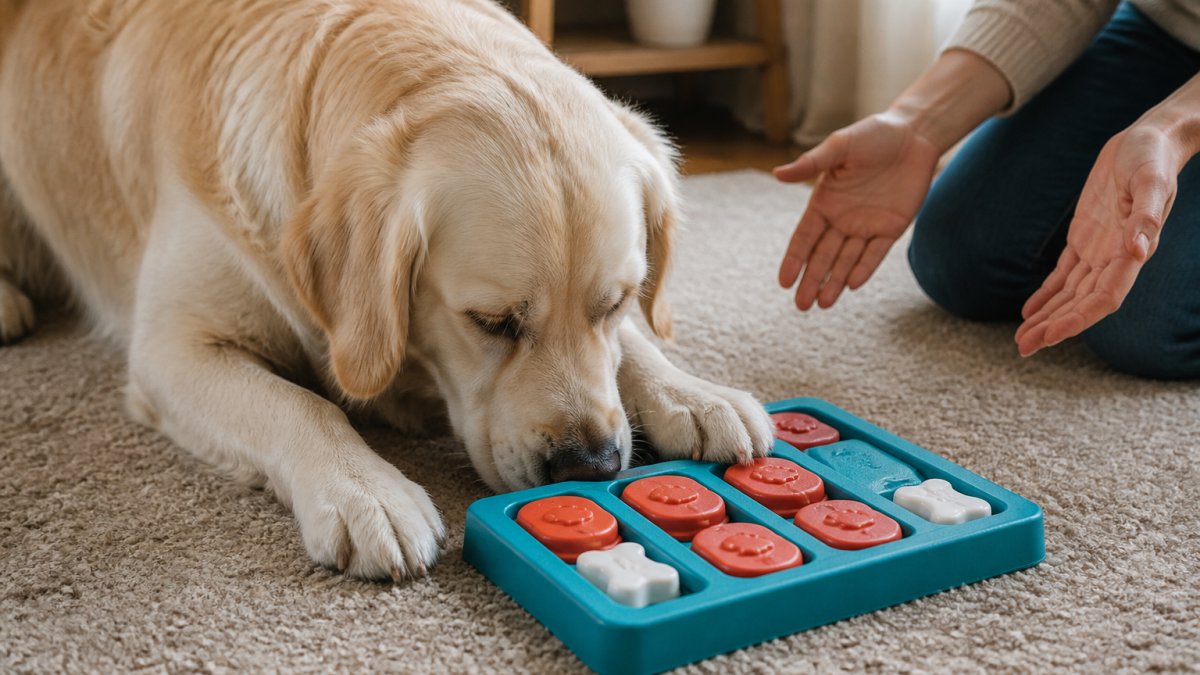
Start by letting your dog explore the toy with their nose. Don't immediately fill it with treats.
Next, place a high-value treat, something your dog loves, in an obvious, easy-to-access spot on the toy. Your dog should find the treat within seconds.
Gradually increase the difficulty over multiple sessions. Move the treat to slightly harder-to-reach spots. Add more treats so your dog has to search longer.
Keep early sessions short: 5-10 minutes. You want your dog to experience success and remain interested.
Use treats your dog is already motivated by. If your dog isn't food-motivated, puzzle toys may not be the best enrichment tool.
Always supervise the first several sessions. Watch how your dog interacts with the toy. Do they chew aggressively or solve methodically?
Finding the right puzzle toys for blind dogs means matching toys to your dog's sensory preferences, play style, and safety needs. The Chewzzle collection offers options across multiple price points and difficulty levels, so you can start with an affordable option like the RollFeast Treat Ball at $9.99 and upgrade to more challenging puzzles like the PuzzleFeast at $49.99 as your dog's skills develop.
Frequently Asked Questions
What are the best puzzle toys for blind dogs?
Puzzle toys for blind dogs should rely on scent, sound, and tactile feedback rather than visual cues. Treat-dispensing toys like the Chewzzle MindMaze IQ Puzzle ($29.99) and sliding puzzles like the Chewzzle PuzzleFeast ($49.99) work well because dogs use their nose and paws to solve them. Toys with textured surfaces, moving parts that make noise, and strong treat scents help visually impaired dogs engage confidently. Start with simpler toys and progress to more complex ones as your dog gains confidence.
How do you introduce a puzzle toy to a blind dog?
Introduce puzzle toys gradually in a quiet, familiar space. Let your dog explore the toy by smell and touch before adding treats. Start with the puzzle partly solved so your dog can quickly find a reward and build confidence. Use high-value treats with strong scents. Supervise early sessions and offer verbal encouragement. Once your dog understands the concept, you can increase difficulty by fully hiding treats. Most food-motivated dogs catch on within a few sessions.
Are snuffle mats good for blind dogs?
Yes, snuffle mats are excellent for blind dogs. They encourage natural nose-work and foraging behavior, which provides mental stimulation without relying on vision. Hide small treats or kibble in the fabric folds, and your dog uses scent to locate and retrieve them. This activity builds confidence, reduces anxiety, and provides enrichment during indoor time. Snuffle mats are safe, easy to supervise, and can be used daily as part of your blind dog's routine.
What safety features should I look for in toys for visually impaired dogs?
Choose toys made from non-toxic, BPA-free materials that are safe if chewed. Avoid small parts that could become choking hazards. Look for durable construction that won't break apart easily, dogs can't see loose pieces. Ensure toys have a non-slip base so they don't slide away during play. Textured surfaces help dogs grip and manipulate toys with their paws and nose. Always supervise initial use, and choose toys designed for your dog's size and chewing strength.