

5 Best Dog Brain Games for Puppies
Table of Contents
- Why Mental Stimulation Matters for Puppy Development
- Interactive Dog Toys for Mental Stimulation
- Best Puzzle Feeders for Puppies
- DIY Puppy Brain Games and Enrichment
- How to Tire Out a Puppy Mentally
- Age-Appropriate Difficulty and Breed-Specific Needs
- Troubleshooting Frustration and Common Mistakes
- Quick Comparison: Chewzzle Brain Games and Puzzle Toys
- Frequently Asked Questions
Last Updated: October 1, 2026
Why Mental Stimulation Matters for Puppy Development
Puppies' brains develop rapidly, and mental stimulation during these early months shapes how they learn, problem-solve, and handle stress. Without adequate cognitive engagement, puppies turn to destructive behaviors, chewing furniture, excessive barking, or obsessive play, because boredom and pent-up mental energy need an outlet.
The 5 best dog brain games for puppies are training tools that build focus, impulse control, and positive reinforcement. When a puppy solves a puzzle, their brain releases dopamine, a neurochemical reward that teaches them problem-solving is worthwhile. This translates into better obedience, calmer behavior, and genuine mental satisfaction.
High-energy breeds like Border Collies and Australian Shepherds especially benefit from structured mental enrichment, but all puppies gain confidence and focus from interactive play. A puppy that concentrates on a puzzle toy develops better impulse control in real-world situations.
Many puppy owners struggle with endless energy, destructive habits, or anxiety that physical exercise alone can't solve. The solution is mental stimulation through interactive dog toys for mental stimulation that engage your puppy's natural instincts to forage, problem-solve, and hunt.
Interactive Dog Toys for Mental Stimulation
Interactive puzzle toys turn mealtime into a challenge. Instead of eating from a bowl in seconds, your puppy works for their food, slowing eating, reducing bloating, and staying engaged far longer than with a traditional toy.

Chewzzle SmartPaws Interactive Puzzle
The Chewzzle SmartPaws features scalable difficulty as puppies grow. Load treats or kibble into compartments, and your puppy nudges, paws, or flips the toy to access them. You adjust how tightly compartments close, easier for beginners, harder as your puppy learns.
At $39.99, it encourages problem-solving while teaching that persistence leads to rewards. Non-toxic plastic handles aggressive chewing without breaking apart.
Chewzzle MindMaze IQ Puzzle
The MindMaze is smaller and lighter than the SmartPaws, ideal for puppies under 20 pounds. Multiple hidden compartments require your puppy to slide, spin, or flip sections to access treats.
At $29.99, it works well for food-motivated puppies. BPA-free plastic is durable, and treats dispense as your puppy solves each section.
Best Puzzle Feeders for Puppies
Puzzle feeders serve double duty as enrichment toys and slow-feeder bowls, transforming feeding from a 10-second event into a 5-10 minute engagement session.
Chewzzle ThinkDisc Puzzle Feeder
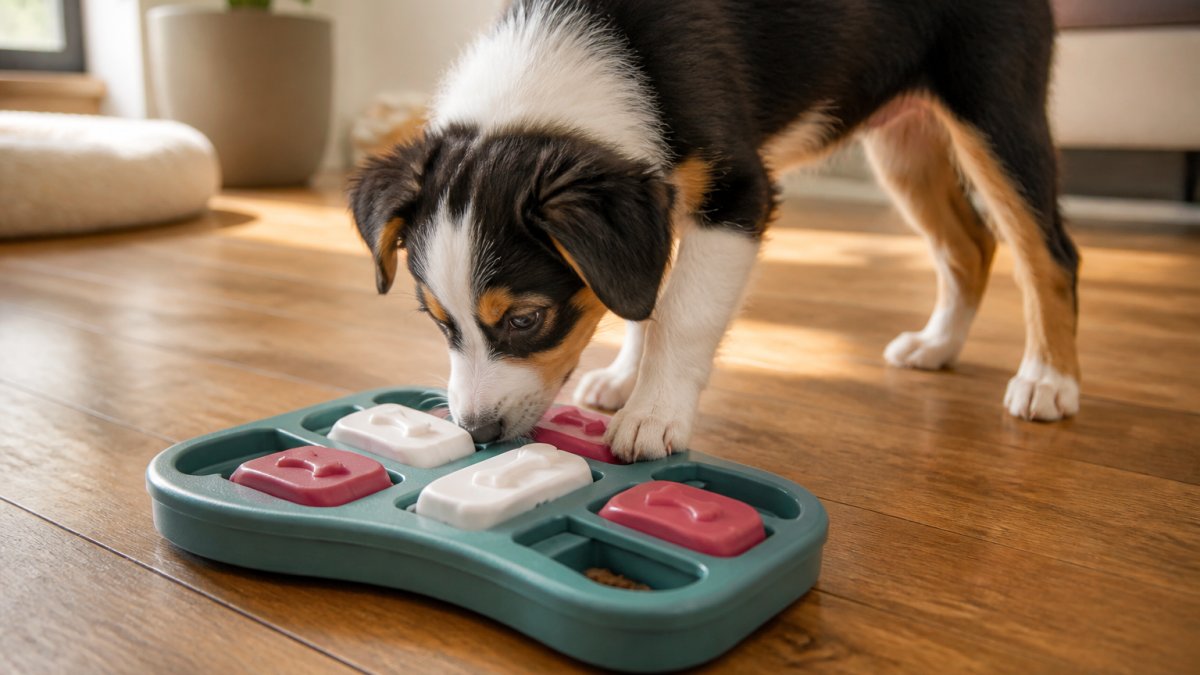
The ThinkDisc is a flat, disc-shaped feeder with sliding paw-shaped covers and a rotating center wheel. Your puppy nudges covers aside to reach kibble pockets, then works the center wheel for more.
At $19.99, it's the most affordable option. The non-slip rubber base keeps it planted while your puppy pushes at it.
It genuinely slows fast eaters, a bowl that disappears in seconds becomes a 5-minute puzzle. Simple enough for quick understanding, complex enough to stay interesting for weeks.
It's sized for small and medium dogs; large breed puppies may find compartments cramped. Difficulty cannot be adjusted.
Chewzzle PuzzleFeast Sliding Puzzle
The PuzzleFeast is a button-sliding puzzle where each button hides a single treat. Your puppy noses or paws buttons aside one at a time, forcing fast eaters to slow down.
At $49.99, the premium price reflects durability and thoughtful design. The non-slip base and engineered button mechanism handle repeated use. Load with kibble for meals or treats for enrichment.
It works for all sizes, smaller puppies use their nose, larger ones use a paw. Only one treat exposed at a time genuinely paces puppies.
Chewzzle SmartPaws Interactive Puzzle →
Chewzzle TreatDrop Ball
The TreatDrop Ball is soft silicone that dispenses treats gradually as your puppy plays. Textured silicone also helps reduce plaque buildup.
At $14.99, it's the budget-friendly entry point. Soft enough for teething puppies, durable for moderate chewing, and helps prevent bloating in fast eaters.
DIY Puppy Brain Games and Enrichment
Not every enrichment tool needs to cost money. Some of the best mental stimulation comes from items you already have at home. DIY games tap into your puppy's natural instincts to forage, sniff, and problem-solve.
Towel Roll and Muffin Tin Games
Roll a towel tightly and hide small treats inside the folds. Your puppy has to unroll the towel or nose through the layers to find the treats. This engages their natural foraging instincts and keeps them busy for 10-15 minutes.
For a muffin tin version, place kibble or treats in each cup and cover with tennis balls. Your puppy learns to move the balls aside to access the food. It's simple, free, and surprisingly effective.
The benefit: these games teach your puppy to problem-solve using their nose and paws. They're also adjustable, hide treats deeper in the towel or use smaller kibble pieces to increase difficulty.
Hide and Seek with Treats
Hide treats around your home or yard and let your puppy find them. Start with obvious hiding spots where your puppy can see the treat, then progress to more challenging locations. This game builds confidence and teaches your puppy to use their nose.
Scent Work and Sniffing Games
Puppies have incredible noses. Scent work games channel that instinct into mental engagement. Hide a treat in a box, under a blanket, or inside a paper bag. Let your puppy sniff and dig to find it. The mental effort of following a scent is exhausting in the best way, your puppy's brain is working hard, not just their legs.
How to Tire Out a Puppy Mentally
Physical exercise is important, but mental stimulation is what actually tires puppies out. A puppy that's spent 20 minutes working through a puzzle toy is more satisfied than one that's run for an hour without cognitive engagement.
Age-Appropriate Difficulty and Breed-Specific Needs
Not all puppies are the same. A 10-week-old Golden Retriever has different cognitive abilities than a 10-week-old Chihuahua. Similarly, some breeds are naturally more motivated by food, while others need different types of engagement.
Troubleshooting Frustration and Common Mistakes
The most common mistake is introducing a puzzle that's too difficult. Your puppy tries for 30 seconds, can't figure it out, and walks away. They've learned that the toy is frustrating, not rewarding. Start simpler than you think necessary.
Quick Comparison: Chewzzle Brain Games and Puzzle Toys
| Toy | Price | Best For | Key Feature | Durability |
|---|---|---|---|---|
| SmartPaws Interactive Puzzle | $39.99 | Puppies needing scalable difficulty | Adjustable compartment difficulty | Heavy-duty plastic |
| MindMaze IQ Puzzle | $29.99 | Food-motivated puppies under 20 lbs | Multiple hidden compartments | BPA-free plastic |
| ThinkDisc Puzzle Feeder | $19.99 | Budget-conscious owners, fast eaters | Sliding covers and rotating wheel | Non-slip base |
| PuzzleFeast Sliding Puzzle | $49.99 | Puppies who gulp food | One treat at a time | Premium durability |
| TreatDrop Ball | $14.99 | Teething puppies, gentle chewers | Soft silicone construction | Moderate chewing |
Mental stimulation is the missing piece in most puppy training routines. Interactive dog toys for mental stimulation don't just keep your puppy busy, they build confidence, improve focus, and create a foundation for better behavior throughout their life. The best dog brain games for puppies combine commercial puzzle toys with DIY enrichment, giving you flexibility and variety.

Frequently Asked Questions
What are good brain games for puppies?
The best brain games for puppies combine treat-dispensing, problem-solving, and sensory play. Puzzle toys like the Chewzzle SmartPaws Interactive Puzzle and MindMaze IQ Puzzle encourage problem-solving skills through hidden rewards. DIY games such as muffin tin puzzles, towel rolls, and scent work engage puppies without expensive equipment. Interactive play like hide-and-seek with treats builds focus and impulse control. Start with simpler games at 8-12 weeks old and gradually increase difficulty as your puppy develops.
How does mental stimulation help reduce destructive puppy behavior?
Mental stimulation channels a puppy's natural curiosity and energy into productive activities, reducing boredom-driven chewing and destructive behaviors. When puppies engage with puzzle toys and brain games, they experience cognitive fatigue alongside physical exercise. This combination satisfies their need for enrichment and helps them develop impulse control and problem-solving skills. Dogs with adequate mental engagement show fewer signs of separation anxiety and are more likely to settle calmly indoors.
What is the best puzzle feeder for fast eaters?
The Chewzzle PuzzleFeast Sliding Puzzle ($49.99) is ideal for fast eaters because it dispenses one treat at a time, forcing your puppy to solve each button slide individually. This paces eating and encourages sniffing and problem-solving rather than gulping. The Chewzzle ThinkDisc Puzzle Feeder ($19.99) offers a budget-friendly alternative with sliding covers and a turning center wheel. Both designs prevent bloating and indigestion while providing mental enrichment during regular mealtimes.
How long should puppy brain training sessions last?
Most puppies benefit from 5-15 minute brain training sessions, repeated 2-3 times daily. Younger puppies (8-12 weeks) tire quickly and need shorter, frequent sessions. As puppies mature, you can extend sessions to 20-30 minutes. Watch for signs of frustration or fatigue, if your puppy loses interest or becomes frustrated, end the session on a positive note. Mental exercise is cumulative, so multiple short sessions throughout the day are more effective than one long session.
Are puzzle toys safe for puppies?
Yes, when chosen carefully. Select toys made from non-toxic, BPA-free materials like those used in Chewzzle products. Supervise your puppy during initial sessions to ensure they're solving the puzzle rather than chewing it. Avoid toys with small, detachable parts that could be swallowed. For puppies under 12 weeks, start with larger, simpler designs. Always match the toy size to your puppy's breed and monitor for signs of choking hazards or excessive chewing.