

Interactive Dog Toys for Mental Stimulation: 2026 Guide
Table of Contents
- Why Interactive Dog Toys for Mental Stimulation Actually Matter
- Types of Interactive Dog Toys: Matching the Toy to the Need
- The Real Benefits of Slow Feeder Toys Beyond Mealtime
- Mental Stimulation for High Energy Dogs: Breed and Age Considerations
- Durable Enrichment Toys for Chewers: What to Look For
- Enrichment for Anxious and Rescue Dogs
- Cleaning, Maintenance, and Safe Play: What Most Guides Skip
- Conclusion
Last Updated: August 28, 2026
Why Interactive Dog Toys for Mental Stimulation Actually Matter
Dogs are problem-solvers by nature. Modern pet life strips away the foraging, hunting, and environmental challenges their ancestors faced, leaving a brain built for problems with almost none to solve. That gap is where boredom, anxiety, and destructive behavior take root.
Interactive dog toys for mental stimulation directly address this need by giving dogs a job to do and a reward for figuring it out. According to American Kennel Club's guide to canine enrichment, mental exercise can tire a dog out as effectively as physical exercise. A 20-minute puzzle session can leave a high-energy dog calmer than a 30-minute walk alone.
This guide covers which toy types work for which dogs, how age and breed shape your needs, maintenance best practices, and how to use puzzle toys alongside training for compounding results.
Signs Your Dog Needs More Cognitive Enrichment
Watch for excessive chewing on furniture, barking without obvious triggers, hyperactivity that doesn't settle after a walk, digging, pacing, or escalating attention-seeking behavior. These are rarely personality flaws, they're symptoms of insufficient mental engagement. The fix isn't more corrections; it's more enrichment.
Types of Interactive Dog Toys: Matching the Toy to the Need
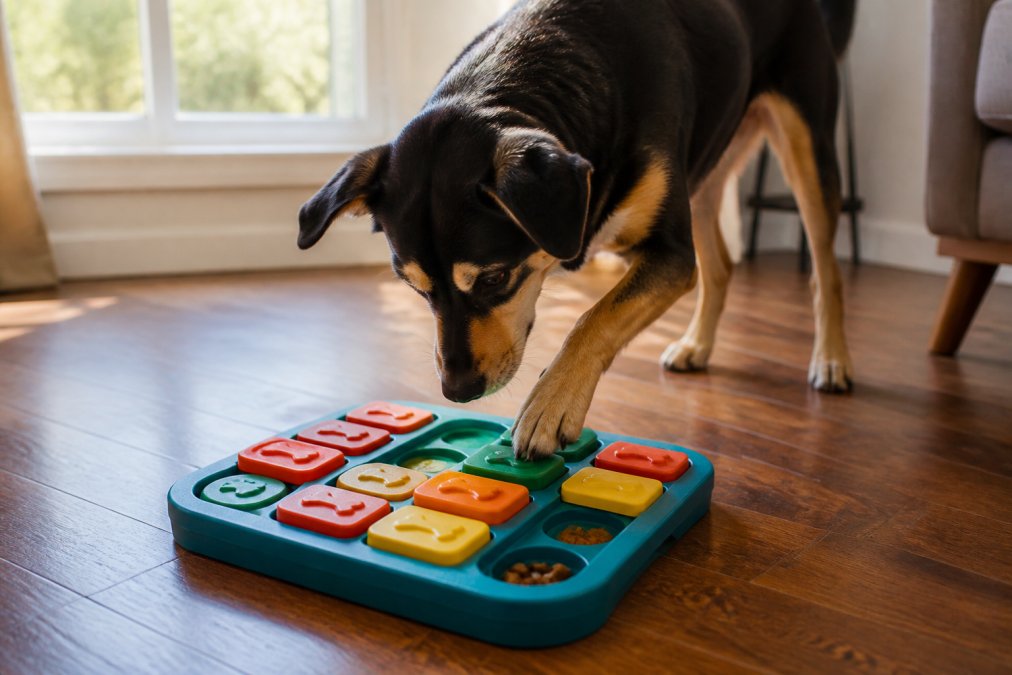
Not all interactive dog toys are created equal. The right starting point is understanding what motivates your dog: food-motivated dogs thrive with treat-dispensing puzzles, scent-driven dogs light up with snuffle mats, and high-energy dogs often do best with toys combining movement and reward.
| Dog Profile | Best Toy Type | Goal |
|---|---|---|
| Food-motivated, fast eater | Slow feeder, sliding puzzle | Slow meals, extend engagement |
| High-energy, easily bored | Treat-dispensing ball, IQ puzzle | Burn mental energy |
| Anxious or rescue dog | Lick mat, snuffle mat | Calming, sensory engagement |
| Senior or low-mobility dog | Low-difficulty puzzle | Gentle cognitive engagement |
| Heavy chewer | Durable chew-and-dispense toy | Safe outlet, mental stimulation |
| Puppy in training | Beginner puzzle with clear rewards | Build problem-solving skills |
Treat-Dispensing and Puzzle Toys
Treat-dispensing toys activate foraging behavior, one of the most deeply wired instincts in domestic dogs. The Chewzzle MindMaze IQ Puzzle ($29.99) lets dogs unlock hidden compartments to reach treats. For dogs that master beginner puzzles quickly, the Chewzzle PuzzleFeast Sliding Puzzle ($49.99) raises difficulty with individual buttons covering treats. The Chewzzle TreatDrop Ball ($14.99) combines treat-dispensing with movement, dispensing kibble as the dog bats it around.

Lick Mats, Snuffle Mats, and Slow Feeders
Repetitive licking triggers serotonin release and promotes calm, making lick mats effective for anxious dogs and stressful situations. Snuffle mats hide kibble in fabric folds, engaging scent work, especially effective for Beagles, Dachshunds, and German Shepherds.
Slow feeders extend mealtime while preventing gulping. According to American Veterinary Medical Association resources on canine bloat, rapid eating contributes to gastric dilatation-volvulus in susceptible breeds. Slow feeders address this risk while turning mealtime into a brain game.
The Real Benefits of Slow Feeder Toys Beyond Mealtime
Slow feeders engage foraging behavior throughout the meal. Dogs that eat from a slow feeder are not just eating more slowly; they're problem-solving. A dog finishing a slow feeder meal is noticeably calmer than one clearing a bowl in 30 seconds.
Secondary benefits include improved digestion, reduced post-meal hyperactivity, a calm mental state carrying into the afternoon, and positive associations with mealtime that reduce food-related anxiety.
Mental Stimulation for High Energy Dogs: Breed and Age Considerations
High-energy breeds need cognitive challenge alongside physical exercise. Border Collies, Australian Shepherds, and Belgian Malinois were developed to make independent decisions for hours. Mental stimulation works best when layered: physical exercise followed by a puzzle session produces a more settled dog than either alone.
Breed-specific considerations matter. Scent hounds engage best with snuffle mats and hide-and-seek games. Herding breeds respond well to multi-step sliding puzzles. Retrievers thrive with treat-dispensing toys they can play with alongside their owner.
Age-Specific Enrichment: Puppies, Adults, and Seniors
Puppies need enrichment building confidence without overwhelming them. Start with single-step puzzles where success is nearly guaranteed. Short five-to-ten-minute sessions are more effective than longer ones.
Adult dogs can handle progressively harder challenges. Rotate toys every few days to prevent habituation. If your dog solves a puzzle in under two minutes consistently, move up a difficulty level.
Senior dogs benefit from continued enrichment in formats that don't strain joints. Lick mats, snuffle mats, and low-profile slow feeders keep the brain active without physical strain. According to Veterinary partner resources on cognitive aging in dogs, regular mental engagement in senior dogs is associated with slower cognitive decline.
Integrating Puzzle Toys with Positive Reinforcement Training
Puzzle toys teach dogs that effort produces reward, the same foundation positive reinforcement training builds on. Use a puzzle toy as a warm-up before training sessions. Five minutes of treat-dispensing play puts your dog in a focused, food-motivated state that carries into the training block.
You can also use puzzle toys to reinforce commands. Ask for a sit or down before placing the puzzle in front of your dog. Over time, the dog associates calm, responsive behavior with access to enrichment.
Durable Enrichment Toys for Chewers: What to Look For
For heavy chewers, durability is a safety concern. Broken fragments can be swallowed, and cheap materials may contain unwanted additives.
Durable enrichment toys need:
- Material integrity: Thick, food-grade silicone or hard non-toxic nylon compounds
- Non-toxic certification: Materials tested to ASTM F963 toy safety standards
- Construction: Integrated puzzle pieces rather than loose components
- Difficulty level: Challenging enough to hold attention through the session
The Chewzzle SmartPaws Interactive Puzzle ($39.99) is built for heavy chewers needing substantial mental challenge.

Enrichment for Anxious and Rescue Dogs
Anxiety-driven destruction is a coping mechanism. Interactive enrichment gives anxious dogs a healthier outlet and can reshape their emotional response to triggering situations.
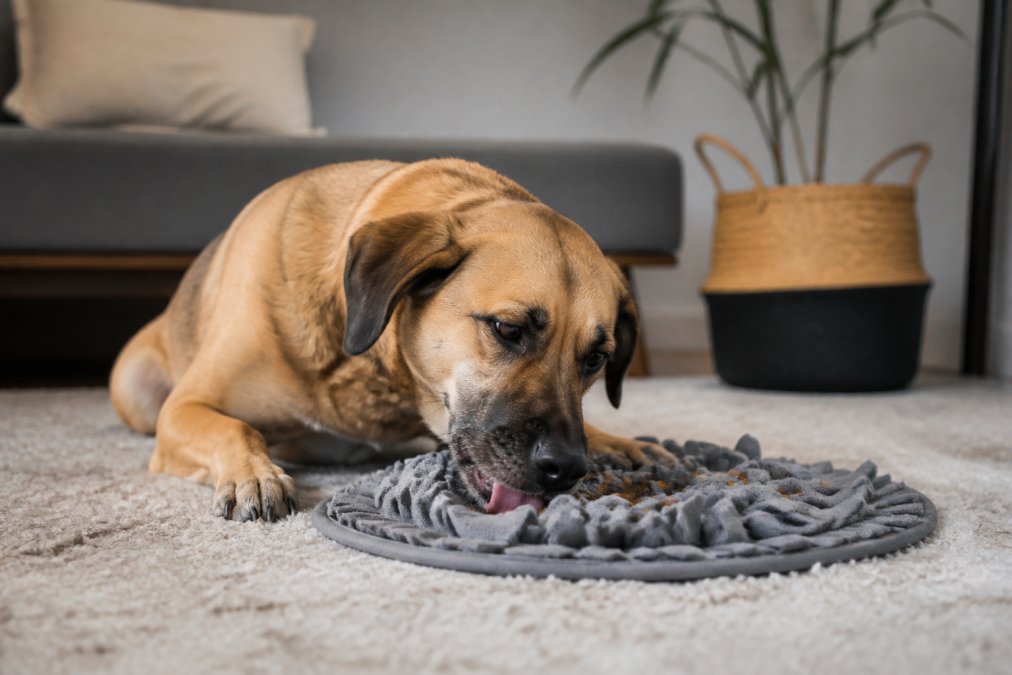
Introduce enrichment gradually. Start with a lick mat, the repetitive licking is inherently calming. Once comfortable, introduce a snuffle mat, then a beginner puzzle. This graduated approach builds confidence alongside problem-solving skills.
For separation anxiety, leaving a lick mat or treat-dispensing toy as you exit creates a positive association with your departure. The goal isn't just distraction, it's building your dog's capacity to self-regulate.
Cleaning, Maintenance, and Safe Play: What Most Guides Skip
Puzzle toys accumulate saliva, food residue, and treat fragments in hard-to-reach crevices. Left uncleaned, these grow bacteria and mold.
| Toy Type | Cleaning Method | Frequency |
|---|---|---|
| Silicone lick mat | Dishwasher safe (top rack) or hand wash | After every use |
| Plastic puzzle board | Hand wash with brush for crevices | After every use |
| Treat-dispensing ball | Rinse immediately; soak for stubborn residue | After every use |
| Snuffle mat | Machine wash on gentle cycle; air dry completely | Weekly or when soiled |
Air dry completely to prevent mold. Inspect regularly for cracks or separated components. Rotate four to six toys to keep novelty high. Match treat size to the toy specifications. Keep toys separate for households with different-sized dogs.
Dogs with more mental engagement tend to be calmer, more trainable, and easier to live with. Chewzzle's range of interactive puzzle toys and slow feeders, from the beginner-friendly TreatDrop Ball to the multi-step PuzzleFeast Sliding Puzzle, meets dogs at every stage and temperament. Every product is crafted from non-toxic materials with durability in mind. Add to cart and give your dog the mental workout they've been waiting for.

Frequently Asked Questions
What are the most mentally stimulating dog toys?
Sliding puzzle boards, treat-dispensing balls, and multi-level IQ puzzle toys consistently rank as the most mentally demanding options. The Chewzzle PuzzleFeast Sliding Puzzle and MindMaze IQ Puzzle both require dogs to problem-solve through sequential steps before earning a treat, which builds focus and extends engagement. Snuffle mats and lick mats also deliver strong cognitive enrichment, especially for food-motivated dogs or those working through separation anxiety.
Are puzzle toys good for anxious dogs?
Yes, and the mechanism is straightforward: puzzle toys redirect anxious energy toward a solvable task. The focused, repetitive action of nosing or pawing for treats activates foraging behavior, which is naturally calming for dogs. Lick mats in particular are used as calming techniques because the sustained licking motion releases serotonin. For rescue dogs or those with separation anxiety, starting with an easy puzzle and working up in difficulty helps build confidence rather than frustration.
How long does 15 minutes of mental stimulation actually tire a dog?
Fifteen minutes of active puzzle play can produce mental fatigue comparable to a 30-to-45-minute walk for many dogs, particularly high-energy breeds. The concentration required to solve treat-dispensing toys and IQ puzzles burns energy differently than physical exercise. Dogs that finish a puzzle session often settle more quickly and stay calmer for longer. Combining interactive dog toys with daily walks gives you the most balanced enrichment routine.
How do I clean interactive dog toys safely between uses?
Most silicone and hard-plastic puzzle toys can be rinsed under warm water and scrubbed with a pet-safe dish soap after each use. Many are dishwasher safe on the top rack, which cuts cleaning time significantly. Check the product label before using a dishwasher, as some multi-part sliding puzzles have components that warp under high heat. Letting toys dry fully before refilling prevents mold in treat compartments, especially with wet food or peanut butter.
This article was written using GrandRanker