
Best Interactive Feeders for Small Dogs
Table of Contents
- Why Interactive Feeders Matter for Small Dogs
- Benefits of Puzzle Feeders for Dogs
- How to Stop Dog Eating Too Fast
- Top Interactive Feeders for Small Dogs: Quick Comparison
- Chewzzle ThinkDisc Puzzle Feeder: Multi-Level Challenge
- Chewzzle PuzzleFeast Sliding Puzzle: Button-by-Button Problem Solving
- Chewzzle SnuffleSphere Foraging Ball: Natural Instincts Unleashed
- Budget-Friendly Options: TreatDrop Ball, RollFeast, and ChewClean Treat Ball
- Frequently Asked Questions
Last Updated: September 19, 2026
Why Interactive Feeders Matter for Small Dogs
Small dogs often face a problem that larger breeds don't: they tend to inhale their food in seconds. What should be a calm, healthy mealtime becomes a frantic race. This is where interactive feeders for small dogs make a real difference.
Interactive feeders transform eating from a passive gulp into active mental work. Your dog has to solve a puzzle, nudge buttons, or dig through fabric to access their food. The result is slower eating, better digestion, and a dog that's mentally engaged rather than bored.
At Chewzzle, we've designed interactive feeders specifically for the needs of small dog owners. Whether you're managing a fast eater prone to bloating, a rescue dog with anxiety, or a puppy that destroys everything in sight, the right puzzle feeder can address multiple challenges at once. It's not just about slowing down mealtime, it's about enrichment, mental stimulation, and supporting your dog's overall wellbeing.

Benefits of Puzzle Feeders for Dogs
Puzzle feeders deliver tangible benefits that go beyond keeping your dog entertained during meals. The primary advantage is controlling eating speed. Dogs that gulp their food are at higher risk for bloating and digestive upset. When food comes out one piece at a time instead of all at once, your dog's digestive system has time to process properly.
Mental enrichment is the second major benefit. Dogs are natural problem-solvers. When they work for their food instead of simply consuming it, they activate cognitive pathways that reduce anxiety and boredom. This is especially valuable for rescue dogs with separation anxiety or high-energy breeds that need constant stimulation.
A third benefit often overlooked: puzzle feeders extend mealtime. A bowl that disappears in 30 seconds now takes 10-15 minutes. That extended engagement keeps your dog occupied and satisfied longer, which can reduce destructive chewing and excessive barking during the day.
How to Stop Dog Eating Too Fast
Fast eating is a behavioral pattern, not a character flaw. Some dogs are naturally competitive eaters, especially rescues that came from food-insecure backgrounds. Others are simply enthusiastic. Regardless of the cause, you have proven strategies to slow them down.
The most effective approach is using a slow feeder or puzzle toy. These physically prevent your dog from accessing all their food at once. Instead of shoveling kibble into their mouth, they have to work for each bite. This mimics natural foraging behavior and satisfies the instinct to hunt and search.
Portion control also matters. If you're feeding your dog's entire meal in one sitting, consider splitting it into two or three smaller portions throughout the day. This reduces the volume available at once and gives your dog multiple enrichment opportunities.
Feeding environment changes can help too. Some dogs eat faster when they sense competition or feel rushed. Feed your dog in a calm, quiet space without distractions. Remove other pets from the room if you have multiple dogs. This removes the psychological pressure that drives fast eating.
For dogs with severe gulping issues, hand-feeding small amounts can be effective during training. This gives you direct control over eating pace and reinforces calm behavior around food.
Top Interactive Feeders for Small Dogs: Quick Comparison
The key is matching the right toy to your dog's size, chewing style, and problem-solving ability.
| Product | Price | Best For | Key Feature |
|---|---|---|---|
| Chewzzle ThinkDisc Puzzle Feeder | $19.99 | Dogs new to puzzles | Multi-level sliding covers and rotating wheel |
| Chewzzle PuzzleFeast Sliding Puzzle | $49.99 | Advanced problem-solvers | Button-by-button treat dispensing |
| Chewzzle SnuffleSphere Foraging Ball | $29.99 | Natural foraging instincts | Soft fleece mimics snuffling in grass |
| Chewzzle TreatDrop Ball | $14.99 | Budget-conscious owners | Textured silicone with treat leaks |
| Chewzzle RollFeast Treat Ball | $9.99 | Active play sessions | IQ-boosting rolling and nudging |
| Chewzzle ChewClean Treat Ball | $9.99 | Dental health focus | Natural rubber cleans teeth during play |
Each option serves a different purpose. Some emphasize mental challenge, others focus on slow feeding, and a few combine dental benefits with enrichment. Your choice depends on your dog's current behavior and what problem you're trying to solve.

Chewzzle ThinkDisc Puzzle Feeder: Multi-Level Challenge
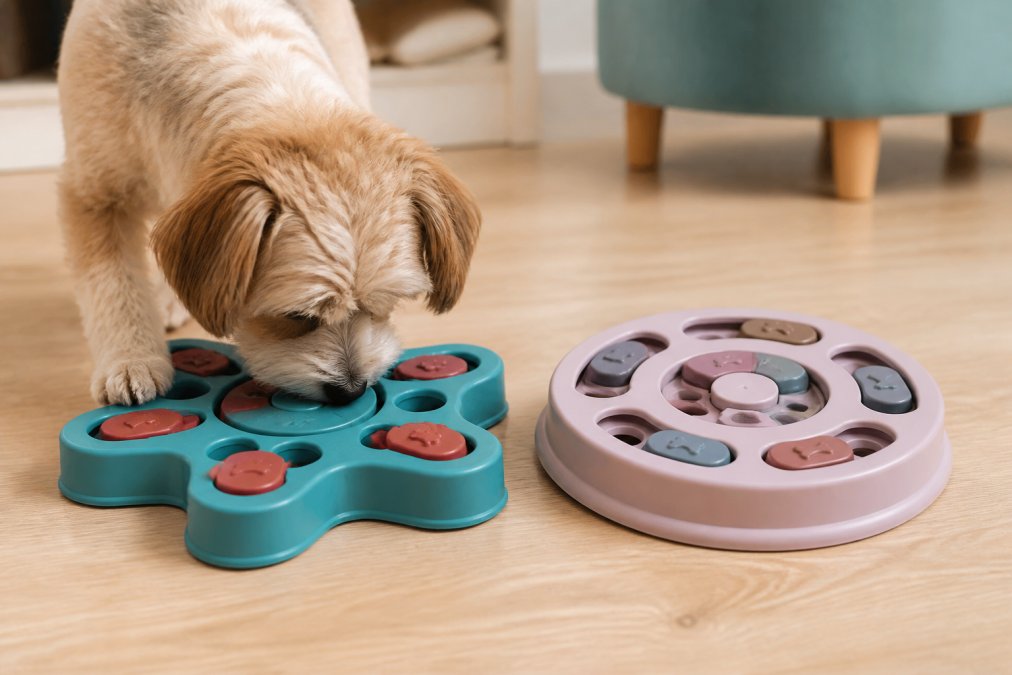
The ThinkDisc is the ideal entry point for dogs new to puzzle feeders. It combines two different puzzle mechanisms, sliding paw-shaped covers and a rotating center wheel, so your dog learns problem-solving in layers.
Food goes into recessed compartments around the rim and in the center wheel. Your dog nudges the paw-shaped covers aside to reach the outer compartments, then figures out how to rotate the center wheel to access the hidden wedges inside. This dual-puzzle approach keeps even smart dogs engaged longer than single-mechanism toys.
Chewzzle ThinkDisc Puzzle Feeder →
The non-slip rubberized base is a practical feature often overlooked. Small dogs can push puzzle feeders across tile or hardwood floors while working on them. The ThinkDisc stays planted, reducing frustration and preventing the toy from sliding under furniture mid-puzzle.
At $19.99, the ThinkDisc is a great option. It works for both small and medium dogs, and the product listing notes it's equally effective for cats. The pet-safe plastic construction is easy to rinse clean.
One strategic tip: rotate where you place the food between sessions. If your dog learns that treats are always in the same compartments, the puzzle becomes routine and engagement drops. By varying food placement, you keep the challenge fresh.
Chewzzle PuzzleFeast Sliding Puzzle: Button-by-Button Problem Solving
The PuzzleFeast takes puzzle feeding to the next level. Instead of multiple compartments, it features a sliding-button design where each button hides a single treat. Your dog has to nose or paw each button aside sequentially to work their way across the entire board.
This mechanism creates genuine mental work. The dog can't just figure out the puzzle once and be done, they have to repeat the problem-solving process dozens of times during a single feeding session. Each button requires the same effort and focus as the first, maintaining engagement throughout the meal.
The pace control is exceptional. Because only one treat is uncovered at a time, even the fastest eaters slow down dramatically. A portion of kibble that would normally disappear in 30 seconds takes 10-15 minutes. This extended feeding time satisfies the dog's need to work for food while giving their digestive system adequate time to process.
At $49.99, the PuzzleFeast is a premium option in the Chewzzle lineup. The non-slip base keeps it stable on tile and hardwood.
Chewzzle SnuffleSphere Foraging Ball: Natural Instincts Unleashed
The SnuffleSphere takes a different approach than rigid puzzle feeders. Instead of mechanical challenges, it taps into your dog's natural foraging instincts. The soft fleece construction mimics grass or leaf litter, and treats are hidden within the fabric layers.
Budget-Friendly Options: TreatDrop Ball, RollFeast, and ChewClean Treat Ball
Not every dog needs a complex puzzle feeder. Sometimes a simpler, more affordable option delivers exactly what you need. The Chewzzle budget tier includes three solid choices, each with a different strength.
| Budget Option | Price | Best For | Durability |
|---|---|---|---|
| TreatDrop Ball | $14.99 | Dental health + slow feeding | Gentle to moderate chewers |
| RollFeast Treat Ball | $9.99 | Active play + mental engagement | Regular use, moderate chewers |
| ChewClean Treat Ball | $9.99 | Aggressive chewers, all sizes | Heavy-duty use, tough chewing |
Frequently Asked Questions
Are interactive feeders good for dogs that eat too fast?
Yes. Interactive feeders slow eating by dispensing food one piece at a time or requiring problem-solving before each bite. This pacing helps prevent bloating, indigestion, and gulping, common issues in fast eaters. Most dogs take several minutes instead of seconds to finish a meal, which also extends mental engagement and satisfaction.
How do I choose the right size puzzle feeder for my small dog?
Look for feeders designed for small to medium dogs. The Chewzzle PuzzleFeast and ThinkDisc work for dogs of all sizes, smaller dogs typically use their nose to solve them, while larger dogs use their paws. Portable options like the SnuffleSphere are ideal if you travel or use crate training, while larger puzzle boards work best for stationary feeding.
What are the main benefits of puzzle feeders for dogs?
Puzzle feeders provide mental enrichment, slow eating speed, and reduce boredom-related behaviors. They mimic natural foraging instincts, improve problem-solving skills, and turn mealtime into cognitive work rather than mindless consumption. For anxious or high-energy dogs, this mental engagement can reduce anxiety and support overall wellbeing.
How often should I clean interactive feeders?
Clean after each use to prevent food buildup and bacteria growth. Most Chewzzle feeders are easy to rinse, the ThinkDisc, TreatDrop Ball, and others can be hand-washed or rinsed under warm water. Quick rinses take 1-2 minutes. Dry thoroughly before refilling to maintain hygiene and keep the toy fresh for your dog.
Can I use interactive feeders for a whole meal or just treats?
Both. You can fill puzzle feeders with a portion of your dog's regular kibble to slow a full meal, or use a handful of treats for shorter enrichment sessions. The Chewzzle PuzzleFeast and ThinkDisc work especially well for kibble-based meals, while smaller balls like the TreatDrop work best for treat-based play. Adjust based on your dog's appetite and training goals.