

Clean Dog Puzzle Toys Fast: 5-Minute Method
Table of Contents
- Why Quick Cleaning Matters for Puzzle Toys
- What You'll Need for a Fast Clean
- The 5-Minute Speed-Cleaning Workflow
- Dishwasher Safe Dog Toys: When to Use the Machine
- Cleaning Hard-to-Reach Crevices in Dog Puzzles
- A Simple Dog Toy Maintenance Schedule
- Conclusion: Keep Playtime Fresh and Sanitary
- Frequently Asked Questions
Last Updated: September 6, 2026
Dog puzzle toys are brilliant for mental stimulation, but they turn into a sticky science experiment if you skip the hygiene. We design interactive feeders and puzzles, and we have tested every method below on rubber, plastic, and fabric surfaces.
The fastest method takes just five minutes and requires items you already own. A quick daily rinse handles light slobber, while a deeper weekly soak tackles residue in crevices. This guide walks you through both, plus the dishwasher settings that work for some toys and ruin others.
Why Quick Cleaning Matters for Puzzle Toys
Every time your dog noses a treat out of a compartment, saliva and food particles get pushed deeper into the seams. Left alone, that residue hardens, becomes harder to remove, and starts to smell.
Puzzle toys are designed to be licked, chewed, and pawed for extended periods, so they collect more saliva than a standard chew toy. Sticky surfaces also trap dirt and hair from your floors, turning the toy into a magnet for grime.
A consistent routine prevents the problem entirely. A few minutes of maintenance after each use keeps the toy fresh and reduces the need for heavy scrubbing later.
What You'll Need for a Fast Clean
You do not need specialty cleaners to clean dog puzzle toys effectively. The best supplies are probably in your kitchen right now. Use ingredients that are non-toxic and food-grade, since your dog will put their mouth on every surface.
Gather these items before you start:
- Warm water to loosen dried food and activate your cleaning agent
- Mild dish soap that is free of strong fragrances and dyes
- White vinegar for tackling stubborn odors and mineral buildup
- Baking soda as a gentle abrasive for baked-on residue
- A soft-bristled brush like a baby bottle brush or old toothbrush for crevices
- A clean, dry towel for the first stage of drying
Avoid bleach or harsh disinfectants. These leave residues that are not pet-safe, and the smell can deter your dog from using the toy again. Stick to mild dish soap for routine washes and save vinegar for occasional odor removal.
The 5-Minute Speed-Cleaning Workflow
This is the core routine for daily or every-other-day cleaning after your dog finishes a puzzle session. The entire process takes about five minutes of active time, plus drying time.
Step 1: Shake Out Loose Debris
Start before the toy touches water. Hold the puzzle over a trash can or sink and give it a few firm shakes. This dislodges crumbs, hair, and loose kibble that would otherwise turn into sludge in your sink.
For toys with sliding parts or removable covers, take them apart first. This exposes the surfaces where food hides and makes every later step more effective. Pick out large chunks of stuck food with your fingers or a dull knife before moving on.
Step 2: Soak and Scrub in Warm Soapy Water
Fill your sink or a small basin with warm water and add a few drops of mild dish soap. Submerge the disassembled toy pieces and let them soak for two to three minutes. This softens dried food and saliva residue so it releases easily.
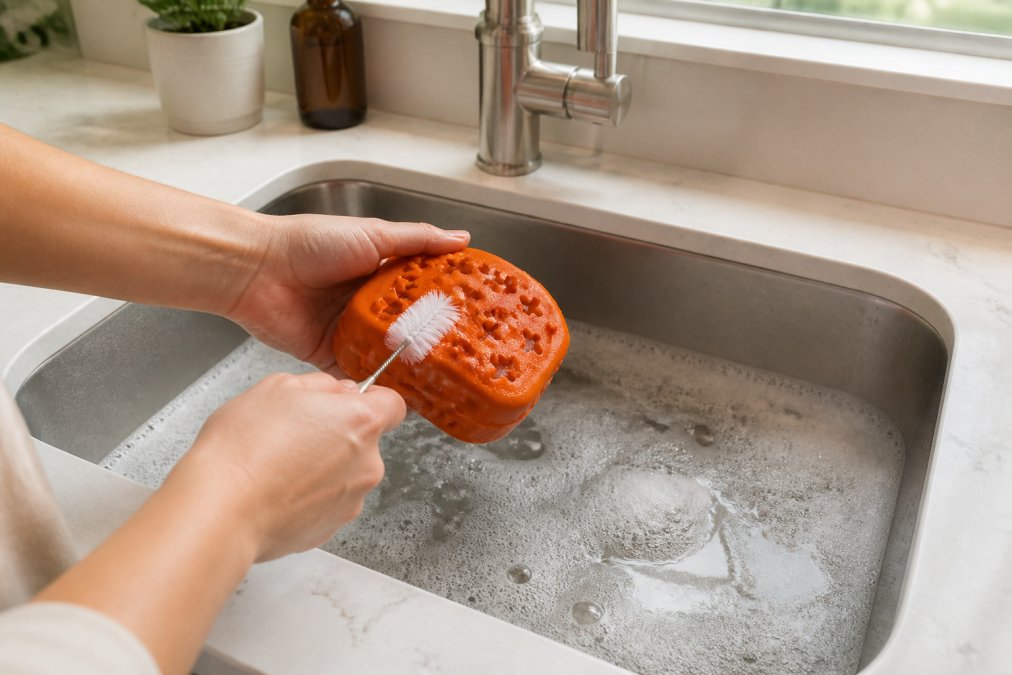
After the soak, scrub every surface with your soft brush. Pay special attention to the crevices and compartments where treats sit, as these collect the most residue. For textured rubber, use a circular motion to work the soap into the nooks. A quick scrub on the outside is not enough, you need to reach the areas your dog's tongue cannot.
Step 3: Rinse and Air-Dry Thoroughly
Rinse each piece under running warm water until the water runs clear and no soap suds remain. Soap residue can irritate a dog's stomach, so this step matters more than it seems.
Drying is where most people cut corners, and it is the most common cause of mold. Shake off excess water, pat the pieces dry with a clean towel, and leave them on a drying rack or counter in a well-ventilated area. Do not reassemble the toy until every part is completely dry to the touch. Moisture trapped inside a puzzle mechanism is an invitation for mold and mildew.
Dishwasher Safe Dog Toys: When to Use the Machine
Dishwashers are a genuine time-saver, but they are not a universal solution. The machine works well for some materials and silently damages others. The key is knowing which material your toy is made from before you load it.
Hard Plastic (ABS, Polypropylene, Nylon)
Hard plastic puzzle toys, like sliding tiles, flip boards, and compartment boxes, are the best dishwasher candidates. These materials withstand heat up to about 170°F without warping. Place them on the top rack, away from the heating element, and skip the heated dry cycle. The water pressure alone handles most residue if you pre-rinse loose kibble first.
Natural Rubber (Thermoplastic Rubber, TPR)
Natural rubber toys are a mixed bag. Some TPR blends handle a gentle cycle fine; others degrade. The visual test: if the rubber feels tacky or has a matte finish, it is likely a softer blend that will absorb water and warp. If it feels firm and bounces back quickly when pinched, it can usually handle a top-rack wash. When in doubt, hand-wash, a warped rubber puzzle no longer fits together, which ruins the challenge for your dog.
Silicone (Food-Grade)
Silicone is the most forgiving material. It withstands high heat, does not absorb odors, and releases residue easily. Silicone puzzle toys can go on the top rack with confidence. The one caveat: silicone can pick up dishwasher detergent residue, so run an extra rinse cycle or wipe the toy down with a damp cloth after the wash.
Materials That Should Never Go in the Dishwasher
- Fabric and felt, Snuffle mats and plush puzzles absorb water and detergent, then take days to dry. The heat can also melt synthetic fibers.
- Soft rubber or latex, These materials degrade quickly under heat and may release a bitter-tasting chemical that deters your dog from the toy.
- Wood or particleboard, The moisture causes swelling, cracking, and delamination.
- Toys with suction cups, electronic parts, or painted details, Heat loosens adhesives, and paint can peel into flakes your dog might ingest.
The Dishwasher Workflow That Works
- Disassemble the toy completely, remove sliders, covers, and wheels.
- Shake out loose debris over the trash.
- Place pieces on the top rack, spaced apart so water reaches all surfaces.
- Run a normal or gentle cycle with regular dish soap, no bleach, no rinse aids, no sanitize mode.
- When the cycle ends, open the door and let the steam escape. Do not close the door, which traps moisture.
- Remove pieces and air-dry on a rack for at least 2 hours before reassembling.
A Quick Material Reference
| Material | Dishwasher Safe? | Best Method |
|---|---|---|
| Hard plastic (ABS, PP) | Yes, top rack | Gentle cycle, no heated dry |
| Firm TPR rubber | Yes, top rack | Gentle cycle, no heated dry |
| Soft rubber or latex | No | Hand-wash with mild soap |
| Food-grade silicone | Yes, top rack | Normal cycle, extra rinse |
| Fabric, felt, wood | No | Hand-wash or spot-clean |
This material-first approach is the difference between a toy that lasts for years and one that warps, cracks, or grows mold after a few washes. When you know the material, you know the method.
Cleaning Hard-to-Reach Crevices in Dog Puzzles
The whole point of a puzzle toy is that it has hiding spots for treats, which means it also has hiding spots for bacteria. Crevices collect saliva, kibble dust, and floor grime that a standard sponge cannot reach. The right tools and a specific sequence make the job fast and thorough.
The Tool Kit That Reaches Every Groove
- Baby bottle brush, The angled head and narrow neck reach into sliding tracks and treat wells. This is the single most useful tool for puzzle toys.
- Pipe cleaners, These bend into L-shapes and U-shapes to follow the curves of channels and tunnels. They are cheap, disposable, and effective for tight slots.
- Interdental brushes, The tiny conical brushes used for dental care fit into narrow gaps between sliding pieces. They are stiffer than pipe cleaners and scrub better.
- Cotton swabs, Useful for wiping the inside of small compartments where food paste accumulates.
- Toothpick or wooden skewer, For dislodging packed, dried food that has hardened into a plug.
The Two-Pass Cleaning Method
Pass 1: Dry dislodging. Before any water touches the toy, use the toothpick or skewer to break up and remove dried food plugs. This prevents them from turning into sludge that spreads through the toy when you soak it.
Pass 2: Wet scrubbing. After a 5-minute soak in warm soapy water, use the bottle brush for wide channels, the pipe cleaner for narrow tracks, and the interdental brush for gaps between moving parts. Work in one direction, push debris out rather than pushing it deeper.
The Hidden Problem: Trapped Moisture in Hollow Toys
Most cleaning guides stop at scrubbing and rinsing, but the real risk is what happens after. Puzzle toys with hollow compartments, internal chambers, or enclosed wheels trap water inside. You cannot see this moisture, and it does not evaporate quickly.
A common pattern: you rinse a hollow toy, shake it out, and set it on the counter. The outside dries in an hour, but water remains pooled inside the hollow core. You reassemble the toy, store it, and within three to five days, mold develops in that dark, damp interior.
How to Dry Hollow Toys Completely
- Shake vigorously over the sink for 15 seconds to expel loose water.
- Use a drying rack with airflow, place the toy upside down so gravity drains internal water.
- Insert a rolled paper towel into any opening wide enough to accept it. The paper towel wicks moisture from the interior.
- Use a hairdryer on the cool setting, hold it 6 inches from the toy and direct air into openings for 30 to 60 seconds. Do not use heat, which can warp rubber.
- Wait 24 hours before reassembling, if you are unsure whether the interior is dry, wait another day. Mold prevention is worth the delay.
A Deep-Clean Soak for Stubborn Crevices
For toys that have not been cleaned in a while, use a vinegar soak before scrubbing. Mix one part white vinegar with three parts warm water in a basin. Disassemble the toy and submerge all pieces for 15 to 20 minutes. The mild acid breaks down mineral deposits from saliva and softens baked-on residue. Rinse thoroughly afterward, vinegar smell fades as the toy dries, but your dog may still notice it, so a full rinse matters.
This crevice-focused approach, with the right tools and a deliberate drying protocol, is what separates a toy that stays fresh for years from one that develops a permanent odor or a mold problem. Your dog's nose works harder than yours; if you can smell it, they have been smelling it for days.
A Simple Dog Toy Maintenance Schedule
You do not need to overthink the frequency, but consistency is key. A simple schedule keeps toys safe and extends their lifespan, saving you money in the long run.
| Cleaning Frequency | Method | When to Do It |
|---|---|---|
| After every use | Rinse with warm water, quick scrub with mild soap | Daily, after each puzzle session |
| Weekly | Full soak in soapy water, scrub crevices with brush | Once a week for heavily used toys |
| Monthly | Vinegar soak for odor removal and deep sanitization | Every 4-6 weeks |
| As needed | Discard and replace | When rubber cracks, plastic splinters, or parts break |
Watch for signs that a toy has reached the end of its life. Cracks in rubber can trap bacteria and create choking hazards. If a puzzle piece no longer fits snugly or shows deep bite marks, replace it. A damaged toy is not worth the risk to your dog's health.
Conclusion: Keep Playtime Fresh and Sanitary
A clean puzzle toy is a safe puzzle toy, and the routine takes less time than brewing your morning coffee. Start with a quick shake and rinse after each use, commit to a weekly soapy soak, and always air-dry completely before storing. These habits prevent odor, mold, and bacterial growth while keeping your dog engaged and healthy.
Chewzzle builds interactive puzzle toys and slow feeders from durable, non-toxic materials designed for easy maintenance. Whether you choose the Chewzzle PuzzleFeast Sliding Puzzle for a mental challenge or the Chewzzle ChewClean Treat Ball for dental health, each toy is crafted to handle regular cleaning and hold up to determined chewers. Get started with Chewzzle and make safe, sanitary playtime part of your daily routine.

Frequently Asked Questions
Can I use Dawn dish soap to wash my dog's toys?
Yes, a mild dish soap like Dawn is safe for cleaning dog puzzle toys. Use a small amount and rinse thoroughly with warm water to remove all soap residue. Avoid dish soaps with strong fragrances or antibacterial additives. A proper rinse ensures no leftover soap, which can irritate your dog's stomach. For a non-toxic option, mix a few drops of dish soap with warm water for a safe soaking solution.
Is it safe to put dog puzzle toys in the dishwasher?
Only if the toy is labeled dishwasher safe. Most hard plastic and some natural rubber puzzle toys can go on the top rack. Skip the heated dry cycle and use a gentle setting without detergent or with a fragrance-free, pet-safe detergent. High heat can warp plastic or degrade rubber. When in doubt, hand washing with warm soapy water is always a safe option.
How often should I clean my dog's enrichment toys?
Clean puzzle toys that hold food or treats after every use to prevent bacterial growth. Toys used for play without food can be cleaned weekly. A simple dog toy maintenance schedule helps: rinse daily, do a quick soapy scrub every few days, and perform a deep clean with a vinegar solution monthly. Regular cleaning removes saliva, dirt, and odors, keeping your dog healthy.
How do you remove stubborn odors from dog puzzle toys?
For stubborn odors, soak the toy in a solution of equal parts white vinegar and warm water for 15 minutes. Vinegar neutralizes odors without leaving toxic residue. After soaking, scrub the crevices with a small brush, then rinse thoroughly. Baking soda paste also works for tough smells. Air-dry completely before returning the toy to your dog to prevent mold.