

How to Reduce Destructive Behavior in Dogs
Table of Contents
- Understanding Why Dogs Become Destructive
- Signs of Boredom in Dogs and What They Mean
- How to Stop Puppy from Chewing Furniture
- Best Puzzle Toys for Destructive Chewers
- Step-by-Step Plan to Reduce Destructive Behavior
- Age-Specific Protocols: Puppy vs. Senior Dogs
- Common Mistakes to Avoid
- When to Consult a Professional Trainer or Veterinarian
- Frequently Asked Questions
Last Updated: September 30, 2026
Understanding Why Dogs Become Destructive
Destructive behavior signals an unmet need, usually boredom, anxiety, insufficient exercise, or lack of mental engagement. Understanding the root cause is the first step toward solving the problem and helping you reduce destructive behavior in dogs.
Dogs chew, dig, and shred to meet a need: physical exercise, mental stimulation, anxiety relief, or simple engagement. Identifying which need your dog is trying to meet makes the solution obvious.
Identifying the Root Cause of Destructive Behavior
Start by observing when the destructive behavior happens. Does your dog only chew when you leave the house? That points to separation anxiety. Does she destroy things throughout the day regardless of your presence? That's likely boredom or insufficient exercise.
Common root causes include:
- Boredom and lack of enrichment, Dogs need mental challenges, not just physical activity
- Insufficient physical exercise, High-energy breeds need 60-120 minutes of activity daily
- Separation anxiety, Fear or stress when left alone triggers destructive outlets
- Teething in puppies, Sore gums drive the need to chew
- Lack of appropriate chew outlets, Dogs chew naturally; they need acceptable targets
- Medical issues, Pain, dental problems, or nutritional deficiencies can increase destructive behavior
- Stress or life changes, Moving, new pets, or schedule changes can trigger acting out
The key is matching your intervention to the actual cause. A dog with separation anxiety needs a different approach than a bored dog. A puppy going through teething needs different solutions than a senior dog with cognitive decline.
Normal vs. Abnormal Canine Behavior
Chewing is normal canine behavior. The question is whether your dog chews appropriate items or your furniture.
Normal behavior: puppies chewing during teething, dogs chewing toys, occasional digging. Abnormal behavior: regularly destroying furniture, obsessively chewing non-food items, destructive episodes causing injury, or behavior linked to panic. The line is consistency and intensity.
Signs of Boredom in Dogs and What They Mean
A bored dog has excess energy with no outlet, channeling it into destructive behavior.
Common signs your dog is bored include:
- Destructive chewing of furniture, baseboards, or drywall
- Excessive barking or howling
- Digging holes in the yard or carpet
- Pacing or restlessness
- Jumping on people or furniture
- Stealing and destroying household items
- Attempts to escape or break through barriers
- Repetitive behaviors like spinning or shadow chasing
High-energy breeds like Border Collies, Australian Shepherds, and Labs were developed to work all day. Without a job or mental challenge, they become destructive. The fix: increase both physical exercise and mental stimulation.
How to Stop Puppy from Chewing Furniture
Puppies chew because they're teething and exploring. Make appropriate chew toys more interesting than furniture and prevent access to furniture when unsupervised.
Start with prevention:
- Remove access to furniture when unsupervised (use baby gates or a pen)
- Keep appropriate chew toys visible and accessible
- Rotate toys every few days to maintain novelty
- Supervise closely during playtime
- Use a crate for safe containment when you can't watch
When you catch your puppy chewing furniture, interrupt gently and redirect to a toy. Reward heavily when she chooses the toy. Punishment doesn't work; puppies don't connect it to the behavior.
Provide multiple chew toy types: rubber, rope, puzzle, and teething toys. Experiment to find your puppy's preference.
Breed-Specific Destructive Tendencies
Different breeds have different destructive patterns. Understanding your breed's natural tendencies helps you anticipate and prevent problems.
Best Puzzle Toys for Destructive Chewers
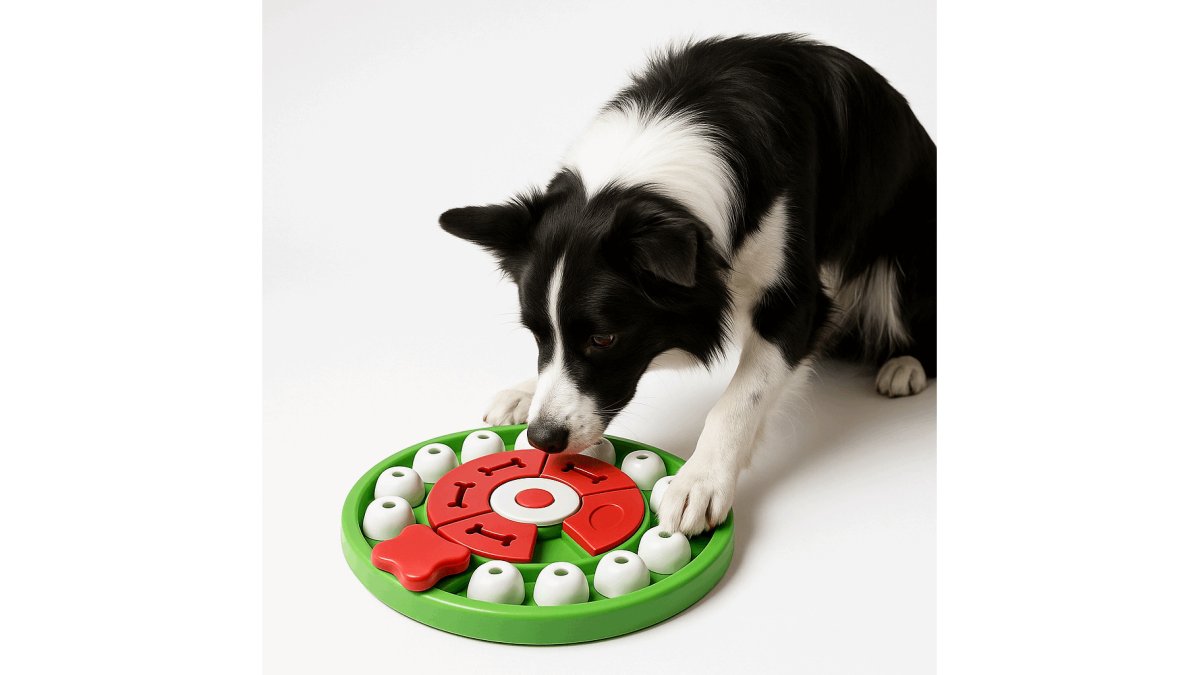
Puzzle toys provide mental stimulation and redirect chewing energy to appropriate objects.
Step-by-Step Plan to Reduce Destructive Behavior
To reduce destructive behavior in dogs requires a systematic approach addressing root causes. Adjust intensity based on your dog's age and energy level.

Step 1: Increase Physical Exercise Daily
Physical exercise burns energy and reduces destructive outlets.
How much exercise your dog needs depends on age and breed:
Chewzzle SmartPaws Interactive Puzzle →
- Puppies, 5 minutes per month of age, twice daily (a 3-month-old needs 15 minutes twice daily)
- Adult high-energy breeds, 60-120 minutes daily
- Adult moderate-energy breeds, 30-60 minutes daily
- Senior dogs, 20-30 minutes daily, adjusted for joint health
Step 2: Provide Mental Stimulation and Enrichment
Implement daily mental challenges: puzzle toys (10-15 min), training sessions (5-10 min, 2-3x daily), sniff games, foraging, and interactive play. Vary enrichment to maintain engagement.
Step 3: Practice Obedience Training and Impulse Control
Obedience training provides mental stimulation and teaches impulse control. Focus on: leave it, drop it, sit, stay, wait, and go to your place. Train in 5-10 minute sessions using positive reinforcement exclusively.
Step 4: Manage the Environment and Dog-Proof Your Home
Environmental management prevents destructive behavior when unsupervised. Remove temptation, use baby gates, crate when necessary, secure cords and trash, remove toxic plants, and protect baseboards. This is prevention, not punishment.
Step 5: Address Separation Anxiety
If destructive behavior occurs only when alone, separation anxiety is likely. Build confidence by practicing short departures and gradually increasing time away. Create a safe space and establish a calm routine. Use puzzle toys to keep your dog engaged. Consult your vet about calming aids or a professional trainer for severe cases.
Step 6: Use Crate Training as a Management Tool
Introduce crate training gradually: leave the door open, place treats inside, feed meals in it, close the door briefly, and increase time gradually. Never force your dog in. Use the crate for overnight containment, when you leave, during high-energy times, and to create routine. Never use it as punishment.
Age-Specific Protocols: Puppy vs. Senior Dogs
Destructive behavior looks different at different life stages. Your approach should match your dog's age and developmental stage.
Managing Destructive Behavior in Puppies
Puppies are destructive for specific reasons: teething, exploration, and excess energy. Their brains are developing rapidly. They need guidance, not punishment.
Puppy-specific strategies:
- Provide teething toys, Offer frozen rubber toys, rope toys, and appropriate chew objects
- Supervise closely, Puppies get into trouble instantly
- Redirect constantly, When you catch destructive behavior, interrupt and offer a toy
- Exercise appropriately, Don't overexercise young puppies, but do provide age-appropriate activity
- Use puzzle toys early, Start mental stimulation from 8-12 weeks old
- Manage access, Restrict access to furniture and tempting items
- Expect regression, Puppies improve then regress; this is normal
Managing Destructive Behavior in Senior Dogs
Senior dogs (7+ years) may develop destructive behavior due to cognitive decline, pain, or anxiety. The approach differs from younger dogs.
Senior-specific strategies:
- Rule out medical issues, Pain, cognitive decline, and incontinence can trigger destructive behavior
- Maintain routine, Senior dogs thrive on predictability
- Adjust exercise, Provide appropriate activity without overexertion
- Provide comfort, Orthopedic beds, ramps, and accessible spaces matter
- Use puzzle toys, Mental stimulation helps cognitive function
- Consider supplements, Consult your vet about joint support and cognitive aids
- Be patient, Senior dogs may have accidents or regression; this isn't willful
Common Mistakes to Avoid
Most people make the same mistakes when addressing destructive behavior. Knowing what not to do is just as important as knowing what to do.
When to Consult a Professional Trainer or Veterinarian
Some destructive behavior requires professional help. Know when to call in an expert.
Consult a veterinarian if:
- Destructive behavior started suddenly
- Your dog is also showing other behavioral changes
- The behavior includes self-injury
- You suspect pain or medical issues
- Your dog is eating non-food items obsessively
Consult a professional trainer or behaviorist if:
- Destructive behavior persists despite consistent management
- The behavior is linked to severe anxiety
- Your dog shows aggression along with destructive behavior
- You're unsure how to implement training
- The behavior is escalating
Frequently Asked Questions
Can puzzle toys really help reduce destructive behavior in dogs?
Yes. Puzzle toys address one of the primary causes of destructive behavior: boredom and lack of mental stimulation. When dogs work to solve a puzzle and earn treats, they engage their problem-solving skills and stay focused for extended periods. This redirects their energy away from destructive chewing and channeling excess energy into a positive outlet. The Chewzzle SmartPaws Interactive Puzzle and MindMaze toys are specifically designed to challenge dogs mentally while rewarding curiosity and persistence, helping reduce boredom-related behaviors.
How do I know if my dog's destructive behavior is caused by anxiety?
Anxiety-driven destructive behavior often shows specific patterns: your dog may destroy items only when you leave, pace or whine before you depart, or focus damage on doors, windows, or items with your scent. Separation anxiety is common in rescue dogs and can trigger excessive barking, destructive chewing, and house soiling. If you suspect separation anxiety, consult a veterinarian to rule out medical issues, then work with a professional trainer on behavioral modification. Puzzle toys can help by providing mental engagement, but anxiety may also require additional support like a structured routine and gradual desensitization to your absence.
What is the best way to slow down a fast eater and prevent destructive behavior?
Fast eaters often gulp food in seconds, which can lead to bloating, digestive issues, and restless, destructive behavior afterward. Slow-feeder puzzle toys like the Chewzzle ThinkDisc Puzzle Feeder and PuzzleFeast Sliding Puzzle force your dog to work for each piece of kibble, turning a meal that normally takes 30 seconds into a 5-10 minute activity. This provides mental stimulation, reduces gulping, and keeps your dog engaged longer. For dogs who inhale their food, using a puzzle feeder for at least part of their daily meals can significantly reduce post-meal destructiveness and improve overall digestion.
How much daily exercise does my dog need to reduce destructive behavior?
Most adult dogs need 30-60 minutes of physical exercise daily, though high-energy breeds may require up to 2 hours split across multiple sessions. Puppies need shorter, more frequent activity to avoid joint stress. Physical exertion burns energy and reduces the restlessness that drives destructive behavior. Combine aerobic exercise (walks, running, fetch) with canine enrichment activities like puzzle toys and training games. If your dog still shows destructive behavior after adequate exercise, mental stimulation through obedience training and interactive play is equally important, a tired body and a stimulated mind work together to prevent destructive chewing.