

Is Desensitization Training Effective for Anxious Dogs?
Table of Contents
- What Desensitization Training Actually Is
-
Systematic Desensitization for Dogs: How It Works
- Step 1: Identify the Specific Trigger
- Step 2: Establish Your Dog's Fear Threshold
- Step 3: Create a Graduated Exposure Ladder
- Step 4: Practice at Sub-Threshold Intensity with Consistent Sessions
- Step 5: Recognize Stress and Know When to Back Up
- Step 6: Advance Only When Criteria Are Met
- Timeline Expectations
- Counterconditioning for Dogs: Pairing Fear with Positive Outcomes
- Does Desensitization Training Actually Work? What the Evidence Shows
- Separation Anxiety Training for Dogs: A Practical Approach
- Dog Noise Desensitization: Tackling Sound Sensitivity Step by Step
- Measuring Progress and Knowing When to Get Professional Help
- Frequently Asked Questions
Last Updated: October 10, 2026
What Desensitization Training Actually Is
Desensitization training is a method to reduce a dog's fear or anxiety response to specific triggers by exposing them to those triggers at very low intensities over time. Understanding whether is desensitization training effective for anxious dogs depends on proper technique, consistency, and realistic expectations. The goal is to gradually teach your dog that the thing they fear isn't actually dangerous.
For example, if your dog fears thunderstorms, start with a barely audible recording of thunder, then gradually increase volume over weeks while keeping your dog calm.
The key word is gradual, many owners rush this process, expecting one or two exposures to work. Real desensitization takes patience and consistency.
Systematic Desensitization for Dogs: How It Works
Systematic desensitization follows a structured process with measurable steps and clear progression rules.
Step 1: Identify the Specific Trigger
Identify the exact trigger. "My dog is nervous" isn't specific enough; "My dog panics when the vacuum turns on" is actionable. Write down when it happens, how your dog reacts, and what intensity causes the strongest response.
Step 2: Establish Your Dog's Fear Threshold
Start well below your dog's fear threshold, ideally 30-50% below where stress signals first appear. If your dog panics at full-volume vacuum indoors, begin with a barely audible recording in another room with the door closed.
Step 3: Create a Graduated Exposure Ladder
Create 8-12 steps ordered from least to most intense. For vacuum anxiety: start with barely audible recordings in another room, gradually increase volume and proximity, then introduce the actual vacuum at a distance, then closer. Each step should feel manageable; add intermediate steps if jumps feel too large.
Step 4: Practice at Sub-Threshold Intensity with Consistent Sessions
Present the mildest trigger version during calm moments in 5-10 minute sessions, 3-5 times weekly. Pair it with treats, play, or praise. Repeat each level for 3-7 days minimum before advancing, one calm session isn't enough. Consistency builds confidence.
Step 5: Recognize Stress and Know When to Back Up
Watch for stress signals: pinned-back ears, tucked tail, stiff posture, panting, avoidance, or freezing. If you see any, you've gone too fast, return to the previous level immediately. Pushing past comfort reinforces fear rather than reducing it.
Step 6: Advance Only When Criteria Are Met
Advance only when your dog remains calm throughout, accepts treats, completes 3-5 successful sessions, and shows consistent calm responses across multiple days. If stress appears, stay at the current level another week, moving too fast sets you back further.
Timeline Expectations
The process typically takes 4-12 weeks for mild to moderate anxiety, depending on fear severity, practice consistency, your dog's age and temperament, and whether you use counterconditioning. Both 2-3 weeks and 8-10 weeks are normal. There's no shortcut.
Counterconditioning for Dogs: Pairing Fear with Positive Outcomes
Counterconditioning pairs the feared trigger with something your dog loves, treats, play, or praise, so they associate it with good things. Desensitization reduces fear intensity; counterconditioning changes what your dog thinks about the trigger.
For vet anxiety, desensitization means gradual visits (outside the building, then waiting room, then meeting staff). Counterconditioning means treats for vet-related cues: hearing the name, driving toward the clinic, seeing the vet.
The two methods work best together. You reduce the intensity of the trigger (desensitization) while also pairing it with rewards (counterconditioning). Your dog's nervous system calms down AND learns to expect something good.
Does Desensitization Training Actually Work? What the Evidence Shows
The question of whether is desensitization training effective for anxious dogs has a clear answer: it does work, but it's not a cure, it's a management tool that reduces anxiety when done correctly. Evidence shows systematic desensitization reduces fear responses, barking, avoidance, and reactivity. Success depends on consistency and technique; poorly executed programs don't work. Response speed varies by genetics, age, and fear severity. Desensitization works best for specific triggers, less so for generalized anxiety. Expect small, steady improvements over weeks, not dramatic overnight changes.
Separation Anxiety Training for Dogs: A Practical Approach
For separation anxiety, desensitize your dog to departure cues. Put on shoes and sit down, grab keys and put them back, pick up your bag and set it down, repeat until these lose meaning. Then practice very short absences: leave for 10 seconds, return before anxiety peaks, gradually extend time. Return before panic teaches your dog stress works. Keep departures and arrivals quiet, no fanfare. Give puzzle toys or chews only when leaving so your dog anticipates something good.
Dog Noise Desensitization: Tackling Sound Sensitivity Step by Step
Noise anxiety is easiest to treat because you control the stimulus. Start with whisper-quiet recordings during normal activities. Gradually increase volume over 3-7 day intervals at each level. Progress from barely audible to moderately loud while your dog stays calm. Once recordings work, expose your dog to real sounds at a distance (neighbor mowing three yards away before closer exposure).
Measuring Progress and Knowing When to Get Professional Help
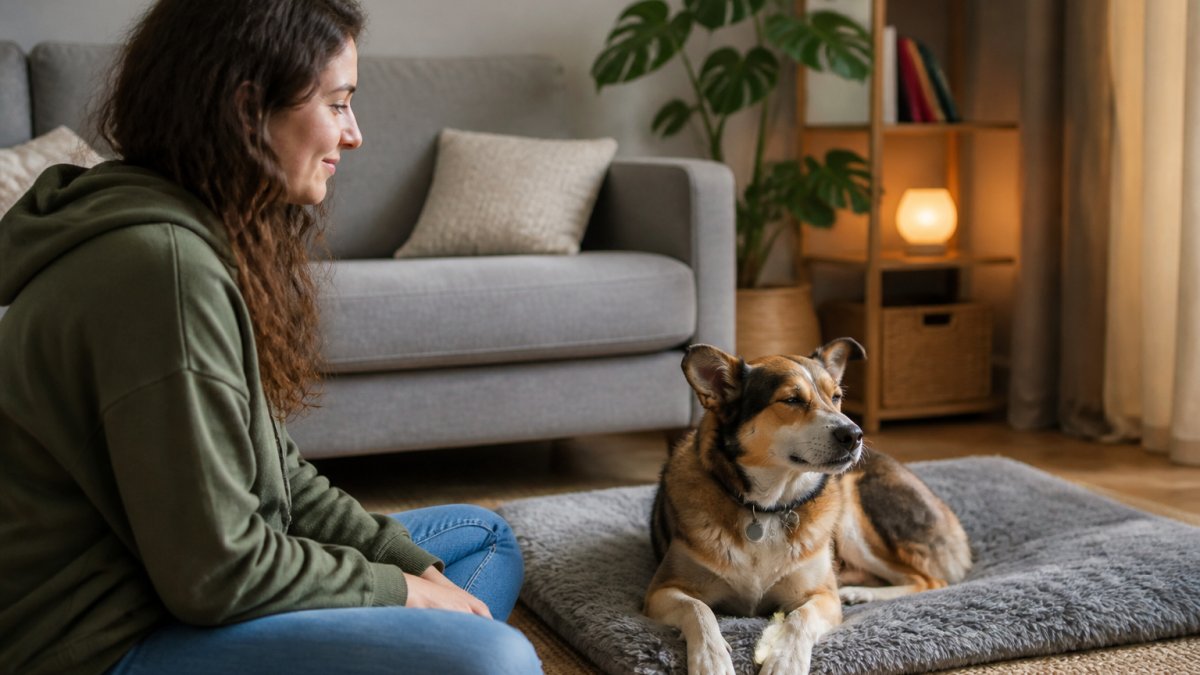
Progress in desensitization isn't always obvious. Track reduced fear responses and measurable behavior shifts; without metrics, you may miss real progress.
Observable Indicators of Progress
Track these specific, measurable behaviors weekly:
1. Reaction Latency: As desensitization works, the delay before your dog reacts increases. A dog who panicked instantly might now take 2-3 seconds to react, that's progress.
2. Intensity of the Fear Response
Rate your dog's reaction on a scale of 1-10 each session:
- 1-2: Mild awareness, ears perk up, but dog remains calm
- 3-4: Noticeable concern, slight tension, but dog doesn't flee or hide
- 5-6: Clear anxiety, panting, avoidance, but dog doesn't panic
- 7-8: Significant fear, barking or whining, dog seeks escape
- 9-10: Full panic, extreme distress, self-injury risk
You're looking for the number to trend downward.
3. Recovery Time (How Long Fear Lasts After the Trigger Ends)
This is one of the most reliable indicators of improvement. After the trigger is gone, how long until your dog returns to normal behavior?
- Week 1: Dog panics for 15 minutes after the trigger ends
- Week 4: Dog settles down within 5 minutes
- Week 8: Dog returns to normal within 1 minute
Shorter recovery time means your dog's nervous system is becoming less reactive. This is a sign desensitization is working.
4. Distance and Duration Tolerance
Can your dog tolerate the trigger for longer? Can they tolerate it closer?
- Week 1: Dog calm only when trigger is in another room
- Week 4: Dog calm when trigger is 10 feet away
- Week 8: Dog calm when trigger is 5 feet away
Increasing tolerance of proximity and duration are concrete wins.
5. Ability to Eat and Take Treats
When a dog is truly anxious, they often refuse food. As anxiety decreases, they'll accept treats during or near the trigger.
6. Body Language Shifts
Watch for these positive changes:
- Ears relax from pinned-back to normal position
- Tail goes from tucked to neutral or slightly raised
- Posture loosens from rigid to natural stance
- Panting and lip-licking decrease
- Dog stays near you instead of hiding
- Dog engages in normal behaviors (sniffing, playing) during exposure
How to Track Progress
Create a simple weekly log:
| Week | Trigger Level | Reaction Intensity (1-10) | Recovery Time | Distance Tolerated | Notes |
|---|---|---|---|---|---|
| 1 | Recording, volume 2 | 7 | 15 min | Another room | Ears back, panting |
| 2 | Recording, volume 2 | 6 | 10 min | Another room | Slightly calmer |
| 3 | Recording, volume 3 | 6 | 8 min | 15 feet away | Took treats |
| 4 | Recording, volume 4 | 5 | 5 min | 10 feet away | More relaxed |
Review this log every 2-4 weeks. You're looking for the trend, not perfection. Small, steady improvements are the goal.
Realistic Timelines for Improvement
Weeks 1-2: You may see no change, or your dog may seem slightly more aware of the trigger. This is normal.
Weeks 3-4: Most dogs show the first measurable improvements, slightly shorter recovery times, willingness to take treats, or reduced intensity.
Weeks 5-8: Noticeable progress becomes clear. Your dog tolerates higher intensity levels, recovers faster, and shows fewer stress signals. This is when owners often feel encouraged.
Weeks 9-12: Continued improvement, with your dog handling levels that would have caused panic weeks earlier. Some dogs plateau here; others continue improving.
Beyond 12 weeks: Progress may slow, but improvement can continue for months. Some fears take longer to resolve than others.
Factors that slow progress:
- Inconsistent practice (fewer than 3 sessions per week)
- Moving too fast through the exposure ladder
- High stress in other areas of your dog's life
- Undiagnosed medical issues (pain, hearing loss, thyroid problems)
- Severe or long-standing fears (dogs with years of anxiety history take longer)
When to Seek Professional Help
After 4-6 weeks with no improvement: If your dog shows no measurable change in reaction intensity, recovery time, or stress signals after consistent practice, something isn't working.
If you're inconsistent with training: Desensitization requires 3-5 sessions per week minimum.
If the trigger is dangerous: Some fears involve safety risks. A dog terrified of cars who bolts into traffic, or a dog who bites when handled, needs professional assessment before home-based desensitization.
If multiple triggers are involved: Dogs with generalized anxiety or fears of many different things may benefit from professional evaluation.
Frequently Asked Questions
How long does desensitization training take for an anxious dog?
Timelines vary based on trigger intensity, your dog's history, and consistency. Simple fears may improve in 2-4 weeks with daily practice, while deep-rooted anxiety can take 2-6 months or longer. Progress isn't always linear, expect setbacks when stress increases or new triggers emerge. Patience and regular exposure below your dog's fear threshold are critical. Some dogs respond faster with interactive tools like puzzle toys, which provide mental stimulation between formal training sessions.
Can desensitization training make a dog's anxiety worse?
Yes, if exposure intensity exceeds your dog's fear threshold. Pushing too fast or exposing your dog to a trigger at full strength can increase anxiety and create stronger negative associations. This is why gradual exposure is essential, start at a distance or intensity where your dog notices the trigger but stays calm. If your dog shows panic, trembling, or avoidance, you've gone too far. Step back, reduce intensity, and progress more slowly. Professional trainers help prevent this mistake.
What is the difference between desensitization and counterconditioning for dogs?
Desensitization reduces your dog's emotional response to a trigger through repeated, gradual exposure at safe levels. Counterconditioning changes the emotional association itself by pairing the trigger with something positive, like treats or play. They work best together: desensitization keeps your dog calm enough to learn, while counterconditioning teaches your dog that the trigger predicts good things. For example, with noise sensitivity, desensitization plays quiet sounds while counterconditioning pairs those sounds with rewards.
How can I tell if desensitization training is working?
Track specific behaviors: reduced body tension, fewer stress signals (panting, trembling, hiding), shorter recovery time after exposure, and increased calm behavior near triggers. Document distance thresholds, if your dog stays relaxed closer to the trigger than before, progress is happening. Note frequency: does your dog react to fewer occurrences? Setbacks are normal, but overall trends should show improvement over weeks. If you see no change after 4-6 weeks of consistent practice, or if anxiety worsens, consult a veterinary behaviorist to rule out medical causes and adjust your approach.
Desensitization training is effective for anxious dogs when you follow the process carefully. Start low, go slow, and watch your dog's body language. Progress takes time, but the results are real. If your dog isn't improving or anxiety is severe, reach out to a professional. In the meantime, give your dog enrichment tools that support calm behavior, like Chewzzle's interactive toys, and be patient with the process. Your consistency matters more than speed.