

Keep Your Puppy Calm During Thunderstorms: A Toy-Based Guide
Table of Contents
- Understanding Your Puppy's Thunderstorm Anxiety
- How to Create a Safe Space for a Puppy During a Storm
- Best Toys for Dogs with Thunderstorm Anxiety
- Calming Activities for Puppies During Thunderstorms
- How to Keep a Puppy Calm During Thunderstorms Using Toys
- Preparing Your Puppy Before Storm Season
- Conclusion
- Frequently Asked Questions
Last Updated: October 5, 2026
Understanding Your Puppy's Thunderstorm Anxiety
Thunderstorms trigger real fear in puppies. The loud noise, sudden flashes, and pressure changes create genuine anxiety. Your puppy isn't being dramatic, they're responding to a threat their instincts perceive as real.
Most puppies show signs of storm anxiety between 8 and 16 weeks old. Some never outgrow it. The good news: puppy calm thunderstorms toys work best when combined with the right approach.
The solution isn't complicated, but it requires planning before the storm arrives. Toys become your most powerful tool, not just for distraction, but for building confidence and creating positive associations with storm sounds.
Signs of Severe Anxiety in Dogs
Recognizing anxiety in your puppy is the first step. Watch for these behaviors during storms:
- Panting heavily or drooling excessively
- Pacing back and forth in patterns
- Hiding in closets, bathrooms, or under furniture
- Barking, whining, or howling persistently
- Trembling or shaking visibly
- Loss of appetite or refusal to eat treats
- Destructive behavior like chewing or scratching
Not every puppy shows all these signs. Some hide quietly. Others pace constantly. The key is recognizing YOUR puppy's unique stress response. Once you know what anxious behavior looks like for your dog, you can intervene with toys before the anxiety escalates.
Severe anxiety sometimes requires veterinary support. If your puppy shows extreme distress, refuses all food and toys, or injures themselves trying to escape, talk to your veterinarian about additional options.
How to Create a Safe Space for a Puppy During a Storm
A safe space is a quiet room where your puppy feels protected. This isn't a crate or punishment area, it's a refuge.
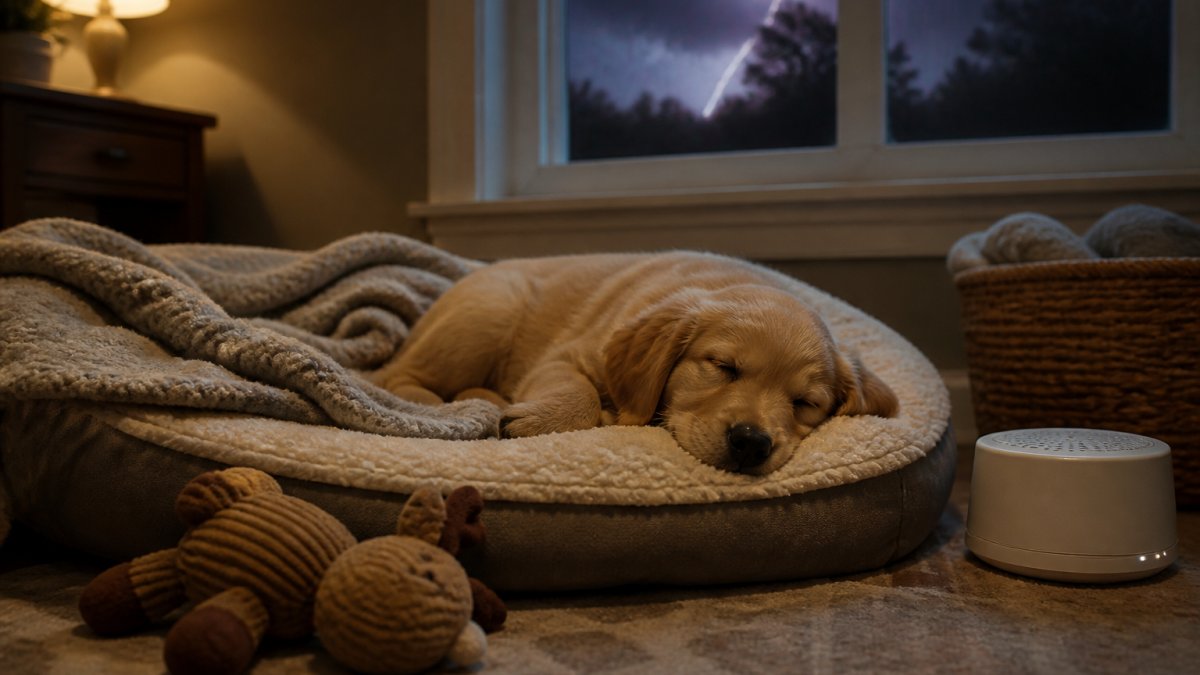
Choose a room away from windows. Interior bathrooms, closets, or basement areas work well. These spaces naturally muffle outside noise. Avoid rooms with large windows where lightning flashes are visible.
Set up the space before storm season arrives. Add these elements:
- A comfortable dog bed or blankets
- Water bowl (placed away from the bed to prevent spills)
- Familiar toys your puppy already loves
- An article of your clothing (your scent is calming)
Leave the door open so your puppy can access the space anytime. Never force your puppy into the safe space. Let them discover it naturally. Once they associate it with safety, they'll retreat there on their own when anxious.
The safe space works best when combined with toys. Toys give your puppy something to focus on besides the storm sounds.
Best Toys for Dogs with Thunderstorm Anxiety
Not all toys help during storms. The best ones provide mental engagement, comfort, or a calming sensory experience. But for puppies, safety during selection and use is equally important as effectiveness.
Puppy-Safe Toy Selection and Supervision
Puppies explore toys with their mouths and lack impulse control. A toy that's safe for an adult dog can become a choking hazard for a puppy under stress.
Size matters. A toy should be too large to fit entirely in your puppy's mouth. The general rule: if it can pass through a toilet paper tube, it's too small for unsupervised play.
Chew strength varies by age. Puppies under 12 weeks have baby teeth and softer jaws. They need softer toys, plush items, soft rubber, or silicone.
Supervision is non-negotiable during storms. Even toys labeled "puppy-safe" should be monitored. A frightened puppy may chew frantically and ingest pieces. Stay in the room during storms.
Material safety. Look for toys made from non-toxic, BPA-free materials. Avoid toys with:
- Plastic eyes or noses that can detach
- Squeakers that can be torn out and swallowed
- Stuffing that unravels (puppies will eat it)
- Paint or dyes not certified pet-safe
Interactive Puzzle Toys for Mental Distraction
Puzzle toys work because they demand focus. Your puppy can't think about thunder while working to extract a treat from a puzzle.
For puppies, choose puzzles with:
- Large, chunky compartments your puppy can manipulate without their paw or mouth getting stuck
- Adjustable difficulty so you can start at easy and increase gradually
- Smooth edges with no sharp plastic seams
- Removable parts that are larger than your puppy's mouth
Start with the easiest setting. Your goal is success, not frustration. As your puppy gains confidence, increase the difficulty. Introduce the puzzle during calm times, not during the first storm. A puppy who's never solved a puzzle won't suddenly figure it out during anxiety.
During storms, place the puzzle in the safe space with a small amount of high-value treat (a pea-sized piece of chicken or cheese works better than kibble, which can scatter). If your puppy ignores it, don't force engagement. Some puppies are too anxious to problem-solve; that's normal.
Chew Toys and Comfort Items
Chewing releases endorphins, natural calming chemicals. For puppies, the right chew toy redirects nervous energy safely.
Soft chew toys (silicone, rubber, or plush) suit puppies under 16 weeks. They satisfy the urge to chew without risk of tooth damage. Textured silicone toys also help clean emerging teeth.
Comfort items, a familiar blanket, stuffed toy, or soft item, work differently than puzzle toys. Pair comfort items with positive experiences before storms arrive.
Rotate toys to prevent boredom and reduce the risk of your puppy becoming obsessed with one toy (which can lead to destructive chewing if it's unavailable).
Never leave toys unattended with a puppy during storms. Anxiety can trigger destructive chewing. Check the toy every 5-10 minutes for damage.
Calming Activities for Puppies During Thunderstorms
Activities matter as much as toys. What you do during the storm shapes how your puppy responds to future storms.
Step-by-Step Storm Routine for Your Puppy
Create a consistent routine. Puppies find comfort in predictability. Here's a routine that works:
Step 1: Before the storm arrives (30 minutes early) Set up the safe space. Place puzzle toys with treats inside. Put comfort items on the bed. Turn on a white noise machine or soft music at low volume. This prepares the environment before anxiety peaks.

Step 2: When your puppy first shows anxiety Offer a puzzle toy without forcing it. If your puppy ignores it, try a different toy. Reward any engagement with praise and treats.
Step 3: During the storm Avoid excessive petting or reassurance. Comfort that feels like sympathy can reinforce anxiety. Instead, engage your puppy with toys. Play a gentle game. Offer treats from the puzzle toy. Keep your energy calm and normal.
Step 4: After the storm passes Praise calm behavior. Offer a special treat or favorite toy. Keep the safe space available for future storms. Don't make a big deal about the storm ending, act like everything is normal.
This routine teaches your puppy that storms are manageable. Toys become the tool for managing them.
Toy-Based Desensitization Techniques
Desensitization means gradually exposing your puppy to storm sounds at safe volumes. Combined with toys, this builds confidence.
Start weeks before storm season. Play recordings of distant thunder at very low volume, barely audible. Pair the sound with puzzle toys and treats. Your puppy learns: thunder sounds + toys = good things happen.
Gradually increase the volume over weeks. Always pair sounds with toys and positive experiences. Never force your puppy to listen. If they leave the room, that's fine, you're building tolerance, not forcing it.
This technique works best when started early, but puppies of any age can benefit. Consistency matters more than speed. Small, regular sessions work better than intense ones.
How to Keep a Puppy Calm During Thunderstorms Using Toys
The core strategy for puppy calm thunderstorms toys combines three elements: a safe space, appropriate toys, and calm behavior from you.
Start with puzzle toys during calm times. Let your puppy learn how they work before a storm arrives. A puppy who's never solved a puzzle won't suddenly figure it out during a stressful storm.
During storms, offer toys without pressure. Some puppies engage immediately. Others need time. Respect your puppy's pace.
Rotate toys to prevent boredom. If your puppy solves a puzzle easily, increase difficulty or try a different toy next time. Novelty keeps engagement high.
When Toys Aren't Helping
Some puppies won't engage with toys during severe anxiety. This is normal. Anxiety shuts down problem-solving ability in some dogs.
If toys aren't working:
- Try a different toy type (puzzle, chew, comfort item)
- Ensure the safe space is truly quiet and dark
- Play white noise or calming music louder to mask thunder
- Consider a pressure wrap designed for anxious dogs
- Talk to your veterinarian about additional support options
Your veterinarian can recommend calming supplements, anxiety medications, or behavior training. Some puppies benefit from a combination approach: toys, safe space, environmental changes, and professional support.
Don't feel like you've failed if toys alone aren't enough. Every puppy is different. Severe anxiety sometimes needs multiple solutions.
Preparing Your Puppy Before Storm Season
Preparation prevents panic. Start these steps weeks before storms typically arrive in your area.
Introduce puzzle toys during calm, happy times. Use them for regular enrichment, not just storms. Your puppy should already love their toys before the first storm hits.
Practice the safe space routine without storms. Have your puppy spend time in the safe space during normal days. Reward them for resting there. Build positive associations before anxiety appears.
Play storm sounds at very low volume during regular play sessions. Pair sounds with toys and treats. This gradual desensitization works best when started early.
Create a storm kit. Stock it with:
- Extra treats for puzzle toys
- Comfort items (blankets, familiar toys)
- White noise machine or speaker
- Cleaning supplies for toys
- Your veterinarian's contact information
Keep this kit accessible during storm season. You'll be ready when storms arrive.
| Preparation Step | Timeline | Purpose |
|---|---|---|
| Introduce puzzle toys | 4-6 weeks before storms | Build familiarity and enjoyment |
| Practice safe space routine | 3-4 weeks before storms | Create positive associations |
| Begin sound desensitization | 2-3 weeks before storms | Reduce fear response gradually |
| Assemble storm kit | 1-2 weeks before storms | Ensure readiness when storms arrive |
Conclusion
Keeping your puppy calm during thunderstorms starts with understanding their fear is real, then giving them tools to manage it. Toys aren't just distractions, they're confidence builders.
The most effective approach combines all three: puzzle toys that engage the mind, a quiet safe space, and your steady, reassuring presence.
Start preparing now, before storm season peaks. Introduce toys gradually. Build the safe space. Practice desensitization at low volumes.
Chewzzle's puzzle toys like the MindMaze and SmartPaws are designed specifically for this kind of mental engagement. The TreatDrop Ball offers a softer option for puppies who need comfort alongside distraction.

Your puppy's storm anxiety won't disappear overnight. But with consistent preparation and the right toys, you'll see real improvement.
Get started with Chewzzle puzzle toys and build your storm preparation plan today. Your puppy will thank you when the next storm rolls through.
Frequently Asked Questions
What are the best toys for dogs with thunderstorm anxiety?
Interactive puzzle toys like the Chewzzle MindMaze IQ Puzzle and SmartPaws Interactive Puzzle work well because they redirect your puppy's focus to problem-solving rather than the storm. Soft chew toys and treat-dispensing toys like the TreatDrop Ball also provide comfort and distraction. The key is choosing toys your puppy already enjoys so they feel familiar and safe during a stressful event.
How do I introduce a safe space to my puppy before storm season arrives?
Start weeks before storm season by making the safe space positive and rewarding. Place your puppy's favorite toy, blanket, and dog bed inside. Reward calm behavior with treats and praise when they spend time there. Play soft music or white noise to familiarize them with the sounds. This way, when a real storm arrives, the space feels like a refuge rather than a place of confinement.
Can I use puzzle toys to distract my puppy during an actual thunderstorm?
Yes, but only if your puppy is mildly anxious. Fill a puzzle toy with treats or kibble and introduce it once your puppy is in the safe space. The mental engagement can redirect focus away from thunder and panting. However, if your puppy is severely distressed or shows signs of panic, they may ignore toys entirely. In those cases, focus on comfort items and calming sounds instead, and consider consulting your veterinarian.
What should I do if my puppy shows signs of severe anxiety during a thunderstorm?
Signs of severe anxiety include excessive panting, whining, hiding, pacing, or destructive behavior. If you notice these, move your puppy to the safe space immediately, offer comfort items and familiar toys, and use white noise or soft music to mask thunder. Avoid over-reassuring, as this can reinforce panic. If severe anxiety persists across multiple storms or worsens, contact your veterinarian or a certified professional dog behaviorist for additional support.