
Prevent Dog Bloat With Slow Feeders: A How-To Guide
Table of Contents
- What Is Canine Bloat and Why Slow Feeders Matter
- Recognizing the Signs of GDV in Dogs
- How to Stop Dog Eating Too Fast: The Root Cause
- How Slow Feeders Prevent Bloat and Reduce Air Ingestion
- Choosing the Right Slow Feeder: Materials, Design, and Safety
- Interactive Puzzle Toys for Dogs: Beyond the Bowl
- The Elevated Bowl Controversy and Post-Meal Activity Restrictions
- Step-by-Step: Introducing Your Dog to a Slow Feeder
- Frequently Asked Questions
Last Updated: September 1, 2026
What Is Canine Bloat and Why Slow Feeders Matter
Canine bloat, medically known as gastric dilatation-volvulus (GDV), is a life-threatening condition where a dog's stomach fills with gas and potentially twists on itself. This is not a minor digestive inconvenience, it's an emergency that can kill a dog within hours without veterinary intervention. Understanding GDV is the first step toward recognizing why prevent dog bloat with slow feeders has become central to responsible pet ownership.
The condition develops when dogs eat too rapidly, gulping large amounts of food and air simultaneously. This aerophagia, the involuntary swallowing of air, causes the stomach to distend. In severe cases, the stomach rotates, cutting off blood supply and trapping food inside. Deep-chested breeds like Golden Retrievers, German Shepherds, and Great Danes face elevated risk, but any dog can develop bloat.
Slow feeders fundamentally change how dogs approach meals, replacing the dangerous gulp-and-go pattern with deliberate, measured consumption. This shift reduces air ingestion, improves gastrointestinal function, and gives your dog's digestive system time to work properly.
Recognizing the Signs of GDV in Dogs
A dog experiencing bloat shows unmistakable distress signals that demand immediate veterinary attention. The abdomen becomes visibly distended, hard and swollen, often within 30 minutes to a few hours after eating. Your dog may pace restlessly, attempt to vomit without producing anything, drool excessively, or show signs of abdominal pain by assuming a play bow position repeatedly.
Other warning signs include rapid breathing, weakness, collapse, and pale gums. Some dogs become uncharacteristically quiet or withdrawn. These symptoms indicate the stomach is already compromised and blood flow to vital organs is being restricted. This is not a wait-and-see situation. Call your veterinarian or emergency clinic immediately.
The critical window is narrow. Dogs can deteriorate rapidly once GDV develops. Even with emergency surgery, mortality rates range from 15-33% depending on how quickly treatment begins and whether the stomach has already died from lack of blood supply. Prevention through dietary management and behavioral modification is infinitely preferable to emergency intervention.
How to Stop Dog Eating Too Fast: The Root Cause
Most dogs eat too fast because they've learned to compete for food, a survival instinct from their wolf ancestors that remains hardwired into modern domestic dogs. Puppies in litters compete with littermates. Rescue dogs may have experienced food scarcity. Even well-fed pets can develop rapid eating habits simply because their environment rewards speed.
The mechanics are straightforward: a typical dog can consume a full bowl in seconds, barely chewing. Each gulp pulls in air alongside kibble. The stomach expands. The dog feels full only after the damage is done. By that point, the stomach is already distended with gas, and if conditions align, the organ can twist.
Food motivation compounds the problem. Dogs with high drive to eat, particularly those bred for working roles, view mealtime as a competition they must win immediately. They don't pause to chew or swallow deliberately. They inhale. For these dogs, a standard bowl is practically designed to encourage bloat.
The solution isn't restricting food or feeding less frequently. It's redesigning the eating experience to physically slow consumption. When a dog must manipulate compartments, slide covers, or roll a puzzle toy to access each bite, the entire neurochemistry of eating changes. The dog engages mentally, chews more thoroughly, and allows digestive enzymes to begin breaking down food before it reaches the stomach.
:::pro tip Dogs with high food motivation actually benefit most from slow feeders because the puzzle element transforms mealtime into a rewarding challenge rather than a frantic race. The mental stimulation often reduces anxiety-driven eating behaviors too. :::
How Slow Feeders Prevent Bloat and Reduce Air Ingestion
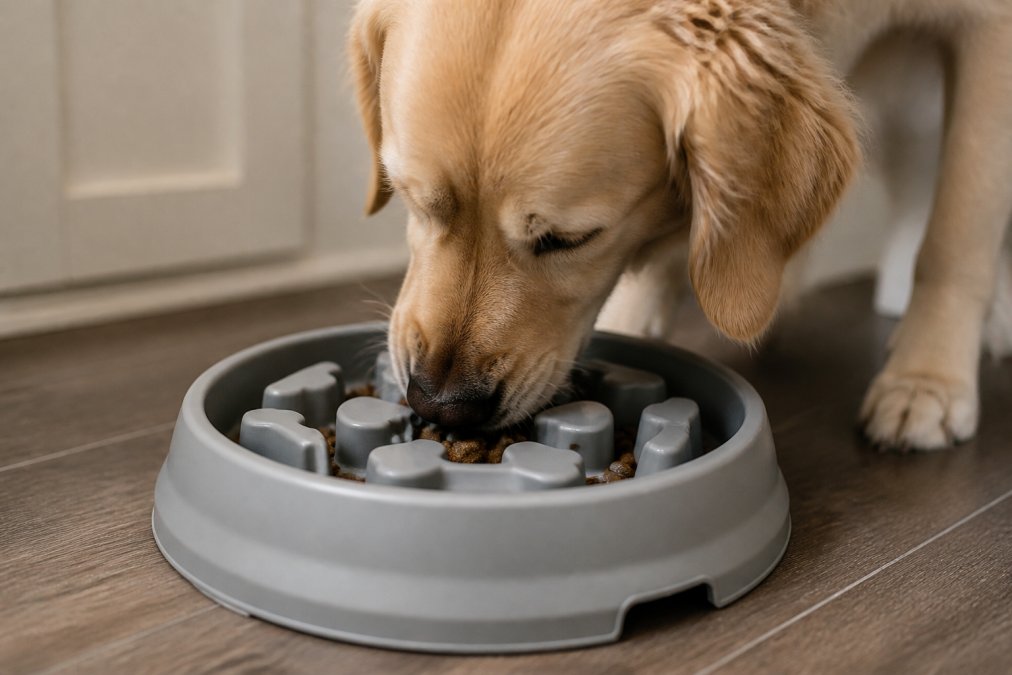
Slow feeders work through mechanical design: they force dogs to work for food rather than simply vacuuming it up. A maze-style bowl with ridged compartments requires the dog to use its nose and tongue to navigate around obstacles. Each bite takes conscious effort. The dog chews more thoroughly. Swallowing becomes deliberate rather than automatic.
The reduction in aerophagia is measurable in behavior. Watch a dog eat from a standard bowl versus a slow feeder, and the difference is obvious. Standard bowl: frantic gulping, audible swallowing, visible air intake. Slow feeder: focused sniffing, deliberate tongue work, measured pace. The dog's respiratory rate stays normal. The stomach fills gradually with food, not gas.
This pacing also allows the dog's satiety signals to register properly. Fullness doesn't happen instantly, it takes 15-20 minutes for the brain to receive signals from the stomach. A standard bowl empties in 30 seconds. A slow feeder stretches that meal across 10-15 minutes, giving the dog's body time to recognize it's satisfied before overeating occurs.
Beyond bloat prevention, this slower consumption improves overall gut motility. The digestive system processes smaller, more frequent swallows more efficiently than it processes one massive bolus of food. Nutrient absorption improves. Bowel movements become more regular. Dogs with sensitive stomachs often show marked improvement in digestive comfort.
Choosing the Right Slow Feeder: Materials, Design, and Safety
Material choice matters more than most pet owners realize. Ceramic and stainless steel slow feeders are the safest options: they don't leach chemicals, resist bacterial growth, and withstand years of daily use. Ceramic bowls with glazed finishes prevent food particles from embedding in porous surfaces. Stainless steel is virtually indestructible and dishwasher-safe, making sanitization simple.
Plastic slow feeders present more complexity. While many are labeled non-toxic, the term lacks regulatory teeth. Non-toxic typically means the material doesn't contain known carcinogens at detectable levels, but it doesn't guarantee safety for aggressive chewers or long-term contact. Plastic also degrades over time, creating small particles that can end up in your dog's mouth. If you choose plastic, inspect it regularly for cracks, cloudiness, or signs of deterioration.
Design features determine effectiveness. Maze-style ridges should be deep enough to slow consumption but not so narrow that kibble gets stuck. Compartments should have smooth edges to prevent mouth injuries. A non-slip base keeps the bowl in place during vigorous eating, a moving bowl undermines the entire purpose of slowing consumption.
Consider your dog's size and jaw strength. A small Chihuahua needs shallow compartments and smaller access points. A large German Shepherd needs deeper ridges and wider spacing to prevent frustration. Mismatch between bowl design and dog size leads to abandoned slow feeders and wasted money.
The Chewzzle ThinkDisc Puzzle Feeder combines thoughtful design: paw-shaped sliding covers and a rotating center wheel create multiple puzzle layers that genuinely slow consumption without causing frustration. The non-slip base keeps it stable, and the design works for dogs of various sizes by adjusting difficulty through which compartments you fill.

Interactive Puzzle Toys for Dogs: Beyond the Bowl
Slow feeders address one critical problem: mealtime consumption speed. But they don't address the broader issue of food motivation and anxiety that drives many dogs to eat frantically in the first place. Interactive puzzle toys extend bloat prevention into a comprehensive enrichment strategy.
Puzzle toys that dispense treats slowly, requiring the dog to manipulate compartments, roll the toy, or solve simple problems, engage the dog's problem-solving instincts. This mental stimulation reduces the anxiety and frustration that often accompany rapid eating. A dog that's mentally engaged during feeding is a dog that's less likely to develop stress-related digestive issues.
The Chewzzle SnuffleSphere Foraging Ball mimics natural foraging behaviors by hiding kibble within soft fabric layers. Dogs must sniff, paw, and nudge to extract each piece. This extended engagement satisfies the dog's need to work for food while dramatically slowing consumption and reducing aerophagia.
Rotating between different puzzle formats prevents boredom and maintains novelty. A dog that solves the same puzzle every day eventually figures it out and eats quickly again. Variety keeps the challenge fresh and maintains the cognitive engagement that makes slow feeding effective.
For anxious rescue dogs or puppies with separation anxiety, puzzle toys serve dual purposes: they slow eating and redirect nervous energy into productive problem-solving. The mental work required to extract food releases endorphins, creating positive associations with mealtime rather than panic.
The Elevated Bowl Controversy and Post-Meal Activity Restrictions
Elevated bowls have been marketed for decades as bloat prevention tools, with the theory that feeding a dog at chest height reduces air ingestion and promotes better digestion. Recent veterinary evidence complicates this narrative. Studies suggest elevated bowls may actually increase GDV risk in susceptible breeds by changing the angle at which food enters the stomach and potentially promoting faster consumption.
This doesn't mean elevated feeders are dangerous for all dogs, it means they're not a reliable bloat prevention strategy and shouldn't be your primary tool. For dogs with existing joint problems or arthritis, elevated bowls do provide ergonomic benefit. But for bloat prevention specifically, floor-level slow feeders outperform elevated bowls.
Post-meal activity restriction is another area where conventional wisdom needs updating. The old advice to restrict exercise for 30-60 minutes after eating was based on the theory that movement increases bloat risk. Current veterinary guidance is more nuanced: gentle walking and normal activity are fine, but intense exercise or play immediately after eating should be avoided. A dog that eats, then immediately runs and jumps may experience gastric stress, but moderate activity poses minimal risk.
The real protection comes from the eating pattern itself, not from activity levels afterward. A dog that ate slowly and deliberately from a slow feeder has a stomach that's processing food normally. Gentle movement actually aids digestion by promoting gut motility. Strict crate rest after meals is unnecessary and may create anxiety in some dogs.
Step-by-Step: Introducing Your Dog to a Slow Feeder
Step 1: Choose the Right Bowl [Time: 5 minutes] Select a slow feeder appropriate for your dog's size and eating style. If your dog is a power eater, start with a design that has deeper ridges and more compartments. If your dog gives up easily on puzzles, choose something simpler initially. You want challenge without frustration.
Step 2: Start with Familiar Food [Time: 1-2 days] Place your dog's regular kibble in the slow feeder without changing anything else about their routine. Let them investigate the bowl at their own pace. Some dogs figure it out immediately; others need time to understand the puzzle. Don't force interaction.
Step 3: Gradually Increase Difficulty [Time: 1-2 weeks] Once your dog is comfortable extracting kibble from the basic compartments, fill fewer spaces or add the puzzle elements (sliding covers, rotating sections) that increase difficulty. Build confidence before adding complexity.
Step 4: Monitor Eating Behavior [Time: ongoing] Watch how your dog approaches the slow feeder over the first week. Does eating time extend from 30 seconds to 5-10 minutes? Is the dog chewing more deliberately? Are there signs of frustration or anxiety? Adjust difficulty accordingly.
Step 5: Maintain Consistency [Time: every feeding] Use the slow feeder for every meal, not just occasionally. Consistency is what creates lasting behavior change. Your dog's eating pattern will normalize around the slower pace.
Expected Result: Within 2-3 weeks, your dog's eating behavior should show measurable change. Meals that once lasted 30 seconds now take 10-15 minutes. Visible air gulping decreases. Post-meal burping and gas typically diminish. Your dog's overall digestive comfort improves.
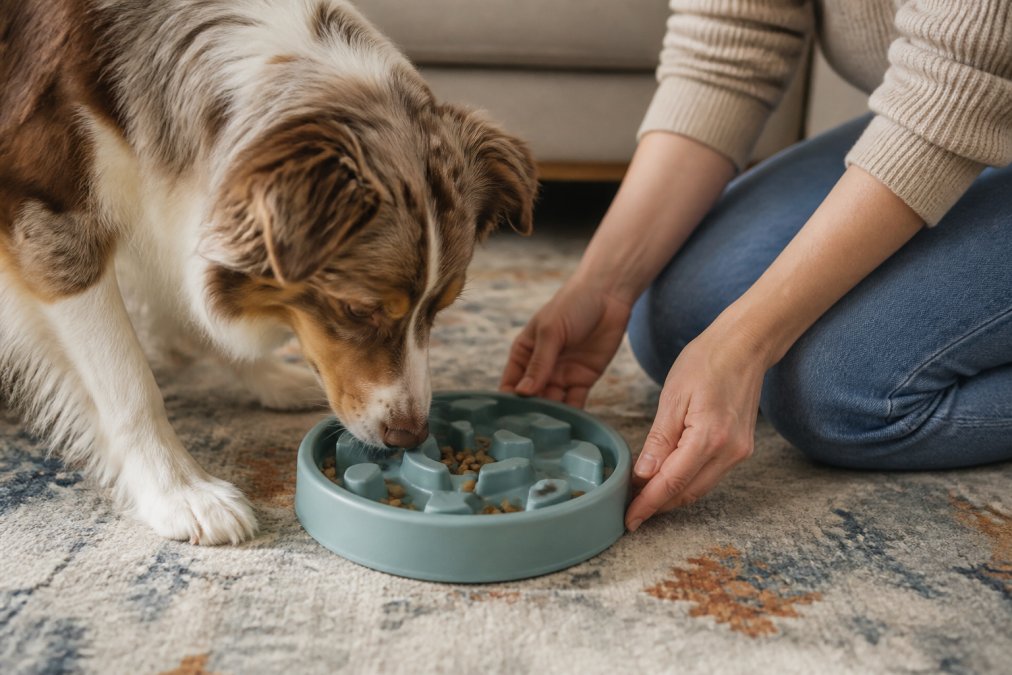
The Chewzzle PuzzleFeast Sliding Puzzle works particularly well for this progression because you control difficulty by choosing which compartments to fill. Start with all compartments accessible, then gradually cover more with the sliding buttons as your dog gains confidence.

Bloat is preventable, but prevention requires action. A standard bowl and standard feeding routine leave your dog vulnerable to a life-threatening condition. Prevent dog bloat with slow feeders by redesigning how your dog eats, not just what they eat. The investment in a quality slow feeder costs less than emergency veterinary surgery and saves your dog's life. Chewzzle's puzzle feeders and interactive toys transform mealtime from a dangerous race into a rewarding challenge that protects your dog's health while providing the mental stimulation every dog needs. Start today with the Chewzzle ThinkDisc or SnuffleSphere, and give your dog the safer, healthier eating experience they deserve.
| Slow Feeder Type | Best For | Key Benefit | Engagement Level |
|---|---|---|---|
| Maze-style bowl | All dogs, especially rapid eaters | Forces deliberate eating pace | Low to moderate |
| Sliding puzzle feeder | High-motivation dogs | Maximum difficulty control | High |
| Foraging ball | Anxious dogs, enrichment seekers | Combines eating with play | Very high |
| Rotating center wheel | Dogs that like novelty | Multiple puzzle layers | High |
Frequently Asked Questions
Will a slow feeder actually prevent bloat in my dog?
Slow feeders significantly reduce the risk of bloat by slowing eating speed and minimizing air ingestion. While they can't eliminate bloat risk entirely, they address one of the primary preventable risk factors. Dogs who gulp air while eating are at higher risk for gastric dilatation-volvulus (GDV). By pacing meals through maze-style ridges or puzzle designs, slow feeders reduce aerophagia and promote healthier gastrointestinal function. For high-risk breeds like deep-chested dogs, combining a slow feeder with veterinary guidance offers strong protection.
What are the early warning signs of GDV I should watch for?
Early signs of gastric dilatation-volvulus include restlessness, excessive drooling, unproductive retching, and a visibly distended abdomen. Your dog may appear anxious, pace frequently, or attempt to vomit without bringing anything up. Some dogs show signs of abdominal pain by whining or adopting a hunched posture. GDV is a medical emergency, if you notice any of these symptoms, contact your veterinarian immediately. Bloat can progress rapidly, so prompt treatment is critical for survival.
Are interactive puzzle toys for dogs just a gimmick, or do they actually help with bloat prevention?
Interactive puzzle toys serve dual purposes: they slow eating speed while providing cognitive stimulation that reduces anxiety-driven rapid eating. Unlike simple slow feeders, puzzle toys require problem-solving, which naturally extends mealtime and reduces gulping. This combination of physical pacing and mental engagement addresses both the mechanical and behavioral causes of bloat. They're especially beneficial for anxious or rescue dogs whose fast eating stems from food insecurity or stress.
How long should it take my dog to eat with a slow feeder?
A typical meal should take 10-15 minutes with a slow feeder, compared to 30 seconds to 2 minutes for dogs eating from standard bowls. This extended timeframe gives your dog's digestive system time to register fullness and reduces the volume of air swallowed during eating. The exact duration depends on your dog's size, the puzzle's difficulty, and the feeder design. Start by monitoring your dog's natural pace and adjust the feeder type if meals finish too quickly.