

Benefits of Organic Cotton Dog Toys for Dogs
Quick Summary
Organic cotton dog toys are generally made from cotton grown without synthetic pesticides or fertilizers and processed under stricter standards that limit harsh chemicals. They offer soft, natural play and reduced chemical exposure, especially for puppies and dogs with skin sensitivities, though they are a poor match for aggressive chewers.
- Look for a named certification such as GOTS, not just the word organic.
- Certification covers the outer fabric; stuffing and trim may be conventional.
- Cotton suits gentle chewers and supervised play, not heavy shredders.
- Inspect toys weekly and retire them when seams open or stuffing shows.
- Wash with mild, fragrance-free detergent and air dry completely to prevent mold.
Table of Contents
- What Organic Cotton Dog Toys Are Made From
- Organic Cotton vs. Conventional Dog Toys: What the Difference Really Is
- Reduced Chemical Exposure and Who Benefits Most
- Non-Toxic Dog Toys for Aggressive Chewers: Where Cotton Falls Short
- Benefits of Organic Cotton Dog Toys for Large Dogs
- Safe Dog Toy Materials: Stuffing, Ingestion Risk and Inspection
- Choosing and Caring for Your Dog's Organic Cotton Toys
- Frequently Asked Questions
What Organic Cotton Dog Toys Are Made From
Last Updated: November 4, 2026
Organic cotton dog toys are generally made from cotton grown without synthetic pesticides or fertilizers, and processed under standards that limit harsh chemicals. For many owners, that is the first reason they start looking at organic cotton dog toys: they want something soft, natural and simple to understand. It helps to start with what is actually inside the toy before deciding whether it suits your dog.
Most organic cotton dog toys are built from a few basic parts: the outer fabric, the rope or braided sections, and the stuffing or filling. The cotton is typically woven or braided into ropes, knotted into tugs, or sewn into plush shapes. The fabric is often dyed, which is where many of the questions about safety start.
The term "organic" usually refers to how the cotton was grown and processed. Look for toys that name a recognized certification rather than relying on the word alone. Labels that mention GOTS (Global Organic Textile Standard) are a good sign, because that standard covers both fiber production and processing. Dyes and finishing agents are another area to check, since they can carry their own chemical concerns even when the cotton itself is organic.
A common mistake is assuming "natural" automatically means "safe to swallow." Cotton is safer to chew than many plastics, but it is still fiber. Loose threads and stuffing can cause problems if your dog eats them, so the construction matters as much as the material.
Organic Cotton vs. Conventional Dog Toys: What the Difference Really Is
The core difference between organic and conventional cotton dog toys is how the raw fiber is grown and processed, but the label on the toy rarely tells you the whole story. Conventional cotton is typically grown with synthetic pesticides, fertilizers and defoliants, and it may be bleached and dyed with heavier chemical inputs.
That is why the useful comparison is not "organic versus conventional" in the abstract, but "what does this specific label actually verify?" Here is how to read the claims you will see on toy packaging and product pages.
What organic certification does establish. A recognized textile certification such as GOTS (Global Organic Textile Standard) covers both fiber production and processing, including restrictions on dyes and finishing agents and requirements around wastewater treatment. That is meaningfully more than a farm-level organic claim alone.
What it does not establish. Certification does not guarantee the toy is indestructible, that the stuffing is also certified, or that the design is safe for your dog's chewing style. A GOTS-certified outer fabric can still be sewn with weak seams or filled with loose polyester stuffing.
Where marketing language outruns the evidence. Terms like "natural," "eco-friendly," "non-toxic" and "chemical-free" are not standardized for dog toys in the way organic certification is for textiles. A toy can be labeled "natural" while using conventional cotton and uncertified dyes. Treat these words as marketing until a specific standard, certifier or test report is named.
A practical side-by-side comparison:
| Factor | Certified Organic Cotton Toy | Conventional Cotton Toy |
|---|---|---|
| Growing method | No synthetic pesticides or fertilizers under the standard | May use synthetic inputs |
| Processing | Restricted dye and finish list, wastewater rules | Varies widely; often unverified |
| Verification | Certifier name and license number you can check | Often none |
| Stuffing and trim | May or may not be covered, check separately | Usually unspecified |
| Durability | Depends on weave, seams and construction | Depends on weave, seams and construction |
Certification adds cost at the farm and mill level, so certified organic toys often cost more than basic conventional ones. Pricing depends on the product line, quantity and current offers, so check the Chewzzle website for current prices or a quote.
Watch out: a toy can carry an organic fiber claim on the outer fabric while the stuffing, squeaker and trim are conventional and uncertified. If the stuffing matters to you, look for a product that states what the filling is made of, not just the shell.
Reduced Chemical Exposure and Who Benefits Most
Reduced chemical exposure is the main reason many owners choose organic cotton. Because organic farming limits synthetic pesticide and fertilizer residue on the raw fiber, owners who want to minimize what their dog is exposed to during long chewing sessions often prefer it. Dogs that chew for hours, or that mouth toys constantly, have more contact with the material than a dog that only plays with a toy now and then.
Some groups tend to get more value from this choice. Puppies, who explore the world with their mouths, are one. Dogs with known skin sensitivities are another, since owners of those dogs often prefer fewer fabric additives. Owners who are already reducing chemicals across the home, from cleaning products to food bowls, often apply the same thinking to toys.
The benefit is real, but it has limits. If your dog has a diagnosed allergy or a skin condition, talk with your veterinarian before assuming any toy material is the cause or the cure. A change in a dog's skin or digestion is worth a vet visit, not a guess about the toy.
Non-Toxic Dog Toys for Aggressive Chewers: Where Cotton Falls Short
Organic cotton is a poor match for aggressive chewers, and we want to say that plainly. Cotton ropes fray, and a determined chewer can pull threads loose quickly. Dogs that shred toys in minutes need something tougher, such as dense rubber or nylon designed for heavy chewing.
Rubber and nylon chew toys are often a better fit for these dogs, though they come with their own tradeoffs. Hard nylon can be tough on teeth if it is too dense, and some rubber toys can split and create small pieces. Choose a toy sized for your dog and supervise the first few sessions so you can see how it holds up.
Watch for signs that a toy is too hard or that your dog is wearing it down unevenly. Cracked or chipped teeth, bleeding gums, or a dog that suddenly avoids chewing can all point to a problem. Those signs call for a vet exam.
Benefits of Organic Cotton Dog Toys for Large Dogs
Large dogs put more force into every chew and tug, so the size and construction of a toy matter a great deal. Organic cotton rope toys can work well for large dogs when they are thick, tightly braided and sized to the dog's mouth. A thin rope on a large, strong dog is a fast way to end up with loose fibers.
When choosing for a large dog, look for:
- A thick, dense weave with minimal loose threads
- Knots and seams that are double-stitched or reinforced
- A size large enough that the dog cannot swallow it whole
Supervision still matters. Remove any toy that starts to come apart, and do not leave a cotton toy unattended with a large dog that is a heavy chewer.
Safe Dog Toy Materials: Stuffing, Ingestion Risk and Inspection
The biggest practical safety risk with plush or stuffed organic cotton toys is not chemicals but ingestion. Dogs can pull out stuffing and swallow it, and swallowed fiber can lead to digestive upset or, in serious cases, a blockage that requires veterinary treatment. Choking is also possible if a piece breaks off. The risk is not the same for every dog, though, and the guidance should not be either.
Match the toy to the chewing style. A gentle chewer who mouths a toy and carries it around faces little risk from a well-made cotton plush. A power chewer who works the same toy with back molars can destroy seams in minutes. For that dog, cotton is a supervised-play material at best, and a tougher rubber or nylon toy designed for heavy chewing is the safer default.
Inspect on a schedule, not just when something looks wrong. Check toys weekly, and after every heavy session for power chewers. Look for:
- Loose threads or pulled seams
- Exposed stuffing at seams or corners
- Small pieces that have broken off
- Stains, mold, or an odor that does not wash out
- A squeaker that has shifted or become accessible
Use concrete replacement thresholds. A toy should be retired when a seam opens enough to expose stuffing, when a rope strand is frayed through more than a small surface fuzz, when any piece small enough to swallow has separated, or when the toy no longer holds its shape after washing.
Washing affects safety, not just smell. Wash cotton toys according to the label with a mild, fragrance-free detergent, and check seams after each wash, agitation can widen a seam that was already stressed. Rinse thoroughly, because detergent residue left in fabric is one more thing your dog ingests during chewing.
Watch out: a toy that looks intact on the outside can have a compromised squeaker or clumped stuffing inside. If the toy feels lumpy or the squeaker no longer sits where it should, treat it as damaged even if the outer fabric looks fine.
If your dog swallows a piece of fabric or stuffing and you notice vomiting, lethargy, loss of appetite or straining, contact your veterinarian promptly.
Choosing and Caring for Your Dog's Organic Cotton Toys
Choosing the right organic cotton toy comes down to matching the toy to your dog's chewing style and size. Start with a toy designed for your dog's weight range, check for a recognized organic or low-toxicity certification, and avoid anything with loose stitching or small detachable parts. Supervised play is the safest way to introduce any new toy.
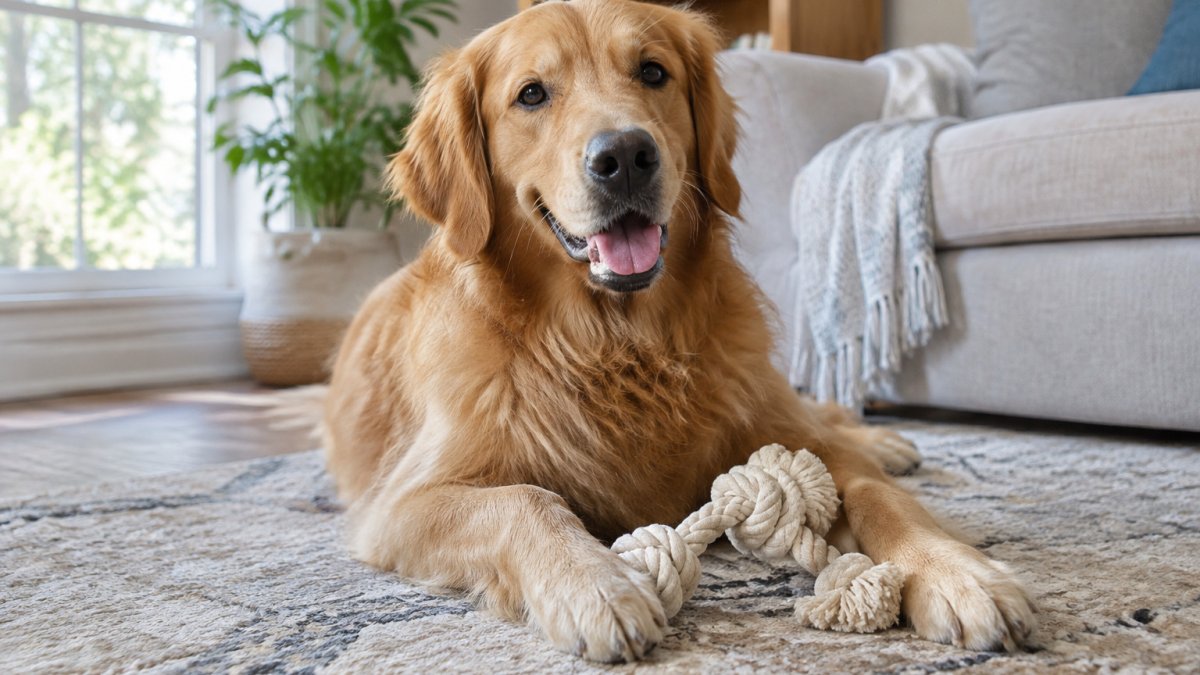
Care is simple but important. Wash cotton toys regularly according to the label, using a mild, fragrance-free detergent, and let them air dry fully before giving them back to your dog. Damp cotton can grow mold, so drying matters as much as washing. Rotate toys so no single one gets worn down too quickly, and retire any that are fraying.
We recommend keeping a few toys of different types on hand rather than relying on one. A soft cotton toy for calm play, a sturdier rubber option for serious chewing, and a puzzle or slow feeder for mealtimes cover most needs. Chewzzle offers interactive puzzle toys and slow feeders designed to support mental stimulation and healthier eating, which can complement cotton toys in a varied routine.
Frequently Asked Questions
Is cotton good for dog toys?
Cotton works well for many dog toys because it is soft, breathable and easy to knot into tug ropes. It is not a substitute for supervision, though. Cotton is fairly easy to tear, and a dog that pulls off and swallows loose threads can develop a gastrointestinal blockage. Choose cotton toys for light to moderate chewing, inspect them often for loose fibers, and replace any toy that fraying has made unsafe.
Are organic cotton dog toys safe for puppies?
Organic cotton toys can be a reasonable choice for puppies, but teething pups tend to pull fibers loose quickly. Supervise play closely and remove the toy once it starts to shed. Look for toys with tightly stitched seams and no small removable parts, and avoid leaving a puppy alone with any fabric toy. Choose a size larger than the puppy's mouth so it cannot be swallowed whole.
Are organic cotton toys durable enough for aggressive chewers?
Usually not for heavy chewers. Organic cotton holds up well for gentle tugging and light chewing, but dogs that shred fabric can pull out fibers quickly. For aggressive chewers, look for denser, tightly woven construction or a material designed for heavy use, and retire any toy as soon as it frays or loses stuffing. Durability depends mostly on the individual dog's chewing style.
How should you clean an organic cotton dog toy?
Most organic cotton toys can go in the washing machine on a gentle cycle in a mesh bag, then air dry completely. Skip harsh bleach and fabric softeners, which can break down fibers and leave residues. Wash toys regularly, especially after outdoor play or when a dog has been chewing, and dry them thoroughly so mold does not develop inside stuffed toys.
