

How to Choose Safe Long-Lasting Chews for Unsupervised Dogs
Last Updated: October 26, 2026
Quick Summary
Safe long-lasting chews for unsupervised dogs depend on your dog's chewing style and the chew type, not just durability marketing. Non-edible rubber toys like the Chewzzle ChewClean Treat Ball are designed to handle aggressive chewers without breaking apart, while edible chews like bully sticks carry choking and obstruction risks when left alone.
- Long-lasting refers to chew durability, not safety when unsupervised, these are different considerations.
- Natural rubber toys are significantly more durable than PVC or TPR plastics and won't splinter or create debris.
- Inspect non-edible chews regularly for tears, punctures, cracks, or separating material and replace if found.
- Assess your dog's individual chewing style first, aggressive chewers need harder, more durable options than gentle chewers.
- Start with supervised sessions to observe how your dog interacts with any new chew before leaving them alone.
Table of Contents
- Understanding the Risks: Can You Really Leave Your Dog Alone With a Chew?
- Long-Lasting Dog Chews: Categories and How They Compare
- Durable Dog Toys for Dogs That Destroy Everything
- Safe Dog Chews: Inspection, Replacement, and Discard Criteria
- How to Stop a Dog From Chewing While Gone: A Decision Framework
- Safer Alternatives to Unsupervised Chewing
- Selecting the Right Chew for Your Dog's Size and Chewing Style
- Frequently Asked Questions
Understanding the Risks: Can You Really Leave Your Dog Alone With a Chew?
The honest answer is complicated. Some safe long-lasting chews are designed for supervised play, others can handle brief periods alone, and some should never be left unsupervised. The difference between a chew that entertains your dog safely and one that causes a veterinary emergency often comes down to the chew type, your dog's individual chewing style, and how closely you monitor your dog.
Many dog owners assume that if a chew is marketed as "long-lasting" or "durable," it's automatically safe to leave with their dog unsupervised. That's not quite right. Long-lasting refers to how long the chew holds up to chewing, not whether it's safe when you're not watching.
The real question isn't whether a chew lasts long. It's whether the chew can be safely left alone without constant supervision. That distinction shapes everything about how you select and use safe long-lasting chews for your dog.
Long-Lasting Dog Chews: Categories and How They Compare
Chew options break into a few clear categories, each with different durability profiles and safety considerations when unsupervised.
Single-Ingredient Natural Chews
Single-ingredient chews like bully sticks, yak cheese chews, and dried animal-based chews are popular. But they come with trade-offs.
Rubber and Non-Edible Chew Toys
The Chewzzle ChewClean Treat Ball is made from durable, non-toxic natural rubber and is designed to handle aggressive chewers.
The Chewzzle toy has textured rubber that helps clean teeth and massage gums during play.
Rawhide Alternatives
| Chew Type | Edible | Digestible | Tooth-Safe | Unsupervised Risk | Best For |
|---|---|---|---|---|---|
| Bully sticks | Yes | Mostly | Moderate | Choking, obstruction | Supervised, shorter sessions |
| Yak cheese | Yes | Partially | Low | Tooth fracture | Supervised chewers |
| Antlers/bones | No | N/A | Low | Tooth fracture | Supervised play only |
| Natural rubber toys | No | N/A | High | Minimal if non-destructive | Unsupervised, durable chewers |
| Rawhide alternatives | Yes | Variable | Moderate | Obstruction, choking | Supervised, shorter sessions |
Durable Dog Toys for Dogs That Destroy Everything
If your dog is an aggressive chewer who can demolish a standard toy in minutes, durability becomes non-negotiable. Explore durable chew toys for heavy chewers to find options specifically designed for destructive chewing.
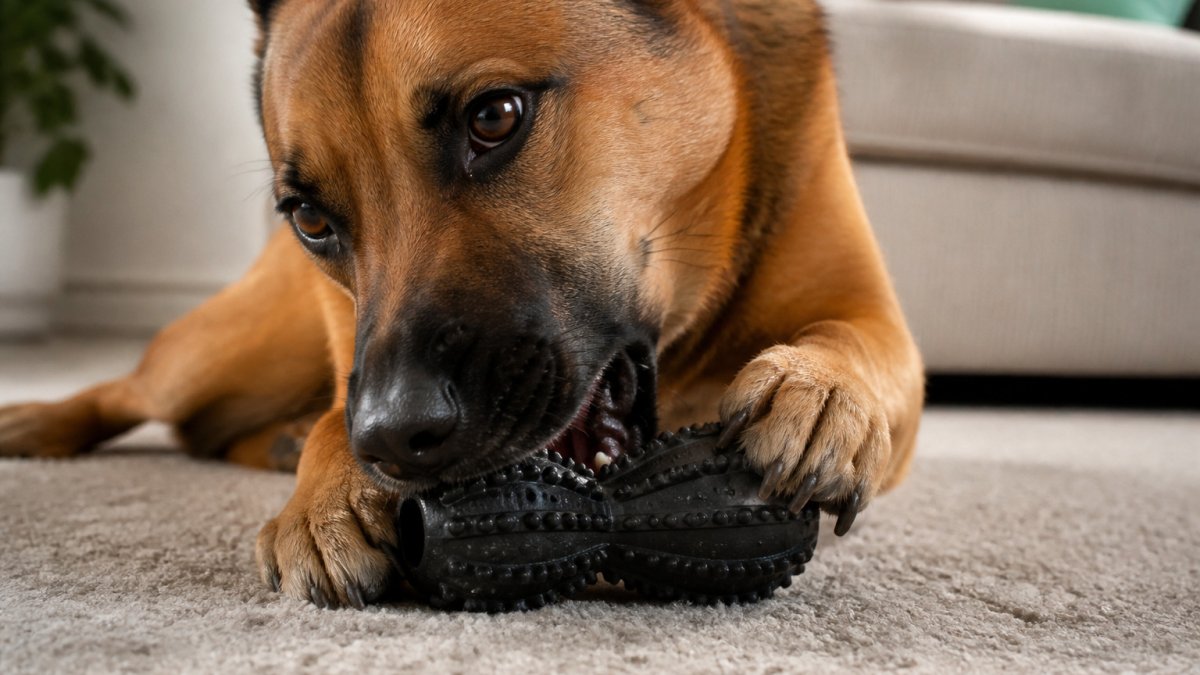
Aggressive chewers need toys made from genuinely tough materials, not just marketed as tough. Natural rubber is significantly more durable than PVC or TPR plastics, which can break down and create small pieces your dog might ingest. The Chewzzle ChewClean Treat Ball is built for this exact scenario: it's designed to handle aggressive chewers without breaking apart, and it won't splinter or leave debris.
The Chewzzle toy has textured rubber that helps clean teeth and massage gums.
Safe Dog Chews: Inspection, Replacement, and Discard Criteria
For non-edible chews like the Chewzzle ChewClean Treat Ball, inspect for tears, punctures, cracks, or areas where the material is separating. Learn about signs of dental damage from hard chew toys to identify when replacement is necessary. If you see any of these, replace the toy. Also check for weak spots where your dog might be able to bite through and create sharp edges. You can learn more about specific warning signs by reviewing durable puzzle toys for aggressive chewers and understanding what damage looks like before it becomes dangerous.
How to Stop a Dog From Chewing While Gone: A Decision Framework
Leaving a dog alone with a chew requires a deliberate decision based on your dog's individual behavior, not just what the product promises. Explore how to reduce destructive behavior in dogs for strategies beyond chew selection. Here's how to think through it:
Step 1: Assess your dog's chewing style. Does your dog chew gently and methodically, or do they bite hard and try to break things apart? Aggressive chewers need harder, more durable toys. Gentle chewers can handle softer options. If you're unsure, start with supervised sessions to observe how your dog actually interacts with the chew.
Step 2: Consider the chew type. Match the chew type to your dog's preferences and your comfort level.
Safer Alternatives to Unsupervised Chewing
There are enrichment options that provide mental stimulation and occupation. Dog puzzle toys for separation anxiety address the root causes of unsafe unsupervised chewing.
Chewzzle offers interactive puzzle toys and slow feeders designed to enhance mental stimulation and promote healthier eating habits.
Selecting the Right Chew for Your Dog's Size and Chewing Style
The Chewzzle ChewClean Treat Ball is 5cm in diameter and is listed as suitable for puppies, small to medium dogs, and large dogs who love a challenge.
For large dogs and aggressive chewers, durability is the priority. Your dog needs something that can withstand sustained, forceful chewing without breaking apart. Natural rubber construction and textured surfaces are non-negotiable here. A cheap toy that falls apart in days isn't a value, it's a waste of money and a potential hazard.
Choosing safe long-lasting chews for unsupervised dogs isn't about finding one perfect product, it's about understanding your dog's individual needs and matching them to the right option. The Chewzzle ChewClean Treat Ball handles aggressive chewers and provides genuine enrichment through its puzzle-style design and dental benefits. Start with supervised sessions, inspect regularly, and adjust your approach based on what you observe. Your dog's safety depends on your willingness to pay attention, not on marketing promises about durability.
Frequently Asked Questions
Is it safe to leave a dog alone with a chew?
Not all chews are safe for unsupervised use. Edible chews like bully sticks and rawhide carry choking and obstruction risks if your dog swallows large pieces. Non-edible rubber chews are generally safer for alone time if they're appropriately sized and show no signs of damage. Always supervise initially to observe your dog's chewing style, and remove any chew that shows weakness or splintering. Puppies and aggressive chewers require extra caution regardless of chew type.
What long-lasting dog chews are less likely to splinter or break into pieces?
Natural rubber and solid non-edible chew toys are your safest bets for durability without splintering. Products made from non-toxic natural rubber resist breaking into sharp fragments. Single-ingredient chews like yak cheese and antlers can splinter or crack under pressure, so they're higher-risk for unsupervised use. Rawhide alternatives vary widely, check for certifications and read reviews about durability. Inspect any chew regularly for soft spots, cracks, or loose pieces before handing it to your dog.
How do I choose the right chew size for my dog?
Match chew size to your dog's mouth and body weight. A chew should be larger than your dog's throat so it cannot be swallowed whole. For small dogs under 20 pounds, choose chews roughly the size of your thumb or larger. Medium dogs (20-60 pounds) can handle chews the size of your fist or bigger. Large dogs (over 60 pounds) need substantial chews, but avoid oversized options that encourage aggressive biting and tooth fracture risk. Always supervise the first few sessions to confirm your dog cannot break off dangerous pieces.
What should I do if my dog swallows part of a chew?
Small swallowed pieces often pass naturally within 24-48 hours. Monitor your dog for vomiting, lethargy, loss of appetite, or constipation. Contact your veterinarian immediately if your dog shows these signs or if a large chunk was swallowed. Do not induce vomiting without professional guidance. To prevent this, remove chews before they become small enough to swallow, avoid chews that splinter easily, and never leave your dog unsupervised with high-risk edible chews. Choosing appropriately sized, durable options reduces this risk significantly.
