
Benefits of Slow Feeding for Dogs: A Complete Guide
Table of Contents
- What Is Slow Feeding and Why It Matters for Dogs
- The Dangers of Bloat in Dogs and How Slow Feeders Help
- How to Stop Dog Eating Too Fast: Practical Strategies
- Mental Stimulation for Dogs Through Interactive Feeding
- Slow Feeder Bowls vs. Puzzle Feeders: What's the Difference
- Choosing the Right Slow Feeder: Materials, Safety, and Maintenance
- Getting Your Dog Started: Transitioning to Slow Feeding
- Conclusion
- Frequently Asked Questions
Last Updated: October 4, 2026
What Is Slow Feeding and Why It Matters for Dogs
Slow feeding for dogs uses specially designed bowls, puzzles, or interactive toys that force your dog to eat more deliberately, taking several minutes to finish a meal instead of gulping it down in seconds. This simple shift transforms mealtime from a race into an opportunity for mental engagement and digestive health.
Most dogs eat too fast due to ancient instinct: in the wild, canines compete for food and eat quickly to secure their share. This wiring persists even with unlimited kibble access. Fast eating triggers bloating, indigestion, regurgitation, and anxiety-related behavioral issues. The solution is redesigning how they access food, not scolding or restricting.
Interactive feeding tools create friction between your dog and their meal by hiding kibble in compartments, under sliding covers, or inside rolling chambers. Your dog works for each bite, naturally pacing consumption and engaging problem-solving instincts. This mimics natural foraging behavior and turns eating into enrichment.
Benefits extend beyond digestion: puzzle feeding reduces boredom-related destructive behaviors, redirects stress in anxious dogs, and channels high-energy breeds' drive into productive activity.
The Dangers of Bloat in Dogs and How Slow Feeders Help
Bloat, or gastric dilatation-volvulus (GDV), is a serious threat to dogs who eat too fast. Rapid gulping causes dogs to swallow air with kibble, expanding the stomach. In severe cases, the stomach twists, cutting off blood supply and becoming life-threatening within hours. While most common in large breeds like Golden Retrievers and German Shepherds, any dog can develop it.
Warning signs include a visibly distended abdomen, restlessness, excessive drooling, and unproductive vomiting attempts. Emergency veterinary care is essential, bloat is not something to wait out. Prevention is far more effective than treatment, and slow feeding is one of the most practical prevention strategies.
Slow feeders reduce bloat risk by minimizing air swallowing and allowing gradual stomach expansion. Research shows rapid eating is a major GDV risk factor, which is why veterinarians recommend feeding strategies that naturally pace consumption.
Fast eating also causes indigestion, gas, and regurgitation. Slowing the eating pace allows digestive enzymes to work efficiently and gives your dog's body time to signal satiety, reducing overeating and weight gain.
How to Stop Dog Eating Too Fast: Practical Strategies
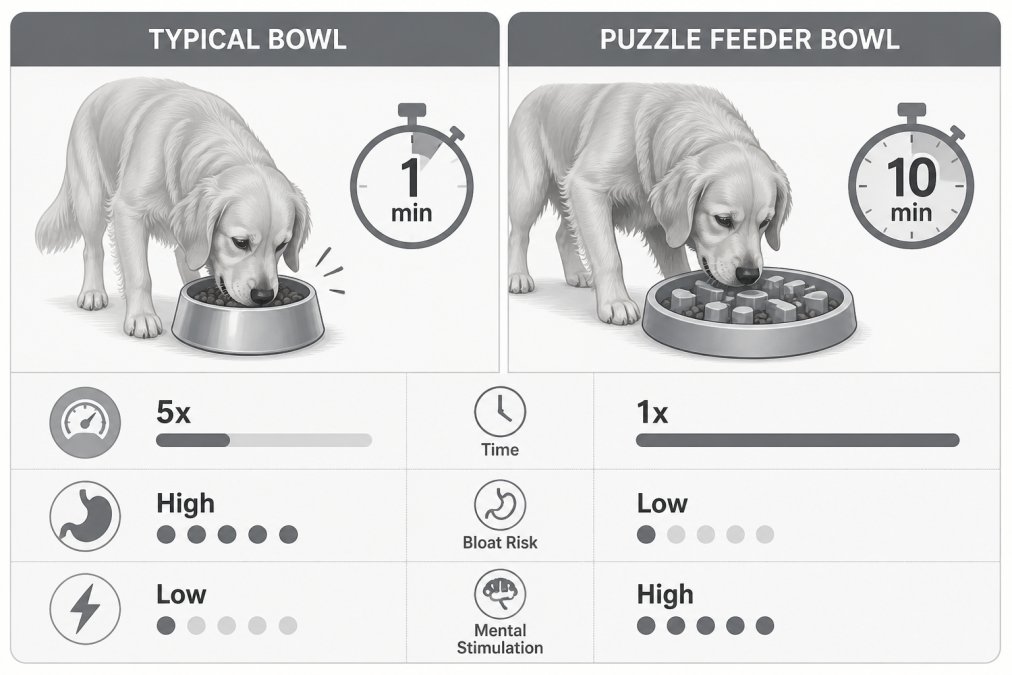
The most direct solution is switching to a slow feeder bowl or interactive puzzle toy. Some have raised bumps or ridges that force eating around obstacles, others use sliding compartments, and still others dispense food gradually as your dog manipulates the toy.
The Chewzzle ThinkDisc Puzzle Feeder uses paw-shaped sliding covers and a rotating center wheel to hide kibble in compartments. What normally takes 30 seconds in a regular bowl takes 5-10 minutes, giving your dog's digestive system and brain time to engage.

The Chewzzle PuzzleFeast Sliding Puzzle offers a different challenge for food-motivated dogs: each button slides to reveal one treat at a time. The mental work becomes as rewarding as the food itself.
For dogs new to puzzle feeders, start with easier options like the Chewzzle TreatDrop Ball, which dispenses treats gradually and satisfies chewing instincts while promoting dental health.
Another strategy is portioning meals into smaller amounts throughout the day. Instead of one large meal, offer three or four smaller portions, which naturally paces consumption and prevents overeating.
Mental Stimulation for Dogs Through Interactive Feeding
Mental enrichment is as important as physical exercise for most dogs. Boredom leads to destructive behaviors: excessive chewing, digging, barking, and anxiety. Interactive feeding addresses this by making mealtime a problem-solving puzzle.
When your dog works to access food, their brain is actively engaged using their nose, paws, and problem-solving ability. This cognitive work releases dopamine, and over time your dog learns to seek out this mental challenge.
For puppies, interactive feeding teaches focus, patience, and problem-solving skills early in life, reducing the likelihood of anxious, frantic eating patterns. The Chewzzle SmartPaws Interactive Puzzle offers scalable difficulty that grows with your puppy's abilities.
For rescue dogs with anxiety, interactive feeding provides structured, calming activity that redirects anxious energy. Slow feeders help rewire patterns of food scarcity by demonstrating that food is reliably available.
High-energy breeds like Border Collies and Australian Shepherds benefit from interactive feeding as part of daily enrichment. A 15-minute puzzle feeding session can be as tiring as a 30-minute walk.
Slow Feeder Bowls vs. Puzzle Feeders: What's the Difference
| Feature | Slow Feeder Bowl | Puzzle Feeder |
|---|---|---|
| Mechanism | Raised bumps or ridges | Sliding covers, compartments, or rolling elements |
| Difficulty Level | Low to moderate | Moderate to high |
| Time to Eat | 3-5 minutes | 5-15 minutes |
| Mental Engagement | Minimal | High |
| Best For | Dogs who need basic pacing | Dogs needing enrichment and mental stimulation |
| Ease of Cleaning | Very easy | Moderate |
| Price Range | $10-20 | $15-50 |
Slow feeder bowls feature raised bumps, ridges, or mazes that force dogs to work around obstacles to reach kibble, naturally slowing eating without requiring puzzle-solving.
Slow feeder bowls are simple, easy to fill and clean, with no learning curve. They're ideal for dogs with mild fast-eating habits or owners wanting a low-maintenance solution.
Puzzle feeders are more complex. They require your dog to actively manipulate the toy to access food. Sliding covers must be nudged aside, compartments must be figured out, or rolling mechanisms must be set in motion. This added complexity means your dog gets significant mental stimulation along with slower eating.
The tradeoff is that puzzle feeders require more supervision initially, especially with dogs who have never encountered one. Some dogs catch on immediately, while others need guidance. A few dogs may become frustrated if the puzzle is too difficult.
For most dog owners, the ideal approach is using both. Use a slow feeder bowl for regular meals when you need quick, simple feeding. Use a puzzle feeder for enrichment sessions when you have time to supervise and when you want to provide mental stimulation.
Chewzzle ThinkDisc Puzzle Feeder →
Choosing the Right Slow Feeder: Materials, Safety, and Maintenance
The material your slow feeder is made from matters more than many owners realize. Poor-quality plastics can leach chemicals, break easily, or become breeding grounds for bacteria if not cleaned properly.
Chewzzle products are crafted from food-grade silicone and pet-safe plastic, specifically chosen to withstand regular use and repeated washing. The materials are BPA-free and chemical-free, which means they're safe even if your dog chews on them for extended periods.
Durability is critical. A slow feeder that breaks after a few weeks of use becomes expensive and frustrating. The Chewzzle PuzzleFeast Sliding Puzzle is designed with a sliding mechanism built into durable plastic.

A non-slip base is essential. When your dog pushes and nudges a puzzle feeder, it should stay in place rather than sliding across your floor. A slipping feeder is frustrating for your dog and creates a mess.
Cleaning is a practical consideration that many owners overlook. If a slow feeder is difficult to clean, you'll be less likely to maintain proper hygiene between uses.
Store your slow feeder in a dry location between uses. Moisture can promote mold growth in compartments or crevices. If you notice any discoloration or odor, soak the feeder in a dilute vinegar solution or use a pet-safe disinfectant.
Getting Your Dog Started: Transitioning to Slow Feeding
Introducing a slow feeder requires patience, especially if your dog is used to eating from a traditional bowl. The transition is easier if you follow a gradual approach rather than making a sudden switch.
Start by placing the slow feeder next to your dog's regular bowl during meals. Let your dog investigate it without pressure. Some dogs will be curious immediately; others will ignore it. This is normal.
Over several days, gradually increase the amount of kibble in the slow feeder while decreasing it in the regular bowl.
For dogs with severe anxiety around food, hand-feeding from the slow feeder can help. Place a few pieces of kibble in the puzzle, then hand your dog one piece at a time as they work the mechanism.
If your dog becomes frustrated with a puzzle that's too difficult, switch to an easier version. The Chewzzle TreatDrop Ball is a good starting point for dogs new to interactive feeding because it dispenses treats with minimal effort.

For rescue dogs or dogs with a history of food anxiety, the transition may take longer. These dogs often have deep-rooted patterns around eating quickly and guarding food. Be patient and consistent.
Never force your dog to use a slow feeder if they're showing signs of severe stress. The goal is to improve their eating habits and provide enrichment, not to create additional anxiety.
Conclusion
The benefits of slow feeding for dogs extend from basic digestive health to behavioral wellbeing and mental enrichment. Reducing the risk of bloat, improving nutrient absorption, and preventing choking are serious health outcomes. But equally important are the mental and emotional benefits: a dog engaged in solving a feeding puzzle is a calmer, more focused dog with fewer behavioral problems.
Chewzzle's interactive puzzle toys and slow feeders are designed to deliver all of these benefits in products that are durable, non-toxic, and genuinely engaging for your dog. Whether you choose the ThinkDisc Puzzle Feeder for its rotating mechanism, the PuzzleFeast Sliding Puzzle for its compartment-based challenge, or the TreatDrop Ball for a gentler introduction to interactive feeding, you're investing in your dog's physical health and mental wellbeing. Start with the transition approach that fits your dog's personality, and watch as mealtime becomes the enrichment highlight of their day. Get started with Chewzzle and transform feeding into a rewarding, healthy routine your dog will love.
Frequently Asked Questions
Do veterinarians recommend slow feeders for dogs?
Yes, many veterinarians recommend slow feeders as part of a comprehensive approach to preventing bloat and improving digestive health. Slow feeding reduces the risk of gastric dilatation-volvulus (GDV), a life-threatening condition in dogs. Vets particularly recommend them for deep-chested breeds and fast eaters. Always consult your veterinarian about whether a slow feeder is appropriate for your dog's specific health needs and feeding routine.
How does slow feeding help prevent bloat in dogs?
Slow feeding prevents bloat by reducing the amount of air your dog swallows while eating. When dogs gulp food rapidly, they also inhale air, a condition called aerophagia. This excess air can cause gastric distension and increase the risk of GDV. By pacing food intake over several minutes instead of seconds, slow feeders allow your dog to chew properly and swallow less air, significantly lowering bloat risk.
Can slow feeders help with dog anxiety and enrichment?
Absolutely. Slow feeders and puzzle toys provide mental stimulation through problem-solving, which redirects anxiety and reduces boredom-driven behaviors. The foraging activity mimics natural canine instincts, keeping dogs focused and engaged during mealtime. This cognitive work can help anxious dogs feel calmer and more confident, while also extending playtime and providing a healthy outlet for excess energy.
What's the difference between a slow feeder bowl and a puzzle feeder?
Slow feeder bowls have raised ridges or compartments that create physical barriers, slowing intake without requiring problem-solving. Puzzle feeders require dogs to solve a puzzle, sliding covers, rotating wheels, or moving buttons, to access food. Both slow eating and provide enrichment, but puzzle feeders offer more mental challenge. Choose based on your dog's food motivation and problem-solving ability.
How long does it take to clean slow feeders and puzzle toys?
Most slow feeders and puzzle toys are quick to clean. Rinse under warm water immediately after feeding to prevent kibble dust buildup. Many are dishwasher-safe, making cleanup even faster. For textured silicone toys like the Chewzzle TreatDrop Ball, a quick rinse and occasional hand wash keeps them hygienic. Regular cleaning prevents bacterial growth and extends the toy's lifespan.
Are slow feeders safe for all dog sizes and breeds?
Most slow feeders work for dogs of all sizes, though sizing matters. Small dogs may do better with shallow puzzle feeders, while large breeds benefit from sturdy, non-slip designs. Deep-chested breeds like German Shepherds and Great Danes face higher bloat risk and benefit most from slow feeding. Always supervise your dog during the first few sessions to ensure they understand how to use the feeder safely.
What does non-toxic mean, and how is it verified?
Non-toxic materials are free from harmful chemicals like BPA, phthalates, and lead. Chewzzle products are made from food-grade silicone and pet-safe plastics designed for long-term safety. Look for products tested by third-party labs or made from materials certified for food contact. If your dog tends to chew rather than solve puzzles, supervise use to prevent ingestion of plastic fragments.