

Best Puppy Gift Sets for Mental Stimulation: A Buyer's Guide
Last Updated: November 12, 2026
Quick Summary
The best puppy gift sets for mental stimulation combine a treat puzzle, a slow feeder, and one durable chew ball, so a new owner can rotate activities instead of buying single toys one at a time. Match a set to your puppy's skill level, starting with one activity it can solve on day one.
- Adjustable difficulty, a non-slip base, and rinseable materials are the traits to look for in a puzzle.
- Start with one sliding cover and add difficulty only after two or three clean successes in a row.
- The Chewzzle MindMaze IQ Puzzle costs $29.99 and suits first-time puppy owners.
- The Chewzzle PuzzleFeast Sliding Puzzle costs $49.99 and reveals one treat at a time for fast eaters.
- Rotate three to four toys rather than offering all at once, and use part of the regular meal.
Table of Contents
- Quick Comparison: Best Puppy Gift Sets for Mental Stimulation
- What to Look for in Best Mental Stimulation Toys for Puppies
- 1. Chewzzle MindMaze IQ Puzzle: Best Starter Gift Set
- 2. Chewzzle SmartPaws Interactive Puzzle: Best for Training and Behavior
- 3. Chewzzle PuzzleFeast Sliding Puzzle: Best for Fast Eaters
- 4. Chewzzle Launch & Learn Puppy Trainer: Best for High-Energy Pups
- 5. Chewzzle TreatDrop Ball and ChewClean Treat Ball: Best Budget Bundle
- Interactive Dog Toys for Mental Stimulation: How They Work
- Frequently Asked Questions
Quick Comparison: Best Puppy Gift Sets for Mental Stimulation
Mental stimulation is not a luxury for a puppy. It is the difference between a dog who settles on a mat and one who redecorates your baseboards while you're on a call. Puzzle feeders and slow feeders are built around what keeps a puppy's brain busy. The short answer: the best puppy gift sets for mental stimulation combine a treat puzzle, a slow feeder, and one durable chew ball, so a new owner can rotate activities instead of buying single toys one at a time.
Below, we'll break down five ready-made bundles, what each one suits, and how to match a set to a puppy's age, size, and chewing style. Here is the at-a-glance version:
| Gift Set | Price | Best For | Difficulty | Standout Feature |
|---|---|---|---|---|
| MindMaze IQ Puzzle | $29.99 | First-time puppy owners | Beginner to intermediate | Adjustable treat placement |
| SmartPaws Interactive Puzzle | $39.99 | Training and chewing redirects | Intermediate | Scalable difficulty for all sizes |
| PuzzleFeast Sliding Puzzle | $49.99 | Fast eaters | Intermediate to advanced | One treat revealed at a time |
| Launch & Learn Puppy Trainer | $69.99 | High-energy pups | Advanced | Rewards fetch with kibble |
| TreatDrop + ChewClean Bundle | $24.98 | Budget gifting | Beginner | Two toys, dental cleaning built in |
Price
What to Look for in Best Mental Stimulation Toys for Puppies
The best mental stimulation toys for puppies share three traits: they are sized for a small mouth, they reward effort with food, and they can be made easier or harder as the puppy learns. Skip anything with loose parts, glued-on decorations, or a difficulty level a young dog cannot solve on day one.
A puzzle a puppy cannot crack in five minutes gets ignored, and an ignored toy teaches nothing. Look for adjustable difficulty, a non-slip base, and materials you can rinse in the sink. Food puzzles work best when they double as a feeding routine, not a separate chore.
Safety, Materials, and Supervision
Safety comes down to three checks: no small detachable parts, non-toxic materials, and active supervision for the first few sessions. A puzzle is not a chew toy, and a chew toy is not a puzzle, so read the label before you hand anything over.
Watch out: puppies explore with their teeth, and a determined chewer can crack thin plastic. For a deeper look at materials and supervision, see our guide on whether puzzle toys are safe for puppies.
Material matters as much as shape. Rigid plastic puzzles suit supervised problem-solving but should be removed once the puppy loses interest and starts mouthing the edges. Natural rubber and silicone tolerate chewing and are better for solo or semi-supervised play.
Size and jaw strength decide suitability more than breed labels do.
Matching Toys to Your Puppy's Skill Level
Skill progression matters more than age. A four-month-old retriever may solve a beginner puzzle faster than a cautious eight-month-old terrier. Start with one step, then add difficulty once your puppy succeeds reliably.
- Beginner: one sliding cover, treats partly visible
- Intermediate: multiple covers, treats fully hidden
- Advanced: sliding plus turning mechanisms, or a fetch-reward loop
- Rotation: swap toys every few days so novelty does the work
A practical progression is to start with a treat ball or snuffle mat that requires almost no technique, move to a single-compartment slider, then add multi-step puzzles and scent games. Increase difficulty only after two or three clean successes in a row. If a puppy fails repeatedly, drop back a level rather than pushing through, because frustration teaches a puppy to quit. This staged approach is also how you get value from a gift set: the bundle should contain at least one activity the puppy can solve on day one and one that will still be challenging a month later.
1. Chewzzle MindMaze IQ Puzzle: Best Starter Gift Set
Our top pick for a first gift set is the Chewzzle MindMaze IQ Puzzle. At $29.99, it gives a new puppy owner a single toy that teaches problem-solving without overwhelming the dog.
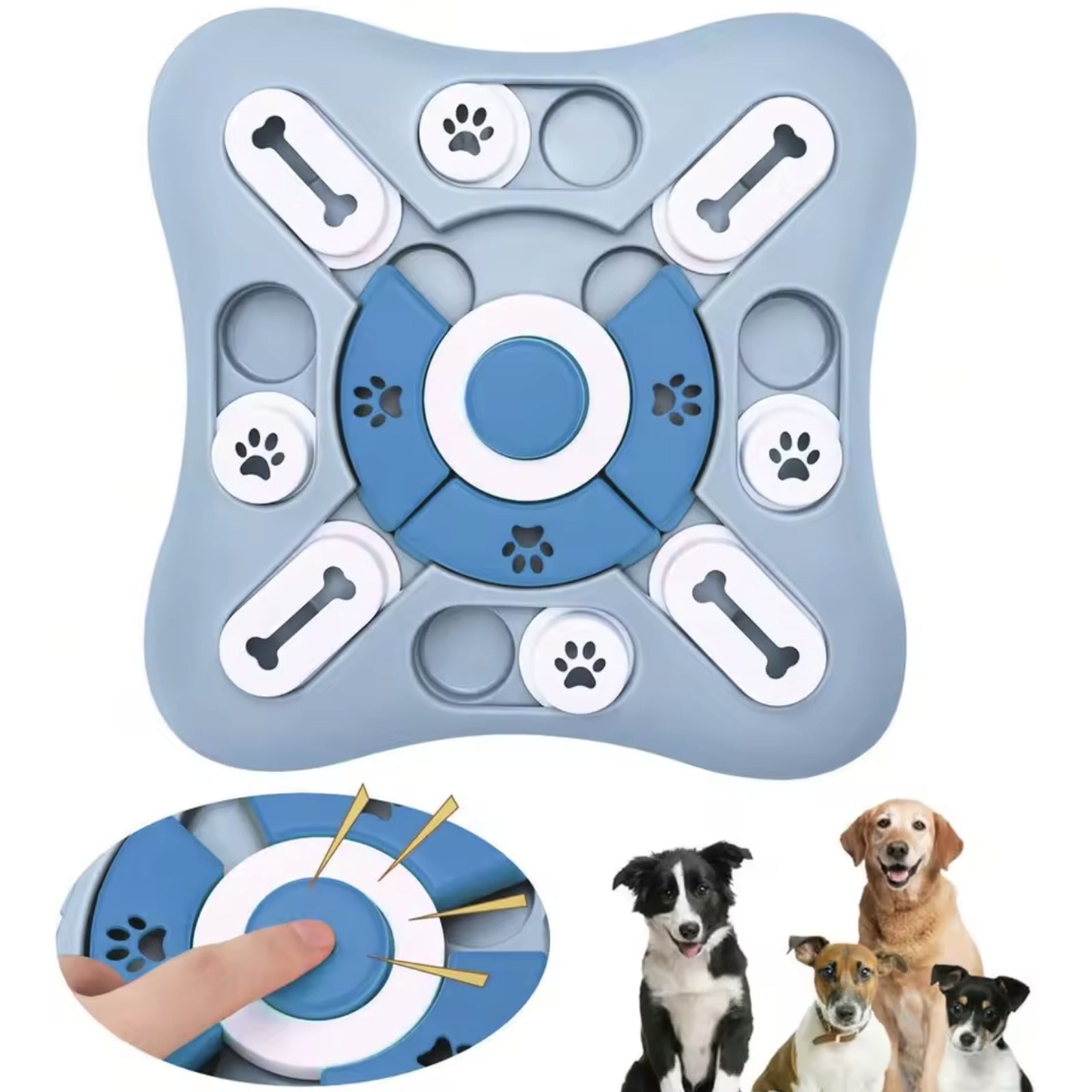
What makes it gift-worthy is the adjustable difficulty. You can vary treat placement to keep the challenge right for a beginner or a smart puppy.
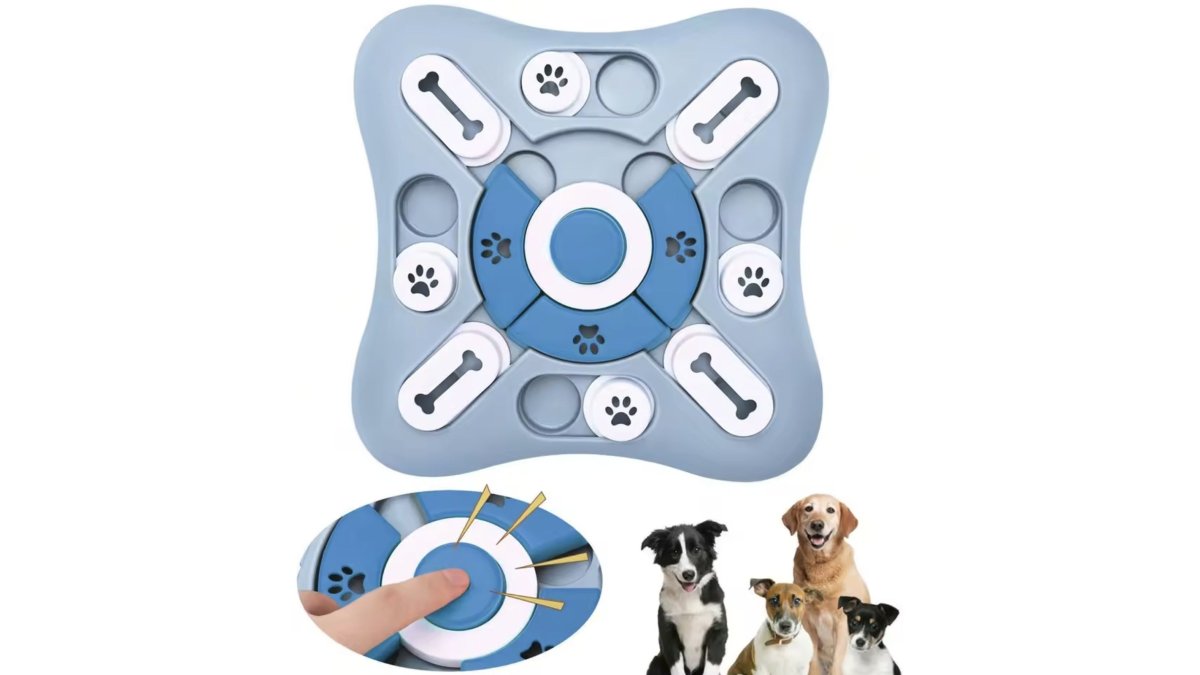
Best for: first-time puppy owners who want one reliable brain game. Skip if: your puppy already solves multi-step puzzles in under a minute.
2. Chewzzle SmartPaws Interactive Puzzle: Best for Training and Behavior
If the puppy has a chewing habit or a short attention span, the Chewzzle SmartPaws Interactive Puzzle is the better gift. It costs $39.99 and leans into training: treat-based problem-solving that redirects chewing energy into a positive outlet.
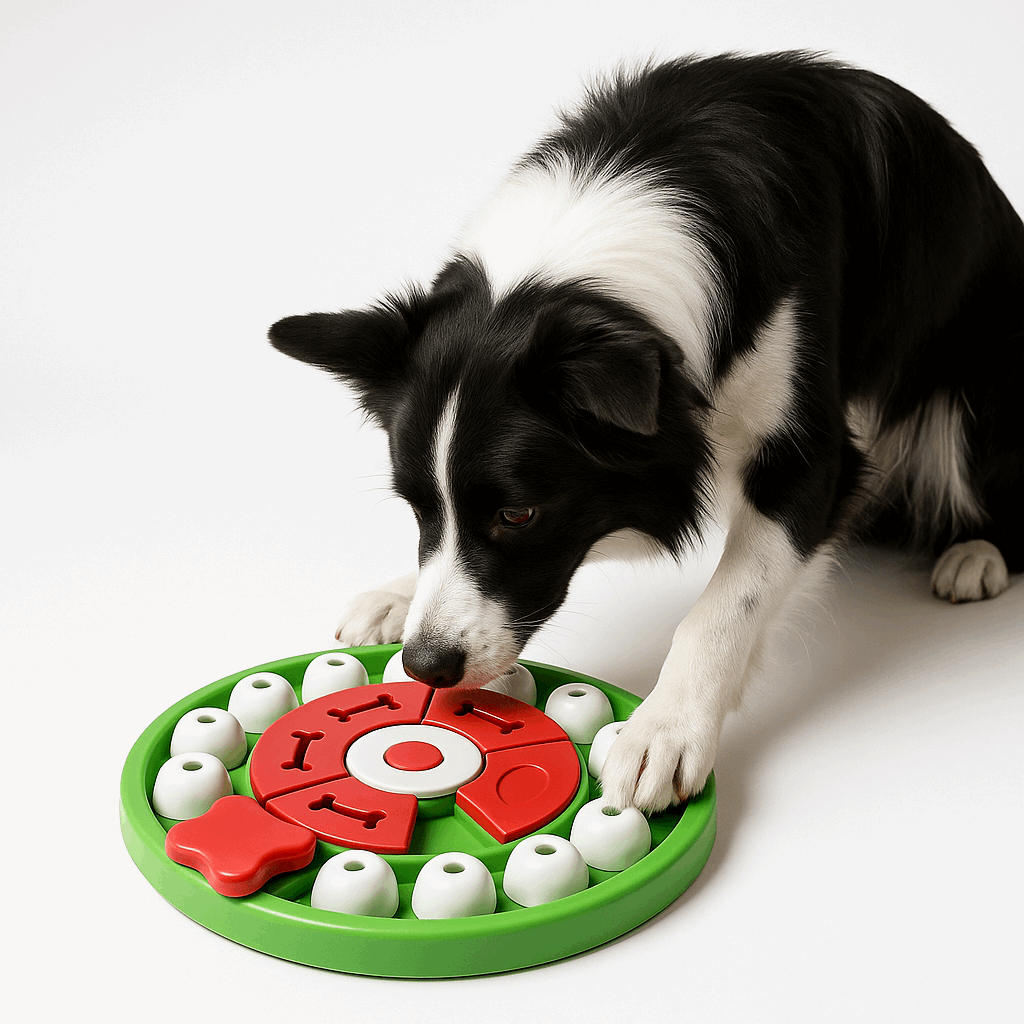
Scalable difficulty keeps it useful as the puppy grows. Start simple during obedience sessions, then increase the challenge once focus improves. In practice, this means the toy earns its place in a training routine rather than sitting in a toy bin.
Best for: puppies in active training or with destructive chewing habits. Skip if: you want a pure mealtime slow feeder.
3. Chewzzle PuzzleFeast Sliding Puzzle: Best for Fast Eaters
The Chewzzle PuzzleFeast Sliding Puzzle solves a specific problem: the puppy who clears a bowl in seconds. Each treat sits under a sliding button, and only one is uncovered at a time. A meal that vanished in a gulp becomes several minutes of sniffing and nudging.
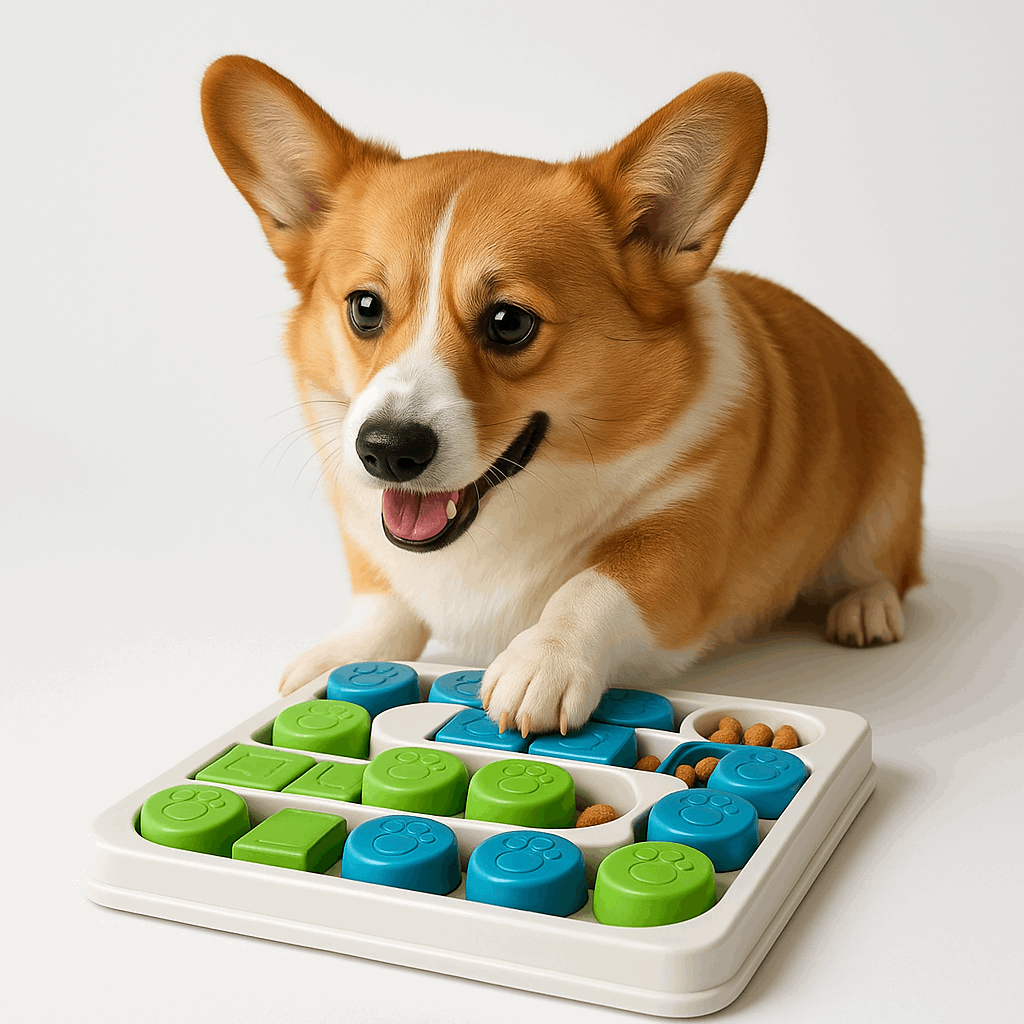
At $49.99, it is the priciest set here, and designed to slow down fast eaters. Load it with a portion of normal kibble to pace a full meal, or a handful of treats for a short session. The non-slip base keeps it planted while your dog works at it.
Best for: fast eaters and food-motivated puppies. Skip if: your puppy chews plastic rather than solving it. This is a puzzle, not a chew toy.
4. Chewzzle Launch & Learn Puppy Trainer: Best for High-Energy Pups
For the puppy who never stops moving, the Chewzzle Launch & Learn Puppy Trainer turns fetch into a puzzle. The dog drops the ball in, the launcher rolls it out, and a kibble reward follows each return. At $69.99, it is the biggest investment in this list and the one that channels the most energy.
It requires no electricity and is designed for small to medium dogs, with non-toxic plastic built for regular play. Think of it as a gentle first step before full ball launchers.
Best for: high-energy puppies who need exercise plus thinking. Skip if: your puppy is a large breed or a heavy chewer.
5. Chewzzle TreatDrop Ball and ChewClean Treat Ball: Best Budget Bundle
Two toys, one low price. The TreatDrop Ball and ChewClean Treat Ball together cost $24.98, making this the easiest gift set to hand to a new puppy parent on a budget. Both dispense kibble as the puppy plays, turning solo time into mental stimulation.
Chewzzle TreatDrop Ball ($14.99)
The Chewzzle TreatDrop Ball is a textured silicone slow feeder that releases kibble as the puppy rolls and chews it. The textured silicone satisfies natural chewing, and it suits gentle to moderate chewers. It is a good solo-activity toy for crate-adjacent downtime.
Chewzzle ChewClean Treat Ball ($9.99)
The Chewzzle ChewClean Treat Ball is made from natural rubber and built for tougher chewers. Fill the grooves with treats or kibble to turn mealtime into a puzzle, or use it for fetch and reward-based training. At 5cm, it fits puppies and small to medium dogs.
Best for: budget gifting and puppies who need a durable chew option. Skip if: you want a multi-step puzzle rather than a rolling feeder.
Interactive Dog Toys for Mental Stimulation: How They Work
Interactive dog toys for mental stimulation work by making food cost effort. Instead of a bowl, the puppy sniffs, nudges, paws, and solves, which mimics natural foraging and turns a two-minute meal into a focused activity.
The range is wider than most owners realize. Snuffle mats and scent-based enrichment encourage sniffing. Lick mats and licking activities calm a wired puppy. Treat-dispensing toys and food puzzles build problem-solving.
Each category does a different job, which is why a good gift set mixes them rather than stacking three versions of the same toy. Treat-dispensing balls and rolling feeders are the easiest entry point: the puppy pushes, the toy rolls, kibble falls out, and the cause-and-effect lesson lands fast. Sliding and compartment puzzles add steps and demand more deliberate paw and nose work. Snuffle mats slow eating and engage scent, which is calming for a puppy who is already wound up.
A few practical notes from building these toys:
- Rotate three to four toys rather than offering all at once
- Keep sessions short and end on a success
- Use part of the regular meal, not extra treats, to avoid overfeeding
- Supervise new puzzles until your puppy understands them
Watch out: enrichment toys are not a substitute for supervision or for chew-specific outlets.
The goal is not a tired puppy. It is a focused one.
Gift shopping for a puppy gets easier when the set does the thinking for you. Chewzzle builds puzzle toys and slow feeders that turn mealtime into a rewarding game, with adjustable difficulty, non-toxic materials, and designs that pace fast eaters.
Frequently Asked Questions
What should a puppy mental stimulation gift set include?
A well-rounded puppy gift set should cover a few different types of enrichment. Look for at least one puzzle toy with adjustable difficulty, such as the Chewzzle MindMaze IQ Puzzle, plus a treat-dispensing or slow-feeding option like the TreatDrop Ball. Add a chew-friendly item for teething relief and a training toy if your puppy is still learning focus and patience. Mixing categories keeps your puppy engaged and gives you options as their skills grow.
Are puzzle toys safe for puppies?
Puzzle toys are safe when you choose the right size and material for your puppy's age and chewing style. Always supervise the first few sessions, especially with puppies who tend to chew plastic rather than solve the puzzle. Check for small parts that could loosen, and inspect toys regularly for cracks or wear. Supervision is still the most important safety step for any puppy toy.
How often should I give a puppy puzzle toys?
A short puzzle session once or twice a day works well for most puppies. You can use a puzzle to replace part of a meal, which turns feeding into a mental workout and slows down fast eaters. Rotate between different toys so the challenge stays fresh, and put a puzzle away if your puppy loses interest or gets frustrated. Ten to fifteen minutes of focused problem-solving is often enough to tire a young dog out.
What are the best mental stimulation toys for puppies who destroy everything?
For heavy chewers, prioritize durable materials and match the toy to the behavior. A natural rubber treat ball like the Chewzzle ChewClean Treat Ball is an option for chewing-focused play. Save sliding or compartment puzzles for supervised sessions, since they are designed for solving, not chewing. Rotating a chew toy with a puzzle toy gives your puppy an appropriate outlet for both instincts and reduces the chance of destruction.
Can interactive dog toys for mental stimulation help with anxiety?
Enrichment toys give dogs a focused, rewarding activity to occupy their time. They are not a cure for separation anxiety, but they are a useful part of a broader routine that includes training and calm environments. Start with an easy puzzle so your dog succeeds quickly, and pair it with your presence during the first sessions. If anxiety is severe, talk to your veterinarian about a full behavior plan.
