

How to Clean Dog Puzzle Feeders: A Step-by-Step Guide
Table of Contents
- Why Cleaning Dog Puzzle Feeders Matters
- What You'll Need to Clean Dog Puzzle Feeders
- Daily Cleaning Routine for Your Puzzle Feeder
- How to Sanitize Dog Toys and Puzzle Feeders
- Material-Specific Care: Plastic vs. Rubber Puzzle Feeders
- Dishwasher Safe Dog Puzzle Feeders: What You Need to Know
- Preventing Bacteria in Slow Feeders Between Uses
- When to Replace Your Dog Puzzle Feeder
- Frequently Asked Questions
Last Updated: September 29, 2026
Why Cleaning Dog Puzzle Feeders Matters
Keeping clean dog puzzle feeders protects your pet's health and maintains functionality. Food residue trapped in crevices harbors bacteria and mold, while regular cleaning prevents biofilm buildup, a layer of bacteria that becomes harder to remove over time.
Every meal leaves kibble dust, saliva, and oils in compartments and under sliding covers. Uncleaned spots become breeding grounds for pathogens causing digestive upset or infections, especially critical for dogs with sensitive stomachs or compromised immune systems.
Even well-engineered puzzle feeders need proper maintenance. Sticky residue jams sliding mechanisms, making the puzzle harder to solve and less rewarding for your dog.
What You'll Need to Clean Dog Puzzle Feeders
Essential cleaning tools:
- Warm water
- Mild dish soap or pet-safe soap
- Soft sponge or cloth
- Soft-bristled brush or old toothbrush (for crevices)
- Towel for drying
- Bottle brush (optional, for hard-to-reach compartments)
Optional but helpful:
- White vinegar (natural disinfectant)
- Baking soda (mild abrasive for stubborn residue)
- Spray bottle (for rinsing)
Avoid harsh chemicals, bleach, or abrasive scrubbers, they damage the toy and leave unsafe residue. Use warm water and mild soap for daily cleaning.
Daily Cleaning Routine for Your Puzzle Feeder
This five-minute routine prevents serious buildup. Do it right after your dog finishes eating.
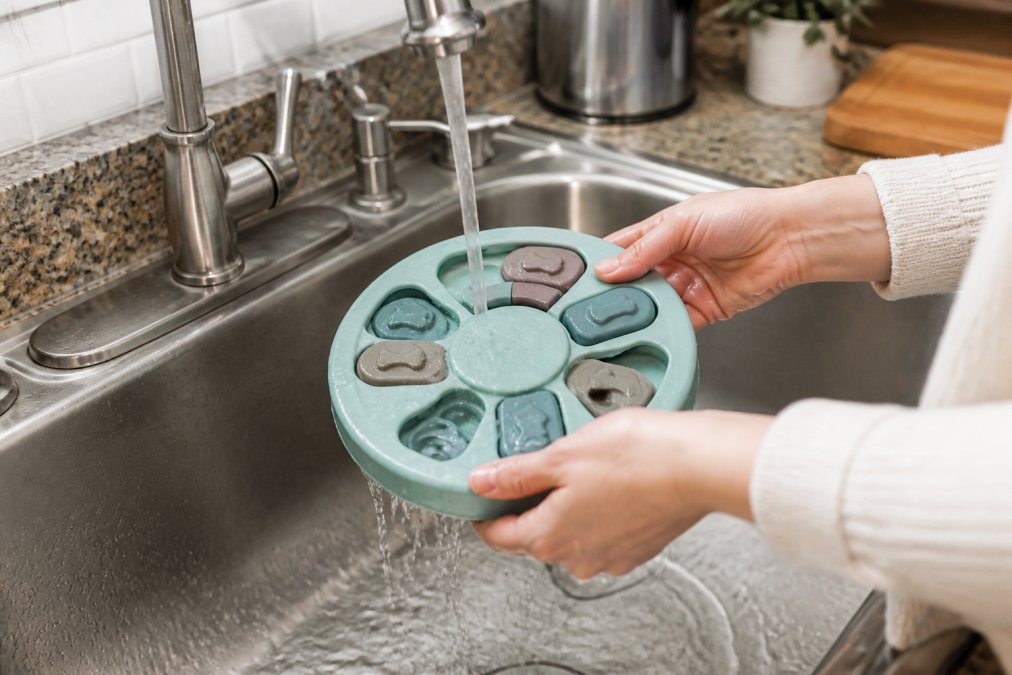
Step 1: Remove large food pieces Dump remaining kibble and rinse under warm water, paying special attention to compartments and spaces under sliding covers.
Step 2: Soak if needed For heavy residue, soak in warm soapy water for a few minutes to soften dried food. Don't exceed 10 minutes.
Step 3: Scrub with soap and water Use a soft sponge and mild soap on all surfaces. Use a soft-bristled brush or old toothbrush for crevices, seams, and moving parts where bacteria hide.
Step 4: Rinse thoroughly Rinse until no soap remains, residue irritates your dog's mouth and stomach. Ensure water flows through all compartments and covers.
Step 5: Air-dry completely Set on a clean towel or drying rack. Let it air-dry fully before the next use, trapped moisture enables mold growth. In humid climates, wipe excess water first.
How to Sanitize Dog Toys and Puzzle Feeders
Weekly sanitization kills bacteria and mold spores that regular washing misses. The right method depends on food type and feeder material.
Sanitization frequency by food type:
Dry kibble feeders need weekly sanitization. Kibble leaves minimal moisture, so a vinegar soak or dishwasher cycle once weekly is sufficient.
Wet or raw food feeders require more aggressive sanitization. Sanitize every 3-4 days instead of weekly, as moisture accelerates bacterial and mold growth.
Mixed diets require twice-weekly sanitization to account for moisture from wet components.
Deep sanitization method for plastic feeders:
Fill a bowl with warm water and add one part white vinegar to four parts water. This natural disinfectant kills pathogens without toxic chemicals. Soak your plastic puzzle feeder for 15-20 minutes. The vinegar smell fades completely once it dries.
For stubborn plastic residue, make a baking soda and water paste, apply to problem areas, let sit five minutes, then gently scrub and rinse thoroughly.
For persistent odors or discoloration, soak plastic in equal parts 3% hydrogen peroxide and water for 10 minutes, then rinse thoroughly.
Deep sanitization method for rubber feeders:
Rubber is more porous and traps bacteria more easily. Soak rubber feeders in vinegar solution (one part vinegar to four parts water) for 30 minutes to penetrate the porous surface.
After soaking, scrub gently with a soft sponge. Don't use baking soda on rubber, use your fingers or soft cloth to work vinegar into crevices instead.
For wet-food rubber feeders, boil weekly: submerge in hot water (removed from heat) for 5-10 minutes to kill bacteria and mold spores more effectively than vinegar alone. Cool completely, then air-dry.
Never use bleach on rubber, it causes discoloration, material breakdown, and leaves toxic residue your dog will ingest.
Dishwasher sanitization (if applicable):
Many plastic feeders are dishwasher-safe. Check instructions first, then place on the top rack and run a hot cycle. High heat (140-160°F) kills bacteria and mold more effectively than hand-washing. Air-dry completely after.
Never put rubber feeders in the dishwasher, heat and water pressure degrade the material and shorten lifespan.
Never put puzzle feeders with electronic components, batteries, or adhesive parts in the dishwasher. Water can damage electronics and degrade adhesives that hold pieces together.
Post-sanitization drying:
Chewzzle ThinkDisc Puzzle Feeder →
After sanitizing, air-dry in sunlight if possible, UV rays provide additional disinfection. In humid climates, wipe excess water before air-drying to prevent trapped moisture.
Don't store until completely dry, even slight moisture allows mold to grow within 24 hours.
Material-Specific Care: Plastic vs. Rubber Puzzle Feeders
Different materials need slightly different care approaches. Using the wrong method can damage your puzzle feeder and shorten its lifespan. Understanding your feeder's material is the first step to proper maintenance.
Hard plastic puzzle feeders:
Hard plastic is durable, affordable, and easy to clean. It resists staining and odors better than rubber. Use soft brushes to avoid micro-scratches where bacteria hide.
Use warm water and mild soap for daily cleaning.
Rubber puzzle feeders:
Silicone puzzle feeders:
For dry kibble, hard plastic is sufficient and cost-effective.
Inspect regularly for cracks, tears, discoloration, odors, rough edges, or loss of flexibility. Replace immediately if damaged. With proper care, hard plastic puzzle feeders typically last 12-24 months. Heavy chewers may need replacements sooner.
Dishwasher Safe Dog Puzzle Feeders: What You Need to Know
Not all puzzle feeders are dishwasher-safe. Check manufacturer instructions, some materials don't tolerate high heat or water pressure.
Place on the top rack only, bottom rack has higher temperatures and pressure. Remove removable compartments and wash separately. Run a hot cycle and air-dry completely before use.
The Chewzzle ThinkDisc and PuzzleFeast models are designed for quick cleaning with removable compartments and smooth surfaces.

Preventing Bacteria in Slow Feeders Between Uses
Bacteria and mold grow fastest between meals. Moisture and food residue create ideal conditions for pathogens.
Store clean, dry feeders in a cool, dry place. Avoid humid environments. In humid homes, use an airtight container with a silica gel packet.
Never store damp or wet feeders, trapped moisture accelerates bacterial growth. Ensure complete dryness before storage.
Rotate multiple feeders to allow complete drying, prevent cross-contamination, and keep your dog engaged.
Remove uneaten meals within 30 minutes, wet food creates ideal breeding grounds for bacteria. Rinse immediately and air-dry.
For multiple daily meals, rinse between feedings to remove fresh residue before it hardens.
Inspect regularly for mold or discoloration. If dark spots or musty smell appear, soak in vinegar and scrub. Replace if mold persists or material is damaged.
When to Replace Your Dog Puzzle Feeder
Even the best-made puzzle feeders eventually wear out. Knowing when to replace yours keeps your dog safe and ensures they get the mental stimulation the toy is designed to provide.
Signs it's time for a replacement:
- Cracks, chips, or tears in the material
- Persistent mold or discoloration that won't come clean
- Sliding covers or moving parts that jam or don't work smoothly
- Missing pieces or compartments
- Rough edges that could cut your dog's mouth or gums
- Permanent odors even after sanitization
Damaged puzzle feeders can harbor bacteria in the broken areas. They also pose choking hazards if pieces break off during use. Don't wait for the toy to completely fall apart.
How long do quality puzzle feeders last? With proper care and daily cleaning, a durable puzzle feeder typically lasts 12-24 months. Heavy chewers or dogs with aggressive play styles may go through them faster. The Chewzzle MindMaze and SmartPaws models are built for durability, but even they need replacement eventually.
Keep receipts and check manufacturer warranties. Some companies offer replacements if the toy fails prematurely due to defects. If your puzzle feeder breaks within a few months of normal use, contact the manufacturer.
When it's time to replace your puzzle feeder, consider upgrading to a different style. Rotating toy types keeps your dog mentally engaged and prevents boredom. The Chewzzle PuzzleFeast Sliding Puzzle offers a different challenge than the ThinkDisc, so alternating between them provides variety.

Keeping your dog's puzzle feeder clean is one of the simplest ways to protect their health.
Frequently Asked Questions
How often should you wash a dog's puzzle feeder?
Wash your puzzle feeder daily after each use to prevent food residue from drying and bacteria from accumulating. If your dog uses the feeder multiple times a day, rinse it between sessions. Deep sanitization should happen weekly. This frequency prevents pathogenic growth and keeps the toy hygienic for your pet's health.
Can you put dog puzzle feeders in the dishwasher?
Many puzzle feeders are dishwasher-safe, but check the manufacturer's instructions first. If yours is safe for the dishwasher, use the top rack and avoid high-heat drying, which can damage plastic. Hand washing with warm water and mild detergent is always a safe alternative and helps extend your feeder's lifespan.
Is vinegar safe to use when cleaning dog puzzle feeders?
Yes, vinegar is a non-toxic, pet-safe cleaning solution. Mix equal parts white vinegar and water to create a natural disinfectant that kills bacteria and mold without harmful chemicals. Soak your puzzle feeder in this solution for 15-20 minutes, then rinse thoroughly with clean water before giving it back to your dog.
How do I prevent mold and bacteria from growing in hard-to-reach crevices?
Use a bottle brush or small scrub brush to clean deep compartments and crevices where food particles hide. After scrubbing, allow the feeder to air-dry completely in sunlight or a well-ventilated area, moisture trapped in crevices promotes mold growth. Store the toy in a dry location between uses to prevent biofilm formation.