

Rubber vs Nylon Chew Toys: Which Is Better for Dogs?
Last Updated: October 28, 2026
Quick Summary
Rubber chew toys absorb a dog's bite and are gentler on teeth, while nylon chew toys resist abrasion and wear far longer, making them the go-to for dogs that shred everything. Choose rubber for safety and nylon for longevity, and always supervise chewing sessions.
- Rubber flexes and absorbs bites, while hard nylon resists wear and abrasion.
- Nylon is molded into bones, rings, and sticks, often with textured surfaces to scrape plaque.
- Match dense nylon to steady gnawers and thick rubber to chompers and thrashers.
- Use soft rubber for puppies under 6 months and check toys are too small to swallow.
- Dense nylon often outlasts rubber but is harder to recycle in most municipal programs.
Table of Contents
- Rubber vs Nylon Chew Toys: The Core Trade-Offs
- Material Characteristics: Natural Rubber vs Hard Nylon
- Durability and Chewing Resistance for Aggressive Chewers
- Tooth and Gum Safety: Fracture Risk and Wear
- Are Nylon Dog Toys Safe? What to Check Before Buying
- Best Chew Toys for Aggressive Chewers: Matching Material to Chewing Style
- Safe Chew Toys for Puppies and Teething Stages
- How to Choose a Dog Chew Toy: A Step-by-Step Framework
- Frequently Asked Questions
Rubber vs Nylon Chew Toys: The Core Trade-Offs
The benefits of rubber vs nylon chew toys come down to one trade-off: rubber gives and nylon resists. Soft, springy rubber absorbs a dog's bite and is gentler on teeth, while hard nylon stands up to relentless chewing but carries more risk of wear and fracture.
Material Characteristics: Natural Rubber vs Hard Nylon
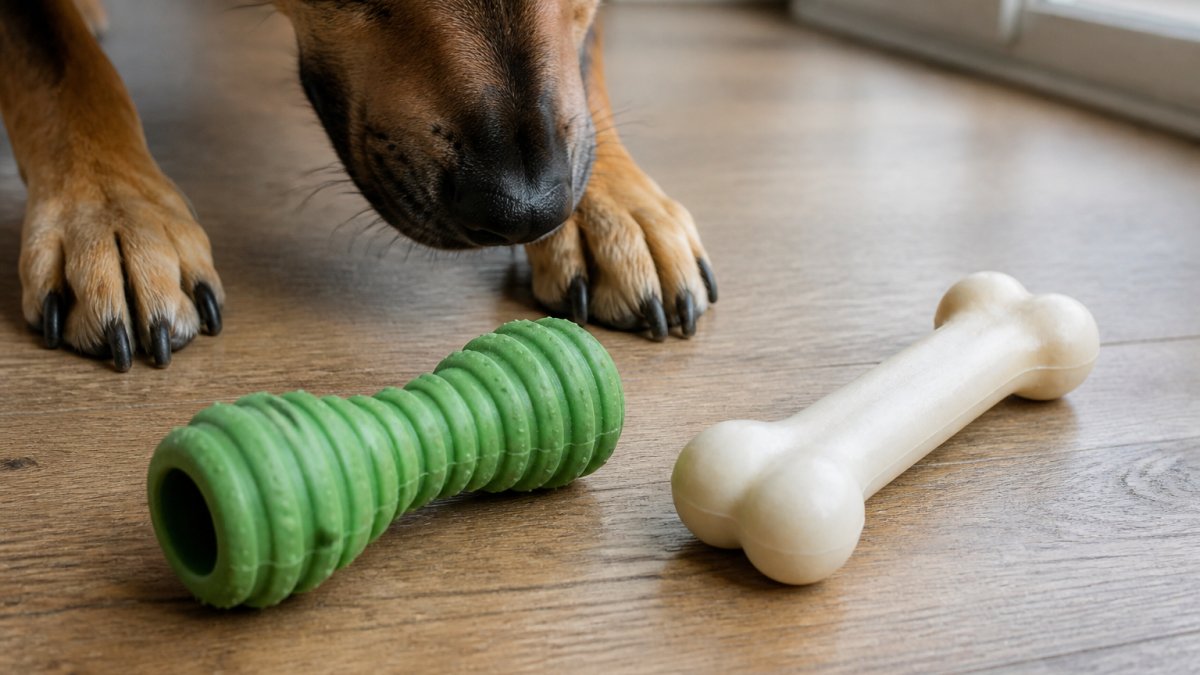
Rubber comes in solid and hollow forms, and many rubber toys use thermoplastic rubber, a molded blend that holds shape well. Nylon is molded into bones, rings, and sticks, often with textured surfaces to scrape plaque. The U.S. Food and Drug Administration's guidance on pet products is a useful starting point for understanding what "non-toxic" should mean on a label.
Durability and Chewing Resistance for Aggressive Chewers
Durability favors nylon, and it isn't close. Hard nylon resists abrasion and wear far longer than rubber, which is why it's the go-to for dogs that shred everything. Rubber's flexibility means it gradually tears, especially at seams and edges, under a strong jaw.
Tooth and Gum Safety: Fracture Risk and Wear
Our guide to the signs of dental damage from hard chew toys walks through what to look for before a small crack becomes an expensive problem.
Are Nylon Dog Toys Safe? What to Check Before Buying
If you want a practical way to confirm a toy is genuinely BPA-free, our guide on how to verify your dog toy is BPA free gives you a step-by-step check you can do before checkout.
Best Chew Toys for Aggressive Chewers: Matching Material to Chewing Style
| Chewing style | Best material | Why it fits | Watch out for |
|---|---|---|---|
| Steady gnawer | Dense nylon | Resists abrasion for long sessions | Overly hard grades |
| Chomper and thrasher | Thick rubber | Flexes instead of shattering | Seam tears over time |
| Power chewer | Rubber, then nylon | Rubber for safety, nylon for longevity | Sharp worn edges |
| Puppy | Soft rubber | Gentler on new teeth | Toys small enough to swallow |
For a deeper look at durable options, our durable chew toys for heavy chewers guide covers material grades and sizing in more detail. The takeaway: rotate toys, inspect often, and don't chase the hardest toy on the shelf.
Safe Chew Toys for Puppies and Teething Stages
Our durable toys for teething puppies buyer's guide breaks down the stages so you can size up as your puppy does.
How to Choose a Dog Chew Toy: A Step-by-Step Framework
7. End-of-life and environmental trade-offs. Longevity varies by product and material formulation, and so do disposal and recyclability claims. Dense nylon often outlasts rubber but is harder to recycle in most municipal programs; rubber toys vary widely in formulation and recyclability. Treat manufacturer environmental claims as claims to verify, not settled facts.
| Dog profile | Default material | Supervision | Key check |
|---|---|---|---|
| Puppy (under 6 months) | Soft rubber | Supervised | Size too small to swallow |
| Steady gnawer | Dense nylon | Supervised sessions | Thumbnail flex test |
| Chomper and thrasher | Thick rubber | Supervised | Seam integrity |
| Power chewer | Rubber, then nylon | Supervised | Wear after every session |
| Dog with dental history | Rubber | Supervised, short sessions | Veterinary clearance for hard chews |
how to stop a puppy from chewing furniture pairs well with a solid toy rotation.
Frequently Asked Questions
Are nylon dog toys safe for aggressive chewers?
Nylon chew toys are dense and resist breakdown, which suits strong chewers who destroy softer toys quickly. Safety depends on matching hardness to your dog's bite force and checking for wear. Avoid nylon for dogs that bite down with extreme force or have a history of tooth fractures, because hard materials can chip enamel. Inspect nylon toys weekly for rough edges, cracks, or pieces breaking off, and replace them when the surface becomes jagged. Always supervise chewing sessions and size the toy large enough that it cannot be swallowed.
Are rubber chew toys better than nylon for dogs?
Rubber chew toys are gentler on teeth and gums because they flex and bounce under pressure, reducing the risk of chips and fractures. They work well for puppies, senior dogs, and moderate chewers who need enrichment. Nylon lasts longer for determined chewers but carries more tooth-fracture risk. Many owners keep both: a rubber toy for daily chewing and a nylon toy for supervised heavy-chewing sessions. Choose based on your dog's chewing style, size, and dental history rather than picking one material for every situation.
Can nylon chew toys damage a dog's teeth?
Nylon is harder than rubber and does not give way under pressure, so a dog that gnaws intensely can chip or fracture teeth, especially the large carnassial teeth. Veterinary dentists report tooth fractures from hard chew items, and nylon ranks among the harder options. Dogs with worn enamel, older dogs, and puppies with developing teeth face higher risk. If you use nylon, choose a size appropriate for your dog, limit session length, and stop if you see pawing at the mouth, drooling, or reluctance to chew.
Are rubber chew toys suitable for teething puppies?
Yes, rubber chew toys are a common choice for teething puppies because the flexible texture cushions sore gums while giving them an outlet for chewing urges. Choose a toy sized for your puppy's mouth so it cannot be swallowed, and avoid hard nylon until adult teeth are fully set. Freeze a water-filled rubber toy for extra soothing relief. Supervise every session, replace toys with tears or missing chunks, and clean rubber toys regularly to prevent bacteria buildup.
