

Dog Anxiety and Bloat: A Feeding Guide
Table of Contents
- How Diet and Feeding Habits Connect to Dog Anxiety and Bloat
- Recognizing Signs of Bloat in Dogs
- How to Calm a Dog Before Eating: Building Mealtime Stability
- Establishing a Feeding Schedule for Anxious Dogs
- Using Slow Feeders for Dogs to Prevent Gulping
- Nutritional Adjustments and Food Choices That Support Calm Eating
- Measuring Progress and When to Seek Veterinary Help
- Frequently Asked Questions
Last Updated: October 13, 2026
How Diet and Feeding Habits Connect to Dog Anxiety and Bloat
When a dog gulps food too fast, dog anxiety bloat often follow together. Feeding habits impact both mental health and digestive comfort.
Fast eating causes two problems at once.
The solution isn't complicated. Slow down mealtime. Add structure to feeding routines. Use tools that make eating a puzzle instead of a race.
Research shows consistent feeding schedules and calm mealtime environments help anxious dogs feel more secure.
Recognizing Signs of Bloat in Dogs
Bloat in dogs is a dangerous condition where the stomach fills with gas and can twist.
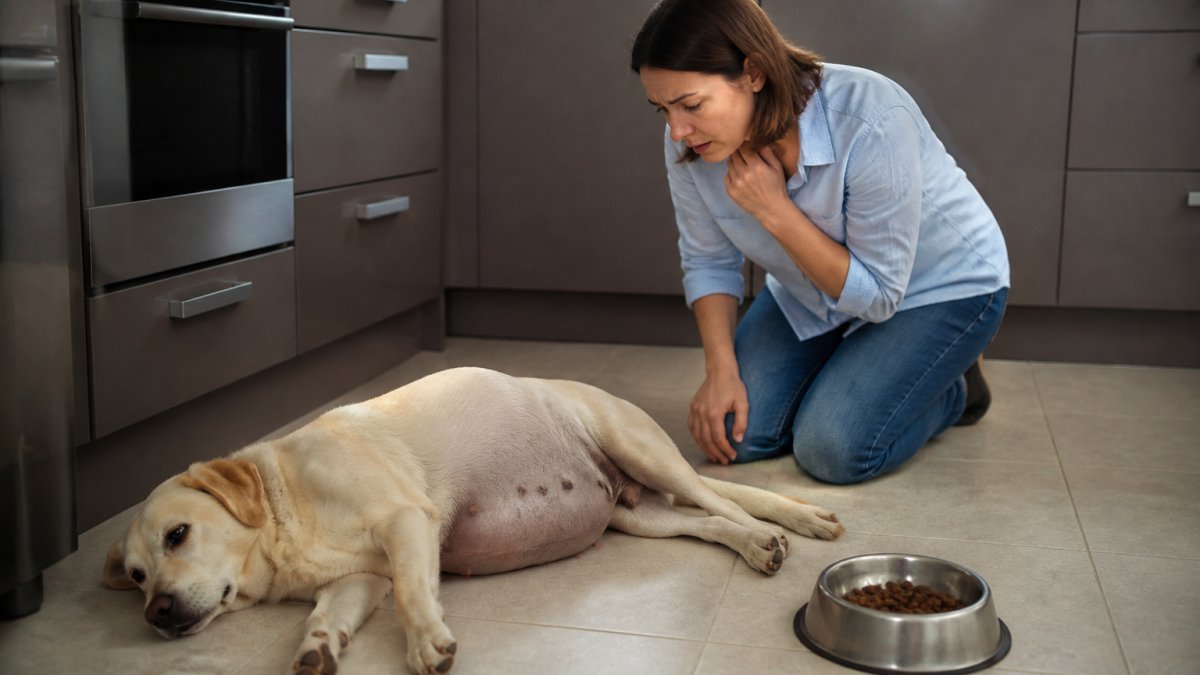
Watch for these symptoms:
- Restlessness and pacing (can't get comfortable)
- Distended or hard belly
- Drooling or dry heaving
Bloat can develop within hours of eating. If you notice any of these signs, contact your veterinarian immediately.
Prevention is far easier than treatment. Slow feeders reduce bloat risk by forcing your dog to eat gradually, in small portions over time.
Dog anxiety bloat becomes more likely when a dog is stressed.
How to Calm a Dog Before Eating: Building Mealtime Stability
Calming your dog before meals sets the tone for the entire feeding experience.
Start with a consistent routine.
Create a calm space for eating, a quiet corner away from noise and chaos.
Before placing the bowl down, sit with your dog, pet them gently, and use a calm voice.
Use these steps before every meal:
- Lead your dog to the feeding area
- Have them sit and wait (builds impulse control)
- Take 60 seconds for gentle petting or calm breathing
- Place the slow feeder on the floor
- Release them to eat
This ritual signals that mealtime is safe and structured. Anxiety drops when dogs know what to expect.
Establishing a Feeding Schedule for Anxious Dogs
A feeding schedule for anxious dogs is your foundation for reducing both stress and bloat. Consistency matters most.
Feed your dog at the same times every day.
Don't leave food out all day. Free-feeding increases anxiety because your dog never knows when food might disappear.
Track your dog's response over two weeks:
- Note the feeding times
- Observe energy levels throughout the day
- Watch for signs of stress or bloating
Most anxious dogs improve within 7-10 days of a consistent schedule. Their demeanor shifts when they trust the routine.
| Feeding Schedule Element | What It Does | Why It Matters |
|---|---|---|
| Same times daily | Creates predictability | Reduces anxiety from uncertainty |
| 8-12 hour spacing | Maintains digestive rhythm | Prevents stomach upset |
| Timed portions | Controls intake speed | Reduces bloat risk |
| Quiet environment | Minimizes stress triggers | Supports calm eating |
Using Slow Feeders for Dogs to Prevent Gulping
Food sits in compartments or under covers, and your dog noses or paws at the feeder to access small amounts at a time.
This extended eating time has real benefits:
- Reduces air swallowing (less bloat)
- Improves digestion
- Keeps your dog mentally engaged
The Chewzzle ThinkDisc Puzzle Feeder ($19.99) works well for most dogs.

For dogs that need more challenge, the Chewzzle PuzzleFeast Sliding Puzzle ($49.99) offers a sliding-button design. Each button reveals one treat.
Start with an easier feeder and move to harder ones as your dog learns.
Nutritional Adjustments and Food Choices That Support Calm Eating
What your dog eats matters as much as how fast they eat it. But diet is a supporting factor for anxiety, not a proven stand-alone treatment. Research links nutrition to behavior, yet most evidence shows association rather than cause-and-effect. A balanced diet can reduce digestive discomfort that feeds anxiety, and certain nutrients support normal nervous-system function, but it will not replace behavior training or veterinary care for a clinical anxiety disorder.
What the evidence actually supports
The strongest dietary levers for anxious dogs are consistency, digestibility, and avoiding ingredients that trigger GI upset. A dog with gas, loose stools, or reflux feels worse, and discomfort amplifies anxious behavior. Fixing the gut often calms the dog, but that is comfort, not a cure.
Nutrients commonly discussed for calming support include:
- Tryptophan and other amino acids, precursors to serotonin. Found in meat and dairy proteins. Dietary levels alone rarely produce dramatic behavior change.
- Omega-3 fatty acids (EPA and DHA), support brain and nervous-system health. Fish oil and marine sources are common. Effects on anxiety are modest and build over weeks, not days.
- B vitamins and magnesium, involved in nerve signaling. Deficiencies matter; extra beyond requirement usually does not.
Treat these as supportive, not curative. Diet alone will not resolve severe anxiety.
Choosing a complete and balanced diet
Look for a label statement that the food is "complete and balanced" for your dog's life stage, based on AAFCO nutrient profiles or a feeding trial. That is the single most useful label check. "Natural," "holistic," and "premium" are marketing terms with no regulatory definition for nutritional adequacy.
Compare these options:
- Commercial complete diets, Convenient, tested, and consistent batch to batch. Best default for most households.
- Veterinarian-formulated therapeutic diets, Designed for specific conditions such as GI sensitivity or food allergy. Require a veterinary recommendation.
- Home-cooked or raw diets, Can work, but only when formulated to meet nutrient requirements. Unbalanced homemade diets are a real and common problem. If you go this route, work with a veterinarian or board-certified veterinary nutritionist.
Foods to emphasize and foods to limit
Emphasize:
- Lean, digestible proteins (chicken, turkey, fish, egg)
- Cooked or pureed vegetables (carrot, green bean, pumpkin)
- Omega-3 sources such as fish oil
- Consistent, measured portions
Limit or avoid:
- High-fat table scraps and greasy treats
- Sudden ingredient changes
- Artificial colors, flavors, and preservatives if your dog is sensitive
- Any food your dog has reacted to before
Safe use of calming supplements and herbal remedies
Supplements are not risk-free just because they are sold without a prescription. Before adding anything, check with your veterinarian, especially if your dog takes medication, has liver or kidney disease, is pregnant, or is very young or very old.
Label checks that matter:
- Look for a guaranteed analysis and a manufacturer contact.
- Prefer products with third-party testing or a National Animal Supplement Council (NASC) quality seal.
- Avoid vague proprietary blends that hide individual ingredient amounts.
- Watch for added xylitol, which is toxic to dogs.
Commonly used calming ingredients include L-theanine, alpha-casozepine (a milk protein derivative), chamomile, valerian, and L-tryptophan. Dosing is weight- and product-specific, so follow the label or your veterinarian's direction.
A gradual food-transition plan
Sudden diet changes cause GI upset, which worsens anxiety. Transition slowly over 7 to 10 days:
- Days 1-2: 75% old food, 25% new food
- Days 3-4: 50% old, 50% new
- Days 5-6: 25% old, 75% new
- Days 7-10: 100% new, monitoring stools and behavior
For dogs with a sensitive stomach, stretch the schedule to 14 days and increase the new food by roughly 10% every two days. If loose stools, vomiting, or itching appear, slow down or pause and consult your veterinarian.
Individual needs, allergies, and medical causes
Age, health conditions, food sensitivities, and pain all shape what diet is appropriate. An older dog may need fewer calories and more digestible protein. A dog with arthritis may act anxious because of pain, not diet. Food allergies can cause itching and GI distress that look like anxiety. If anxiety appeared suddenly in an adult dog, get a veterinary workup before any diet change.
Measuring Progress and When to Seek Veterinary Help
You cannot tell whether a dietary change is helping unless you measure it. Memory is unreliable, especially when you are hoping for improvement. A food-and-behavior diary turns guesswork into data.
Build a simple food-and-behavior diary
Track these columns daily for at least two weeks:
- Date and time of each meal
- Food and amount fed (including any toppers or supplements)
- How long the meal took to finish
- Behavior before eating (pacing, whining, hiding, calm)
Define your scale once and keep it consistent. For example: 1 = relaxed all day, 3 = mildly restless, 5 = severe distress. Consistency matters more than precision.
What realistic progress looks like
GI improvements often show up first, within 3 to 7 days of a consistent routine and gradual transition. Behavior changes lag; expect meaningful shifts over 2 to 6 weeks, not overnight.
Signs of progress:
- Calmer behavior at mealtimes
- Eating more slowly without rushing
- Less visible bloating or discomfort
- More relaxed demeanor throughout the day
Signs the plan is not working:
- No change after 4 weeks of consistent effort
- Anxiety worsening
- New GI symptoms after a diet change
- Weight loss, vomiting, or blood in stool
When diet is not enough
Diet and routine are supportive tools, not treatment for a clinical anxiety disorder. Seek veterinary guidance if:
- Your dog's anxiety interferes with daily life, sleep, or eating
- Behavior is escalating or includes destructive or self-injurious actions
- You suspect pain, a medical condition, or a food allergy
- Symptoms appeared suddenly in an adult dog
Your veterinarian can rule out medical causes, refer you to a board-certified veterinary behaviorist, and discuss evidence-based options including behavior modification and, when appropriate, medication.
Bloat is always an emergency
Bloat, gastric dilatation and volvulus, can be fatal within hours. If your dog shows a hard, distended belly, unproductive retching, drooling, restlessness, or collapse, go to an emergency veterinary hospital immediately. Do not wait or induce vomiting. Call ahead so the team can prepare.
Keep enrichment going beyond mealtime
Mental enrichment supports calmer eating throughout the day. Puzzle feeders, snuffle mats, and chew toys give your dog outlets for energy and reduce boredom-related anxiety. Rotate toys so they stay novel, and supervise chews to prevent choking or ingestion.
Frequently Asked Questions
Can anxiety make a dog eat too fast and cause bloat?
Yes. Anxious dogs often gulp food rapidly as a stress response, which increases the risk of bloating and indigestion. When a dog swallows large amounts of food and air quickly, the stomach can expand dangerously. Slowing down mealtime through puzzle feeders and consistent routines directly reduces both anxiety-driven eating and bloat risk.
What is the best feeding schedule for anxious dogs?
Feed your dog at the same times each day, ideally twice daily for adult dogs. Predictable mealtimes reduce food-related anxiety and stress. Feed in a quiet, designated space away from household chaos. Start meals with a calming activity like a short walk, then use a slow feeder like the Chewzzle ThinkDisc Puzzle Feeder ($19.99) to extend eating time over several minutes instead of seconds.
What are the early warning signs of bloat in dogs?
Watch for a hard, distended abdomen, restlessness, excessive drooling, unproductive retching, or difficulty standing. Some dogs pace or whine. Bloat can develop quickly and is a medical emergency. If your dog shows these signs, contact a veterinarian immediately. Preventive measures like slow feeders and smaller, frequent meals reduce bloat risk significantly.
Do slow feeders actually help prevent dogs from gulping food?
Yes. Slow feeders work by dispensing food one piece at a time or requiring your dog to solve a puzzle to access each portion. A bowl that empties in seconds with a slow feeder takes 5-10 minutes. This paces eating, reduces air swallowing, and gives your dog's digestive system time to process food safely. The Chewzzle PuzzleFeast Sliding Puzzle ($49.99) is especially effective for fast eaters.
Anxiety and bloat often go hand in hand because both stem from feeding too fast and without routine. A calm dog that eats slowly is a healthier, happier dog. Chewzzle's slow feeders and puzzle toys turn mealtime into a game that reduces gulping, prevents bloating, and calms your dog's nervous system. Start with a consistent feeding schedule, add a slow feeder, and watch your dog's anxiety drop within days. Your dog's wellbeing depends on the small changes you make at mealtime.