

How to Choose Puppy Puzzle Difficulty: A Step-by-Step Guide
Quick Summary
Choose puppy puzzle difficulty by picking a level your puppy can solve with some effort, not one they finish in seconds or abandon. Start with beginner toys where treats are visible, then move up one step at a time once your puppy solves each level reliably.
- A puzzle should be a little hard, not impossible: it should hold your puppy's attention for a few minutes.
- Beginner toys use open cups or a single lid; intermediate toys add sliding pieces or flip lids; advanced toys add multiple steps.
- Move up after your puppy solves the current setup in under 30 seconds on three separate sessions.
- Step back if your puppy quits within a minute, avoids the puzzle, or starts chewing or barking at it.
- Keep puzzle sessions to 5 to 10 minutes for puppies under about four months, and count treats toward daily food.
Table of Contents
- How to Choose Puppy Puzzle Difficulty: A Step-by-Step Guide
- Why Puzzle Difficulty Matters for Puppies
- Dog Puzzle Toy Difficulty Levels Explained
- Matching the Puzzle Format to How Your Puppy Plays
- How to Introduce a Puppy to Puzzle Toys
- Signs a Dog Puzzle Is Too Difficult and What to Do
- How Long a Puppy Should Use a Puzzle Toy
- Start Your Puppy's Puzzle Progression With the SmartPaws Interactive Puzzle
- Frequently Asked Questions
How to Choose Puppy Puzzle Difficulty: A Step-by-Step Guide
Last Updated: November 11, 2026
Choosing the right puppy puzzle difficulty is the fastest way to keep your puppy learning instead of frustrated. This guide walks you through how to pick a level your puppy can actually solve, then raise the challenge as they grow.
Here's the basic idea: a puzzle should be a little hard, not impossible. If your puppy solves it in seconds, it's too easy. If they stare at it, nose at it, and give up, it's too hard.
Why Puzzle Difficulty Matters for Puppies
Puppies learn fast, but their attention spans are short. A puzzle that matches their skill keeps them focused on the task. A puzzle that's too hard drains their confidence.
Puppies also have developing bodies and brains. Their paws are still learning to grip. Their problem-solving skills are still forming. That's why starting easy matters so much.
- Too easy: Your puppy finishes in seconds and loses interest.
- Too hard: Your puppy gives up, gets frustrated, or starts chewing the toy.
- Just right: Your puppy works at it for a few minutes and feels proud when they succeed.
Dog Puzzle Toy Difficulty Levels Explained
Most puzzle toys fall into three rough levels. Think of them as a ladder you climb over time.
Beginner (easy):
- Treats sit in open cups or under a single lid.
- Your puppy can see and smell the reward right away.
- Best for puppies just starting out.
Intermediate (medium):
- Treats are hidden under sliding pieces or flip lids.
- Your puppy has to nudge or paw at one or two parts.
- Good once your puppy solves beginner toys reliably.
Advanced (hard):
- Multiple steps, hidden compartments, or turning parts.
- Your puppy has to figure out a sequence.
- Save this for puppies who breeze through intermediate toys.
The article describes three difficulty levels, each with a different treat setup and skill demand.
| Level | How treats are hidden | Best for |
|---|---|---|
| Beginner (easy) | Open cups or a single lid | Puppies just starting out |
| Intermediate (medium) | Sliding pieces or flip lids | Puppies who solve beginner toys reliably |
| Advanced (hard) | Multiple steps, hidden compartments or turning parts | Puppies who breeze through intermediate toys |
Matching the Puzzle Format to How Your Puppy Plays
Not every puppy solves puzzles the same way. Some use their nose, some use their paws, and some just chew. Watch your puppy for a few minutes and notice what they do first.
- Nose-first puppies sniff everything. Choose a toy with clear scent paths and open compartments.
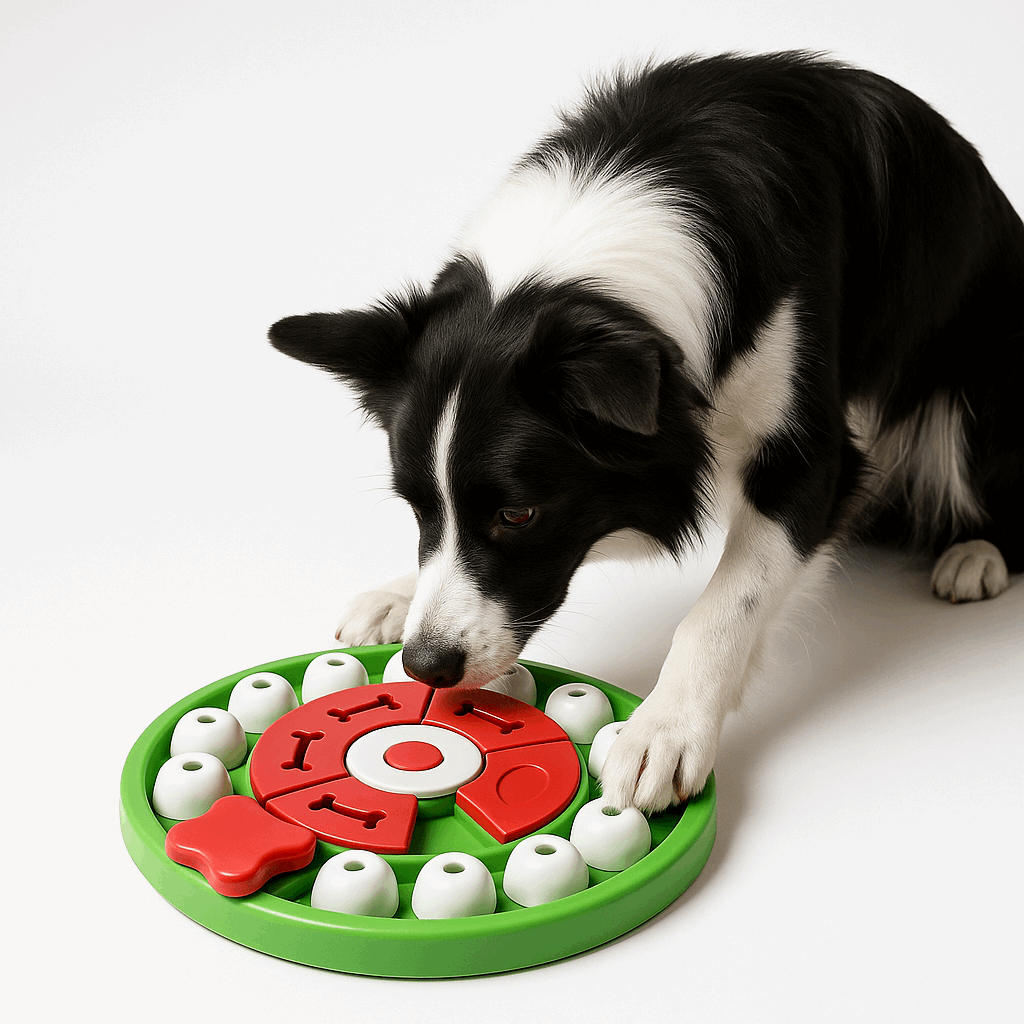
- Paw-first puppies swat and push. The Chewzzle SmartPaws Interactive Puzzle is a good fit because it is designed to reward problem-solving with treats.
- Chewers may bite at the toy. Pick sturdy, non-slip designs and supervise closely.
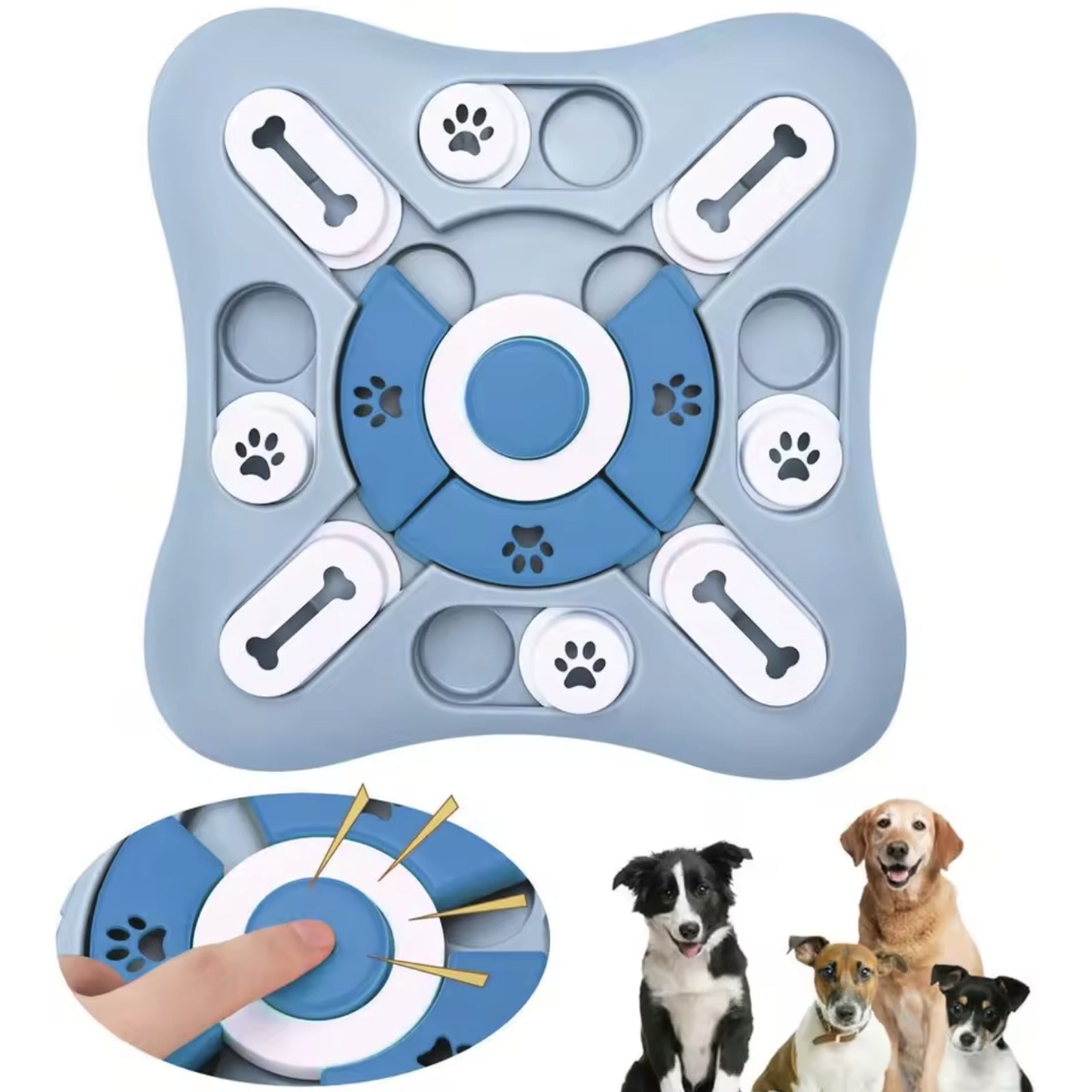
If you want an easy entry point, the Chewzzle MindMaze IQ Puzzle is an option whose treat placement can be varied to keep the challenge fresh.
How to Introduce a Puppy to Puzzle Toys
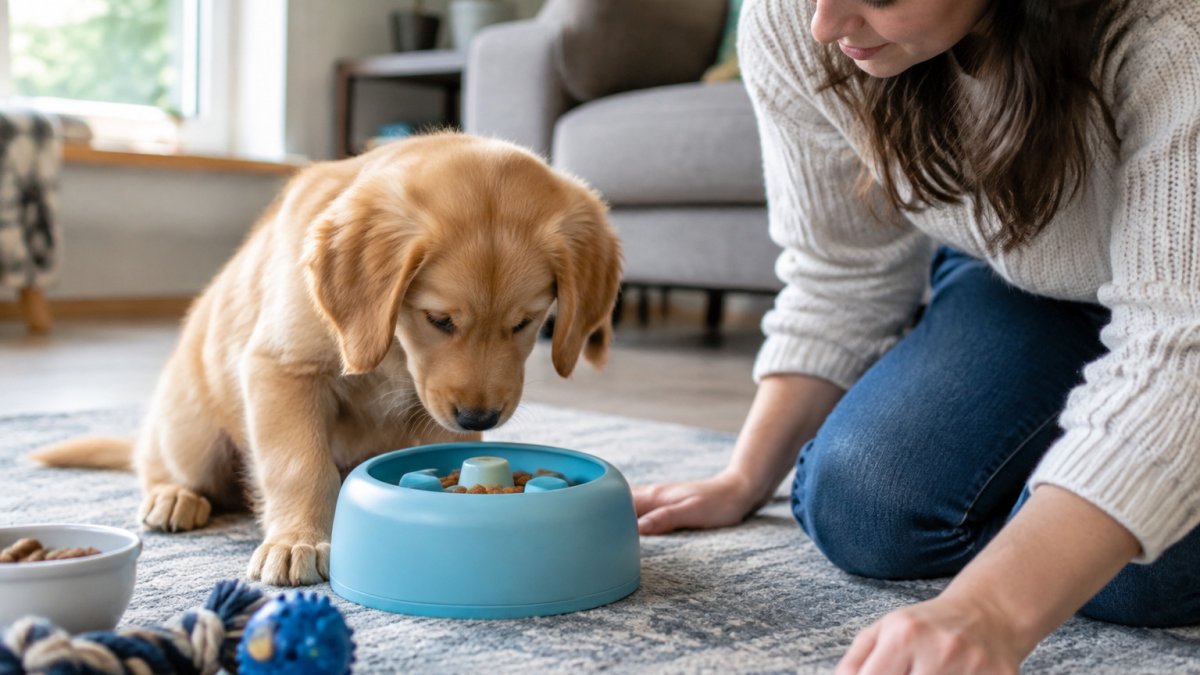
Introducing a puzzle is simple when you go slow. Your goal is for your puppy to feel successful on the very first try.
Setting Up the First Session
Keep the first session short and easy. Five to ten minutes is plenty.
- Choose the easiest level you have.
- Leave the lids or covers partly open so treats are visible.
- Show your puppy a treat and let them sniff it.
- Let them explore and reward any attempt, even a small one.
- Stop while they're still interested.
For a detailed walkthrough, see our first-time puzzle feeder introduction guide.
Using Food Rewards Without Overfeeding
Treats are the reward, but they add up fast. Use part of your puppy's regular kibble for puzzle sessions instead of extra snacks.
- Measure out a portion from your puppy's daily food.
- Use small pieces so they can eat many without filling up.
- Count the kibble so you don't add extra calories.
Signs a Dog Puzzle Is Too Difficult and What to Do
Most guides tell you to watch for frustration. The useful skill is telling frustration apart from boredom, distraction, and plain hunger, because each one calls for a different fix. Use the observations below to sort the behavior before you change the puzzle.
Diagnose Before You Adjust
- Too hard: Your puppy engages within the first 10 to 15 seconds, paws or noses at one part, then stops and looks at you or walks away within about a minute. They may whine, bark, or start chewing the toy itself. The tell is early engagement followed by rapid quitting.
- Too easy: Your puppy solves the puzzle in under 30 seconds, often on the first try, and then ignores the empty toy. Repeating the same easy setup produces no sustained interest.
- Bored or distracted: Your puppy shows no interest from the start, even when treats are visible. This usually means the environment is too busy, the puppy is tired, or they just ate. Try again later in a quiet room before changing the difficulty.
Fixes for a Puzzle That Is Too Hard
Work through these in order and stop as soon as your puppy re-engages:
- Expose the reward. Slide lids partly open or remove one cover so the treat is visible and smellable.
- Reduce the number of steps. If the puzzle has sliding pieces plus a flip lid, set it up so only one mechanism holds the treat.
- Add a scent trail. Rub a treat along the path to the compartment so the puppy can follow the nose instead of guessing.
- Reset the baseline. Drop back to the easiest configuration you have and let the puppy win two or three sessions in a row before adding difficulty again.
- Take a break. If the puppy is still quitting, put the puzzle away for two or three days. Puppies often solve on a fresh attempt what they abandoned before.
Watch out: repeatedly coaxing a frustrated puppy back to the same setup teaches them that the puzzle is a source of stress, so reset the difficulty rather than cheering them through a level they cannot solve.
Fixes for a Puzzle That Is Too Easy
- Move the treat from an open cup to under a single lid.
- Add one sliding or flipping step so the puppy has to combine two actions.
- Hide the treat in a compartment the puppy cannot see, so they must use scent and pawing together.
Fixes for Disengagement and Overexcitement
- No interest at all: Move to a quiet room, use a higher-value treat for one session, and shorten the session to two or three minutes.
- Pawing, barking, or flipping the toy: Place the puzzle on a non-slip mat, start with the easiest setting, and reward the first calm nose contact before the puppy escalates.
- Chewing the toy instead of solving it: End the session, offer an appropriate chew, and choose a sturdier puzzle format next time. Chewing is often a sign the puzzle is too hard or the puppy is past their attention limit.
Log what you see for a week: the setup, how long the puppy engaged, whether they solved it, and how they quit. For a broader look at whether puzzle feeders fit your routine, see our review of whether a puzzle feeder is worth it for puppies.
Want a ranked list of options that suit puppies? Check our best dog brain games for puppies roundup.
How Long a Puppy Should Use a Puzzle Toy
Session length and difficulty level are linked. A puppy who is appropriately challenged will usually work for 5 to 10 minutes and then disengage on their own. A puppy who finishes in under a minute or quits in under a minute is telling you the level is wrong, not that the session was too short or too long.
A Simple Session Structure
- Warm-up (1 to 2 minutes): Start with the easiest setup you have so the puppy gets an early win.
- Main attempt (3 to 8 minutes): Present the current level. Let the puppy work without hovering, but stay close enough to intervene if they start chewing the toy.
- Cool-down (1 minute): End with one easy find so the session finishes on success, then remove the puzzle.
Most puppies do well with two or three short sessions a day. Keep total puzzle time under about 20 to 30 minutes daily, and count the kibble or treats used toward the puppy's daily food intake so you are not overfeeding.
When to Move Up, Hold, or Step Back
Use these observable criteria instead of a calendar:
- Move up when: Your puppy solves the current setup in under 30 seconds on three separate sessions, engages immediately when the puzzle appears, and still shows interest after the treat is gone.
- Hold when: Your puppy solves it in one to three minutes with some pawing or nudging, and stays engaged for most of the session. This is the sweet spot; repeat it for several days before adding difficulty.
- Step back when: Your puppy quits within a minute, avoids the puzzle, or starts chewing or barking at it. Return to the previous level for at least two sessions before trying again.
A Progression Plan From Beginner to Intermediate
Rather than jumping from an open-cup puzzle to a multi-step one, add one variable at a time:
- Open cup, treat visible. Puppy eats the treat with no barrier.
- Single lid, treat visible through a gap. Puppy nudges or paws the lid aside.
- Single lid, treat hidden. Puppy must use scent and pawing together.
- One sliding piece. Puppy pushes a slider to reveal the treat.
- Slider plus lid. Puppy combines two actions.
- Two or three hidden compartments. Puppy searches after the first easy find.
Move to the next step only after the puppy meets the move-up criteria above. If they stall at any step for more than two sessions, hold there or drop back one step rather than pushing forward.
Watch out: a puppy who solves a level quickly once may simply have memorized the setup, so rotate between two puzzles at the same level before deciding the puppy is ready to advance.
Puppy-Specific Limits on Session Length
Young puppies have short attention spans and developing joints. Keep sessions to 5 to 10 minutes for puppies under about four months, and never let a puppy work so long that they start pawing frantically or lying down next to the puzzle. Stop while they are still interested; a puppy who walks away from a puzzle that is still holding treats is telling you the session ran too long or the level was too high.
Start Your Puppy's Puzzle Progression With the SmartPaws Interactive Puzzle
Ready to start? The Chewzzle SmartPaws Interactive Puzzle is a solid place to begin your puppy's puzzle progression. It's built to challenge dogs mentally, reward problem-solving, and support training. Start with easy settings, watch how your puppy responds, and move up as they gain confidence. Your puppy will thank you with focus, calm, and plenty of tail wags.
Frequently Asked Questions
What difficulty level should a puppy start with?
Start with the easiest level available, usually an open or partly covered puzzle where treats are visible and reachable with little effort. Your puppy should be able to solve the first few attempts within a minute or two. If your puppy solves it quickly and eagerly, you can move up one level after a few successful sessions. Starting easy builds confidence and teaches your puppy that the toy is rewarding, which makes harder levels far more enjoyable later.
How do I know if a puzzle is too difficult for my puppy?
A puzzle is probably too hard if your puppy stops trying after a few minutes, paws at the toy without moving the covers, barks or whines, walks away, or starts chewing the plastic instead of solving it. These are signs of frustration or disengagement rather than laziness. Make the puzzle easier by leaving more covers open, reducing the number of hidden treats, or moving the treats to more accessible spots, then increase difficulty gradually once success is consistent.
How long should a puppy use a puzzle toy?
Most puppies do well with puzzle sessions of about 5 to 15 minutes, and sessions should always be supervised, especially with younger puppies who may chew or swallow loose parts. Shorter sessions held a few times a day are usually better than one long session. Stop when treats run out or your puppy loses interest, and avoid leaving a puzzle unattended for long periods until you know how your puppy handles it.
How can I make a dog puzzle easier or harder?
To make a puzzle easier, leave more compartments uncovered, hide treats in obvious spots, or use high-value treats with a strong smell. To make it harder, cover more compartments, hide treats deeper or in less obvious locations, and use smaller pieces of kibble so your puppy has to work through more steps. Change one variable at a time so you can see which adjustment is making the difference.
