

How to Pick Treat Dispensing Toys for Weight Management
Last Updated: November 19, 2026
Quick Summary
The best treat dispensing toys for weight management are slow-release puzzle feeders that stretch one measured portion across a longer meal, so the calories stay the same while the eating pace drops. Load them with regular kibble weighed on a kitchen scale, and count every calorie against your veterinarian's daily budget.
- Start with a rolling toy like the RollFeast Treat Ball for beginners and small or medium dogs.
- Match toy material to chewing style, not dog size, and supervise power chewers with natural rubber only.
- Aim for a meal that takes five to fifteen minutes, then tighten the opening as your dog gets quicker.
- Weigh the toy before and after each session to see how much food the dog actually ate.
- Change only one variable at a time if weight is not moving after three to four weeks.
Table of Contents
- How Treat Dispensing Toys Support Weight Management
- Quick Comparison: Chewzzle Treat Dispensing Toys
- Slow Feeder Toys for Dogs: Pacing Meals and Portions
- Low-Calorie Dog Treats for Weight Loss: What to Load Inside
- Treat Dispensing Dog Toys for Aggressive Chewers
- Matching Puzzle Difficulty to Your Dog's Experience
- Cleaning, Hygiene, and Food Residue
- How to Measure Results and Adjust Portions
- Frequently Asked Questions
How Treat Dispensing Toys Support Weight Management
The best treat dispensing toys for weight management turn a fast, mindless meal into a slow, active one. That single change matters more than most owners realize, because how a dog eats shapes how much he eats and how full he feels afterward.
Food that takes effort to reach is the idea behind our puzzle toys and slow feeders. When kibble trickles out a few pieces at a time, a dog can spend minutes working instead of seconds gulping.
Here's the simple math behind it. A dog who empties a bowl in under a minute barely registers that he ate. A dog who noses a ball around the kitchen for ten minutes gets the same calories stretched across real mental and physical work. That's the core of treat dispensing toys: they make food last, and lasting food is easier to portion.
Why Slow Feeding Helps with Weight Loss
Slow feeding can stretch one measured portion across a longer window. The food amount stays the same; only the pace changes.
That distinction matters. Crash dieting by cutting portions hard tends to backfire. Dogs get pushy, steal food, and raid the trash. For a deeper look at the mechanics, see our guide on the benefits of slow feeding for dogs.
Quick Comparison: Chewzzle Treat Dispensing Toys
Here's how our current lineup compares by use. Pick by your dog's chewing style and experience level rather than by price alone.
| Toy | Price | Best For | Chew Style |
|---|---|---|---|
| RollFeast Treat Ball | $9.99 | Beginners, small and medium dogs | Gentle to moderate |
| ChewClean Treat Ball | $9.99 | Dental cleaning plus enrichment | Aggressive chewers |
| TreatDrop Ball | $14.99 | Soft-mouth chewers, daily enrichment | Gentle to moderate |
| ThinkDisc Puzzle Feeder | $19.99 | Meal pacing, small and medium dogs | Non-destructive |
| MindMaze IQ Puzzle | $29.99 | Adjustable challenge, all sizes | Non-destructive |
| SmartPaws Interactive Puzzle | $39.99 | Training plus enrichment | Non-destructive |
| PuzzleFeast Sliding Puzzle | $49.99 | Full-meal pacing, food-motivated dogs | Non-destructive |
Price
You can browse the full treat dispenser lineup to compare sizes and styles side by side before you commit.
Slow Feeder Toys for Dogs: Pacing Meals and Portions
Slow feeder toys for dogs work by releasing food in small increments, which paces both the meal and the portion.
Start with a rolling or tumbling toy. The RollFeast Treat Ball suits small and medium dogs and takes dry kibble or treats up to 0.59 by 0.91 inches. A dog nudges it, food drops, and the meal stretches out. For a fuller meal, the ThinkDisc Puzzle Feeder hides kibble under sliding paw-shaped covers and a turning center wheel, so a bowlful that vanished in seconds takes several minutes. The PuzzleFeast Sliding Puzzle reveals one treat at a time, which paces even a determined gulper.
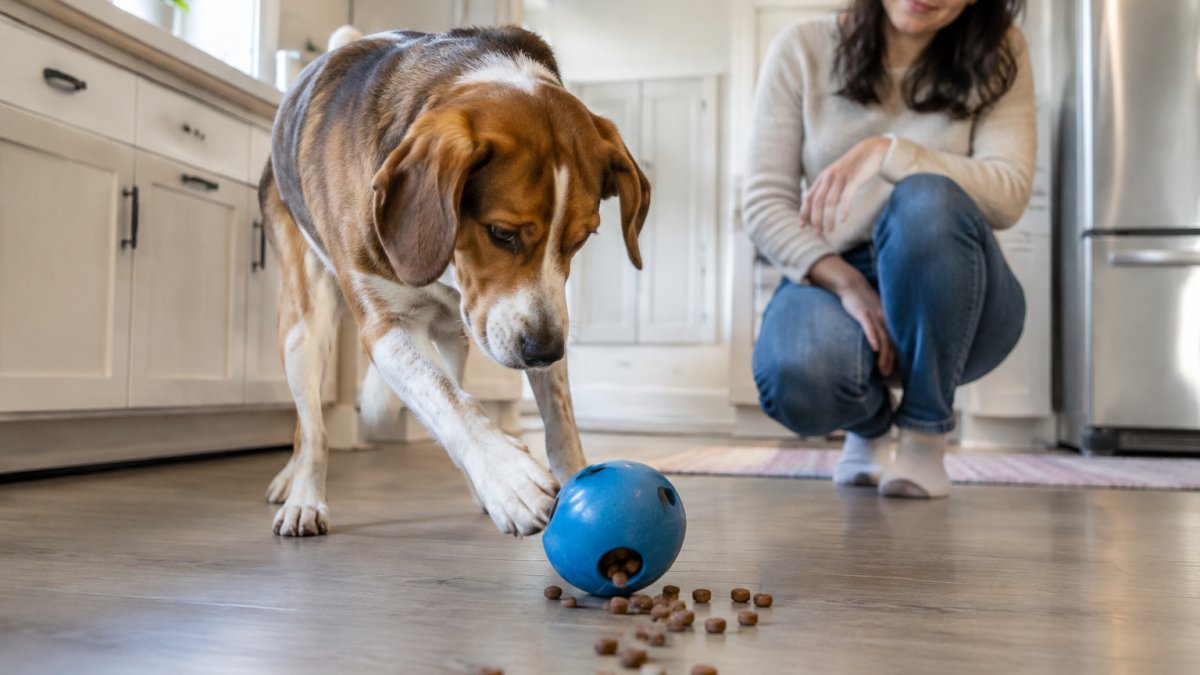
Kibble Capacity and Adjustable Openings
Capacity and opening size decide how fast food comes out. A wide opening dumps kibble; a narrow one forces patience. Match the opening to your dog's pace, then tighten it as he gets quicker.
The MindMaze IQ Puzzle lets you vary treat placement, so the same toy can stay challenging as your dog learns the trick. If you're unsure where to start, our puppy puzzle difficulty guide walks through matching challenge to experience.
Low-Calorie Dog Treats for Weight Loss: What to Load Inside
What you put inside the toy matters as much as the toy. Low-calorie dog treats for weight loss should make up a small slice of the daily food allowance, not sit on top of it. The section most owners skip is the arithmetic: measuring what goes into the toy and counting it against the day's total.
Start With a Daily Calorie Budget
Ask your veterinarian for a target daily calorie intake based on your dog's current weight, ideal weight, age, and activity level. Weight-loss targets should come from your veterinarian, not a chart online. Write that number on the food container. Every calorie that goes into a toy comes out of that budget.
Measure the Load, Don't Eyeball It
Use a kitchen scale that reads in grams, not a scoop. Weigh the full daily ration once, then divide it into the meals and toy loads you plan to feed. If you add commercial treats, weigh them too and subtract the same weight of kibble from the next meal.
What to Load and What to Avoid
- Regular kibble: the cleanest option. Same calories, more work, no math beyond the ration you already weighed.
- Freeze-dried single-ingredient treats: break them into pea-sized pieces so a small weight stretches across a long session.
- Wet food or plain canned pumpkin: good for frozen fillings in rubber toys, but weigh it and count it.
- Avoid: jerky-style chews, dental chews, and peanut-butter-stuffed toys used as a bonus. These are calorie-dense and easy to overfeed.
Watch out: a toy loaded with peanut butter or cheese can deliver more calories than a whole meal, which quietly reverses the deficit you are trying to create.
Do Not Double-Feed
The most common mistake is treating the toy as a bonus instead of a portion. If the toy holds half a cup of kibble, that half cup comes out of the bowl, not on top of it. Keep a simple log for the first two weeks: what went in the bowl, what went in the toy, and what went in the treat jar.
Treat Dispensing Dog Toys for Aggressive Chewers
For heavy chewers, material decides whether a toy survives the week.
The ChewClean Treat Ball is made from natural rubber with a textured design and suits chewing and enrichment play. The TreatDrop Ball is made from soft, durable silicone and suits gentle to moderate chewers. If your dog destroys softer toys, our roundup of durable puzzle toys for aggressive chewers covers the tougher options.
Matching Toy Material to Chewing Style
Match material to how your dog chews, not to his size. A small dog with a strong jaw can wreck a soft toy faster than a big dog who mouths gently. Watch for these signals:
- Gentle chewers: soft silicone and rubber balls work fine
- Moderate chewers: textured rubber and thicker silicone hold up
- Power chewers: natural rubber only, and supervise every session
Watch out: a puzzle toy is not a chew toy. Dogs who chew and destroy plastic rather than solve it may need a more durable chew toy instead.
Matching Puzzle Difficulty to Your Dog's Experience
Puzzle difficulty should start easy and climb as your dog succeeds. A toy that's too hard gets ignored; one that's too easy gets solved and abandoned.
Begin with a partly open puzzle so your dog can see and smell the reward. Once he wins, close it up. The SmartPaws Interactive Puzzle offers scalable difficulty for puppies and clever adults alike, and the MindMaze IQ Puzzle lets you move treats around to keep the challenge fresh. Rotate toys weekly so nothing becomes routine.
Cleaning, Hygiene, and Food Residue
Leftover kibble and saliva turn a toy into a bacteria trap fast.
For stuck-on bits in puzzle compartments, a soft brush and mild soap do the job. Our step-by-step guide on how to clean dog puzzle feeders covers the full routine, including drying the crevices where moisture hides.
How to Measure Results and Adjust Portions
A treat dispensing toy is a tool, not a treatment. It changes how fast food goes in, not how many calories the dog burns, so it only supports weight management when it sits inside a measured feeding plan. Measure four things and you will know within a month whether the toy is helping.
1. Meal Duration
Time how long a meal takes now, then again in two weeks. A dog who finishes in under a minute is a candidate for a tighter opening or a slower puzzle. A dog who gives up after two minutes is telling you the toy is too hard, not that he is full. Aim for a meal that takes five to fifteen minutes, depending on the toy and the dog.
2. Food Consumed
Weigh the toy before loading and after the session on a kitchen scale. The difference is what the dog actually ate. Dogs leave kibble in puzzle compartments more often than owners expect, especially in deep sliding puzzles, so check the crevices before you refill.
3. Engagement
Note whether the dog returns to the toy after the first few pieces, whether he walks away, and whether he whines or paws at it in frustration. A toy that gets abandoned after one session is either too easy or too hard. Rotate two or three toys weekly and track which ones keep him working.
4. Body Condition and Weight
Use a body condition score, not just the scale. The 9-point scale used by most veterinarians rates a dog from 1 (emaciated) to 9 (obese), with 4 to 5 being ideal. You should feel the ribs easily without pressing, see a waist from above, and see a tuck from the side. Weigh your dog monthly on the same scale, at the same time of day, and record it. A loss of 1% to 2% of body weight per week is a common target for a supervised weight-loss plan; faster loss needs a vet's input.
Adjust One Variable at a Time
If the weight is not moving after three to four weeks, change one thing: tighten the toy opening, swap to a slower puzzle, or trim the treat portion. Do not cut meals and add a harder toy in the same week, or you will not know which change worked.
Watch out: a dispenser alone does not cause weight loss. If the daily calorie total is not in a deficit, a slower meal just makes the same surplus last longer.
Frequently Asked Questions
Can I use my dog's regular kibble in a treat dispensing toy?
Yes, regular kibble works well in most treat dispensing toys. Measure out the amount you would normally put in the bowl, then load it into the toy. The toy paces the meal, so your dog eats the same calories over a longer period. Check that your kibble size fits the toy's opening, since pieces that are too large will clog the dispenser.
How do treat dispensing toys help with portion control?
Treat dispensing toys turn a single bowlful into a longer, active session. Because food comes out a few pieces at a time, your dog cannot gulp the entire portion in seconds. This can make it easier to spread a measured amount of food across the day. Pair the toy with a measuring cup to track daily food portions accurately.
Are treat dispensing toys good for dogs who eat too fast?
A dog that clears a bowl in under a minute can take several minutes to work through a puzzle toy, which can reduce gulping. Slow feeder toys for dogs, like rolling balls and sliding puzzles, release kibble gradually. Start with an easier difficulty setting so your dog stays motivated, then increase the challenge as they get faster at solving it.
How much of my dog's daily food should go in a puzzle toy?
Measure the total daily amount first, then decide how to divide it between bowl and toy. If you add low-calorie dog treats for weight loss on top, subtract that amount from the regular food to avoid overfeeding.
