

How to Calm an Anxious Dog Naturally
Table of Contents
- Recognize Signs Your Dog Is Anxious
- Identify Common Triggers and Causes
- How to Calm a Dog with Separation Anxiety
- Natural Remedies and Calming Supplements for Anxious Dogs
- Puzzle Toys for Anxious Dogs and Mental Enrichment
- Build a Calming Routine for Anxious Dogs
- Exercise, Play, and Enrichment Activities for Anxious Dogs
- When to Consult Your Veterinarian
- Frequently Asked Questions
Last Updated: October 21, 2026
Recognize Signs Your Dog Is Anxious
Learning how to calm an anxious dog naturally starts with spotting early signals so you can intervene before anxiety spirals.
Common signs include excessive panting, pacing, whining, trembling, destructiveness when left alone, hiding, or refusing to eat. Yawning, lip licking, and pinned-back ears are subtler signals many owners miss.
Anxious dogs may also become clingy, bark excessively, or have accidents indoors despite being housetrained. Watch your dog's baseline, what's normal for one dog may signal distress in another.
Identify Common Triggers and Causes
Common triggers include loud noises like thunderstorms, fireworks, or vacuum cleaners, plus car rides, vet visits, and owners leaving home.
Separation anxiety is one of the most common forms: dogs become distressed when separated from their owners, even briefly. Rescue dogs often carry past trauma that surfaces as anxiety in new environments.
Age, breed, and personality all play roles.
Chaotic, noisy households can overwhelm sensitive dogs, and inconsistent routines or sudden changes in living situations trigger stress.
How to Calm a Dog with Separation Anxiety
Separation anxiety is treatable, but not by simply leaving for longer each time. The evidence-based approach is systematic desensitization and counterconditioning (DS/CC): teach the dog that departure cues predict something good, then increase absence duration only as fast as the dog stays calm. Rushing it is the most common reason it fails.
Step 1: Set a baseline
Before changing anything, record what happens now. Use a camera or neighbor to note how long after you leave the first stress signal appears (panting, pacing, whining, scratching, howling), how long it lasts, and recovery time after you return. This baseline sets your starting duration and measures progress.
Step 2: Neutralize departure cues
Dogs learn a chain of cues, keys, shoes, bags, that predict leaving and trigger anxiety before you reach the door. Practice each cue without leaving: pick up keys, sit down; put on shoes, make coffee. Repeat until the cue no longer predicts departure. This is cue fading, and it is often skipped.
Step 3: Build a calm departure ritual
Keep arrivals and departures low-key. No dramatic goodbyes or greetings. Give a long-lasting food toy or puzzle feeder only when you leave, and remove it when you return, so departure predicts something enjoyable. This is the counterconditioning half of DS/CC.
Step 4: Run micro-absences and increase gradually
Start with absences shorter than the dog's baseline threshold, often 10-30 seconds for a dog that panics immediately. End each repetition before stress appears. If the dog stays calm, add 10-20% next session; if stressed, drop back to the last successful duration. Progress is measured in calm seconds, not days.
Signs to slow down or back up:
- Panting, drooling, or lip licking before you reach the door
- Pacing, scratching, or destructive behavior during the absence
- Not eating the food toy
- Excessive greeting or clinginess when you return
- Regression after a good week, normal, but reduce difficulty
Step 5: Generalize and maintain
Once your dog tolerates 30-60 minutes calmly, vary the time of day, door, and absence length so the skill holds up. Keep sessions to one or two per day and avoid real absences beyond the dog's current threshold, one long absence can undo weeks of work.
When to bring in professional help
If your dog cannot tolerate even a few seconds alone, shows self-injury (broken teeth, scratched doors, chewed windowsills), or does not improve after several weeks of consistent DS/CC, ask your veterinarian about a referral to a veterinary behaviorist. Medication is sometimes used alongside training to lower anxiety enough for learning; it is not a shortcut, but it can make training possible.
Key steps for managing separation anxiety:
- Record a baseline with video or a neighbor
- Fade departure cues before practicing absences
- Keep arrivals and departures calm and brief
- Start below the dog's stress threshold and increase by 10-20%
- Log calm time and recovery, and back up at the first stress signal
- Provide a safe space and a departure-only food toy
Interactive toys like the Chewzzle MindMaze IQ Puzzle keep dogs mentally engaged while you're away and pair well with a DS/CC plan, the toy is the counterconditioning tool, not a substitute for gradual absences.

Natural Remedies and Calming Supplements for Anxious Dogs
Natural remedies can support an anxiety plan, but they are supportive care, not a substitute for behavior modification or veterinary treatment. Most over-the-counter calming products have modest or mixed evidence, and the FDA does not review pet supplements like drugs, so label claims are not proof of effect.
What the evidence supports
- L-theanine (an amino acid found in green tea) has small studies in dogs suggesting reduced fear responses during thunderstorms and vet visits. It is generally well tolerated. Typical veterinary-recommended ranges are in the 1-5 mg per pound of body weight range, but confirm with your vet.
- Omega-3 fatty acids (EPA/DHA) have the strongest general evidence for brain health and may modestly reduce anxiety-related behaviors; effects build over weeks.
- Chamomile and valerian root are traditional calming herbs with limited dog-specific studies, often included in combination products at low doses; sedation and gastrointestinal upset are possible.
- Pheromone products (dog-appeasing pheromone, or DAP, delivered via diffuser, collar, or spray) have mixed but generally favorable evidence for reducing stress signals in some dogs, especially in confined spaces. Response is individual.
- Adaptogenic herbs (ashwagandha, Rhodiola) are marketed for dogs but have little controlled evidence; quality and dosing vary widely.
Realistically, these tools may take the edge off mild anxiety or support a training plan. They are not a fix for moderate-to-severe separation anxiety, noise phobia, or fear aggression on their own.
Safety, dosing, and interactions
- Never guess the dose. Use products formulated for dogs and follow the label, then confirm the amount with your veterinarian based on weight, age, and health status.
- Human supplements are not automatically safe. Some contain xylitol (toxic to dogs), caffeine, or high-dose herbs. Do not share human capsules or teas without veterinary guidance.
- Essential oils are a real hazard. Tea tree, eucalyptus, citrus, peppermint, and wintergreen oils can cause drooling, vomiting, tremors, or worse in dogs, especially if diffused in small rooms or applied to skin. Do not rely on essential oil diffusers as a calming strategy without veterinary direction.
- Watch for interactions. Sedating herbs and supplements can compound prescription anti-anxiety medications, anesthesia, or pain drugs. Tell your vet everything your dog takes, including chews and powders.
- Stop and call your vet if you see vomiting, diarrhea, lethargy, wobbliness, or behavior change after starting a product.
A practical way to try a remedy
Pick one product at a time, start at the low end of the label range, and give it 2-4 weeks before judging. Keep a simple log (date, product, dose, trigger, duration, recovery time) so you and your vet can tell whether it is helping. Stacking supplements makes it impossible to know what worked or caused a side effect.
Natural calming options to explore (with vet approval):
- L-theanine chews or capsules formulated for dogs
- Omega-3 fish oil for dogs (EPA/DHA)
- Chamomile or valerian combination products at label doses
- Dog-appeasing pheromone diffusers or collars
- Adaptogenic herbs only under veterinary guidance
Puzzle Toys for Anxious Dogs and Mental Enrichment
Mental stimulation is one of the most underrated anxiety management tools. When your dog's brain is actively working, anxiety takes a backseat.
Puzzle toys force your dog to think before eating, working through compartments, slide covers, or rotating wheels to access treats.
The Chewzzle SmartPaws Interactive Puzzle is designed specifically for this purpose. It offers adjustable difficulty levels, so you can match the challenge to your dog's skill.
Rotate toys to prevent boredom, use different puzzles on different days to keep the challenge fresh.
Benefits of puzzle toys for anxious dogs:
- Redirects anxious energy into problem-solving
- Builds confidence through success
- Provides mental stimulation and focus
- Slows eating and aids digestion
- Creates positive associations with alone time
The Chewzzle ThinkDisc Puzzle Feeder works particularly well for fast eaters who inhale their food.

Build a Calming Routine for Anxious Dogs
Consistency is your secret weapon against dog anxiety. Dogs thrive on predictable routines. When they know what to expect, their nervous system relaxes.
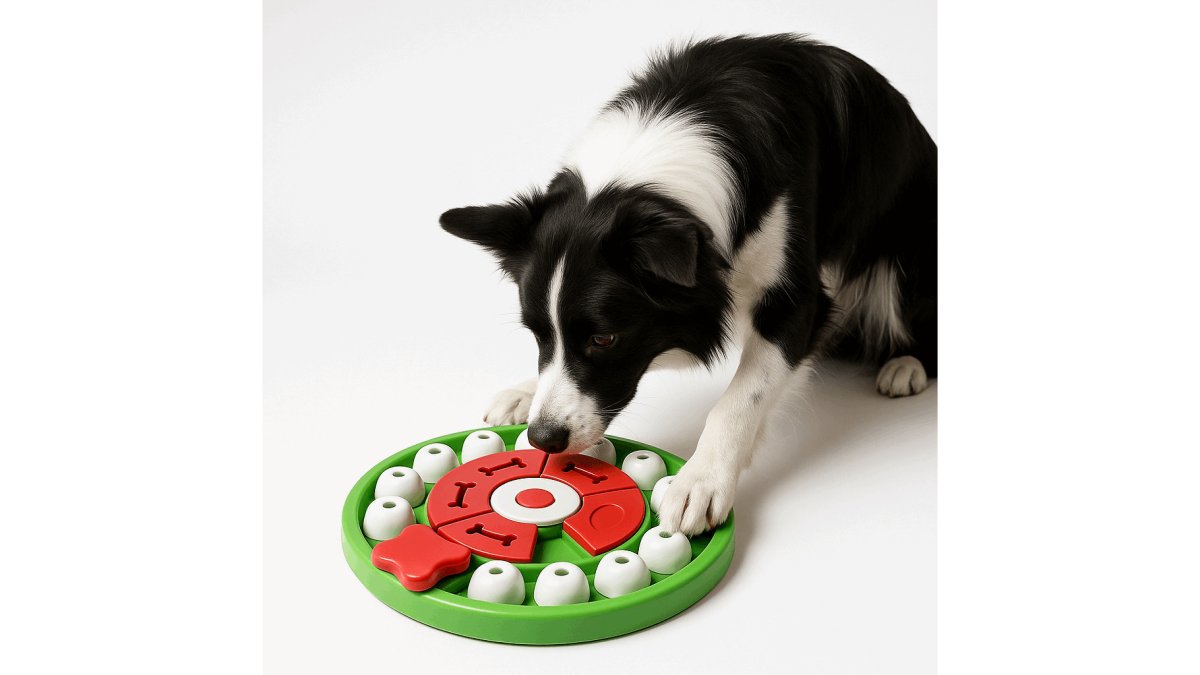
Establish set times for meals, walks, playtime, and rest. Predictability itself becomes calming, anxiety thrives on uncertainty, and routine eliminates it.

Create a wind-down period before bedtime. Dim the lights, keep noise low, and engage in calm activities.
Building your calming routine:
- Set consistent meal times
- Schedule daily walks at the same times
- Create a bedtime wind-down ritual
- Use puzzle toys at predictable times
- Keep your own energy calm and consistent
Use the Chewzzle PuzzleFeast Sliding Puzzle as part of your evening routine. Fifteen minutes of focused problem-solving before bed tires the mind and body.
Exercise, Play, and Enrichment Activities for Anxious Dogs
Physical exercise burns anxious energy. A tired dog is a calmer dog. But the type of exercise matters, structured play works better than chaotic running.
Daily walks provide mental and physical stimulation: new environments, scents, and sights engage your dog's brain.
Interactive play sessions build confidence and trust.
Scent work taps into your dog's natural instincts: hide treats around your home or yard and let your dog search.
Enrichment activities that reduce anxiety:
- Daily walks with varied routes
- Interactive play sessions
- Scent work and hide-and-seek games
- Swimming or water play
- Sniffing games in grass or sand
Rotate enrichment activities to maintain interest, one day scent work, another interactive play. Variety keeps your dog mentally engaged and prevents boredom from feeding anxiety.
When to Consult Your Veterinarian
Some anxiety requires professional help. Severe anxiety that doesn't improve with behavior modification and enrichment may need medical support.
Your veterinarian can rule out underlying health issues. Pain, thyroid problems, or neurological conditions can masquerade as anxiety.
Talk to your vet about prescription calming medications if natural approaches aren't enough.
Reasons to contact your veterinarian:
- Anxiety worsens despite consistent management
- New behaviors emerge suddenly
- Your dog shows signs of pain or illness
- Anxiety interferes with eating or sleeping
- You're unsure whether anxiety is normal nervousness
According to the American Veterinary Medical Association, working with a veterinarian is essential for developing a comprehensive anxiety management plan.
Managing how to calm an anxious dog naturally takes patience and consistency, but the results are worth it.
Frequently Asked Questions
Can puzzle toys really help an anxious dog?
Yes. Puzzle toys redirect anxious energy into problem-solving, which activates your dog's focus and reward centers. When your dog works to uncover treats or kibble, their brain releases calming hormones. Products like the Chewzzle MindMaze and PuzzleFeast are designed to hold your dog's attention for several minutes, giving anxious dogs a constructive outlet that reduces stress-related behaviors.
What natural supplements are safe for calming an anxious dog?
Common natural options include L-theanine, chamomile, valerian root, and omega-3 fatty acids. These support relaxation without sedation. Always check dosing with your veterinarian, as supplements interact with medications and vary by dog weight. Quality matters, look for products tested for purity and potency. Start with the lowest dose to assess your dog's individual response.
How long does it take to see results when calming an anxious dog naturally?
Results vary by dog and method. Enrichment activities like puzzle toys show immediate engagement benefits but may take weeks to reduce overall anxiety. Natural supplements typically show effects within 2-4 weeks of consistent use. Behavior modification and desensitization take longer, usually 4-8 weeks, because you're retraining your dog's nervous system response to triggers.
Is a puzzle toy suitable for a dog who gulps food quickly?
Absolutely. Puzzle feeders like the Chewzzle ThinkDisc and PuzzleFeast slow fast eaters by dispensing food one piece at a time. Instead of a full bowl disappearing in seconds, meals take several minutes. This pacing reduces bloating, improves digestion, and gives your dog mental stimulation during feeding, a win for anxious dogs who eat rapidly when stressed.